The Curator Behind Mancapat
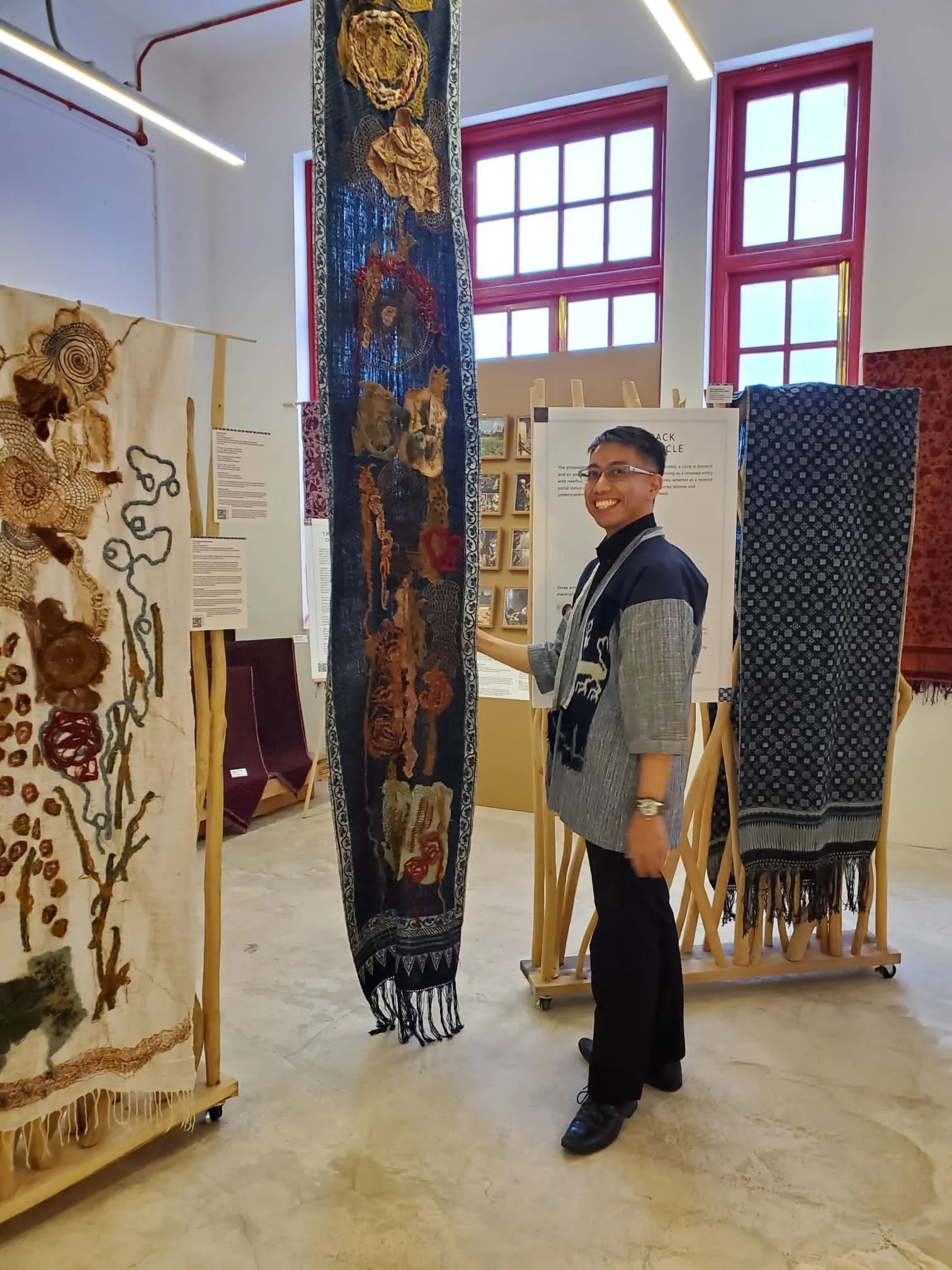
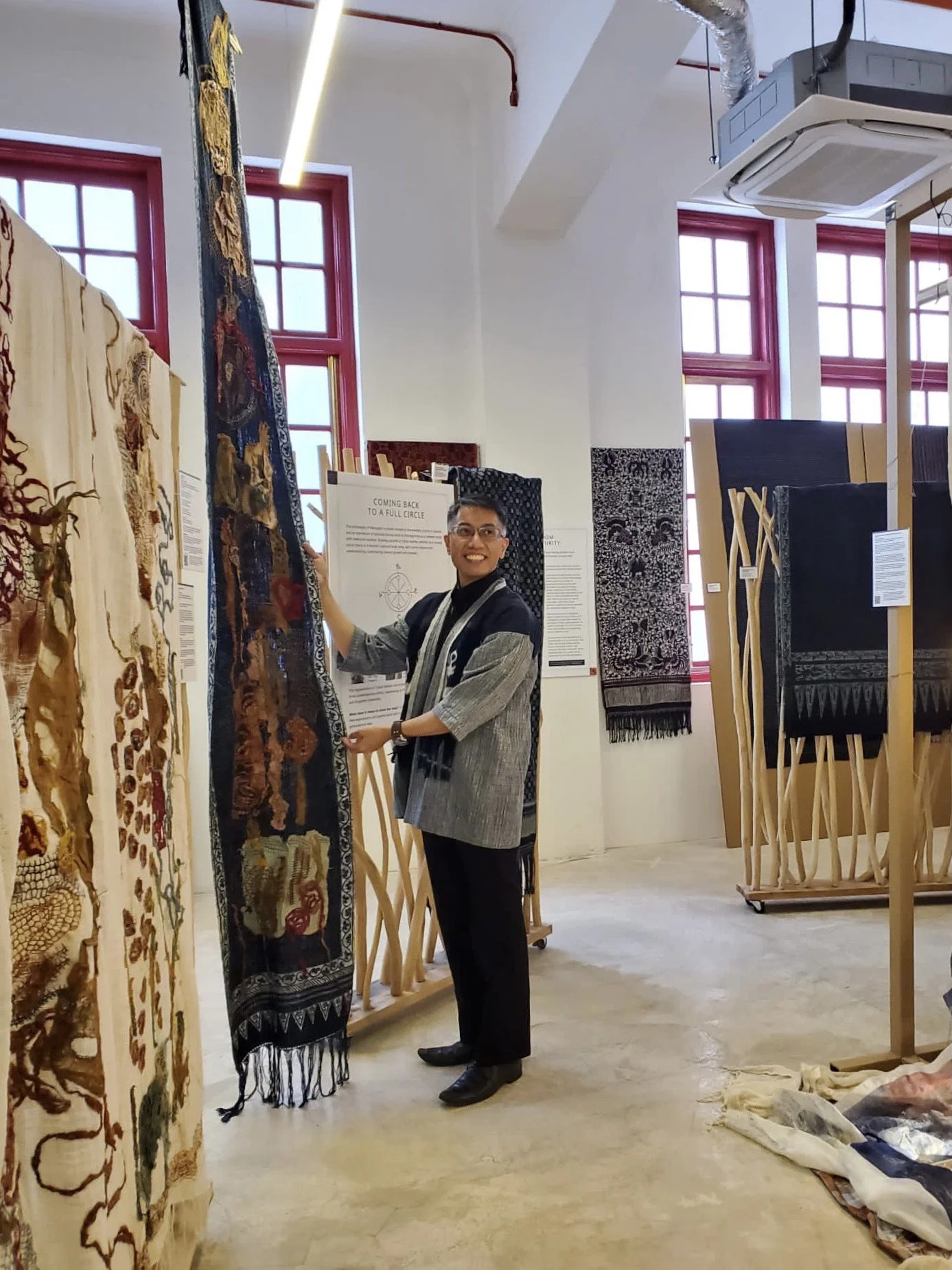
During the Mancapat: An Expression of Life Through the Art of Batik Tenun Gedog in Dec 2021, many of you had the question “what batik is?” in your minds. Actually, a few years ago, I had associated it with hippy designs of the 70s and tie dye. Little did I know that batik is a fabric design steeped in heritage. You can check out my post here . My views on batik had changed when I first met Tony Sugiarta, founder of aNERD Gallery and curator of the exhibition. I thought it would be great to interview the man behind the scenes, and how he started his journey with batik.
Batik is an Art Form
Tony, like me, is a scientist by training, and it was after many years in the pharmaceutical industry that he decided to make the switch to run aNERD Gallery. It was a very brave thing for him to do, but what made him make the switch?
“I was in a transition period from a pharmaceutical research position when I traveled to different parts of Java visiting different batik towns to look for stories that I would perhaps write about. I then met with different people in the industry and there are a lot of stories and perspectives beyond "batik as a cultural heritage that needs to be preserved". There are different angles to textiles - from design, sociology to math and science - that fascinate me and, I think, worth sharing to the rest of the world. “
Batik is definitely a fascinating art form, and has many stories and influences associated with it. The Manacapat exhibition was able to weave these together, but also integrate the philosophy of life as explained by Tony:
“Mancapat is an expression of life - birth, puberty, maturity and death/regeneration - told through the art of Batik Tenun Gedog textiles from Tuban, East Java, Indonesia. Through a display of ethnography materials and contemporary visual art installation, we hope to explore and to incite discussion around creating balance and "closing sustainability loop" in heritage and biodiversity preservation amidst modernity and technology.”

Curator to a Batik Exhibition
As the curator of the batik exhibition, it was interesting to see how Tony approached the curation process. What were his thoughts? Tony explained that “curation of what to display is about prioritizing to suit the space and the narrative” , and as with any textile showcase “from a particular culture, tools (such as looms and spinning wheels) and the textiles showing traditional motifs are the standard must-haves.”
“....I list down all the things that I like to see (and maybe what the audience like too!) in a show. This includes a clear narrative/visitor journey, various things to see, easily digestible panel text, etc. …….
Finally, to add a variety of textures to the exhibition and to "close the loop", I invited three contemporary artists to respond to the idea of this circularity while using materials made by the artisans from Tuban. “
Tony’s initial thoughts when planning the exhibition was to showcase Tuban as being a unique area in Indonesia that houses both weaving and batik in the same area when most conventional textile villages are either weaving or batik villages. However, after further research, Tony found a wealth of information pertaining to Tuban’s culture, philosophies, history, etc., which would bring richness and depth to the exhibition:
“....Throughout the research, the idea of circularity appears constantly - from the textile production in Tuban, Javanese philosophy and architecture layout to the modern sustainability loop. This naturally becomes the narrative arch of the exhibition…..”
“......Many would think that a "traditional textiles" exhibition is a showcase of panels of textiles in a museum with heavy text on history and philosophy. I wanted to add a more contemporary context by engaging artists to give their interpretations to the theme with their chosen medium. This is exciting and nerve-wrecking at the same time as I have no idea what to expect. Glad that all works came together cohesively.”
One topic that was touched upon in the exhibition is sustainability, and I thought it was interesting how Tony incorporated this into the narrative of the showcase. I asked him how important it was that such spaces should be used for social and environmental advocacy:
“My personal belief as a curator is to not only narrate the story behind a piece of an artwork or to showcase artworks for arts' sake (i.e. beauty or commercial value). It is important that we make the show relatable (read: not abstract) for the general audience so that we are able to engage more people and to provoke thoughts and discussion.”
The Challenges to the Batik Exhibition
As with any project, there will be bumps along the way. You can read about mine for this exhibition by clicking here. When Tony first approached me, I was definitely concerned about the impact of COVID when artisans, artists and curator were in different countries! As Tony, put it, he was making sure that “all the stars are aligned!” and says “.... Managing a project - production, shipping, design, marketing, space layouts - requires everyone to work within the timeline!” With the project being in the middle of the pandemic, cross-border interactions between the involved parties were limited to Whatsapp calls and zoom meetings, even though it would have been ideal to meet in person. Although this was the greatest challenge during the preparation phase, Tony believes that in the end it is best to “trust the process and the people you work with”.
I’m very happy to have been part of the process and to have worked with Tony and his team.
For more details about art process behind my contributing piece (in)Visible, visit this post.