
Atomic Habits for Artists: My Progress and Reflections One Year Later
I can hardly believe we’re already nearing the end of 2024. I say this every year, but this one really went by quickly! My mother always reminds me that time feels faster as you get older—something I wish weren’t so true. As the year winds down, it is the perfect opportunity to take a moment to contemplate what is truly important and to evaluate our priorities as we enter the new year.
I have been thinking about the habits that I have adopted (and also dropped!) into my life as an artist since I was introduced to James Clear’s Atomic Habits. I wanted to provide an update on how these habits have influenced my creative process, the changes I’ve implemented, and the insights I’ve gained throughout this journey. Writing this entry has made me sit down and reflect on what has been successful and what hasn’t.
Build Good Habits & Take Care of Yourself
Observing How My Body Responds to Health Changes
I mentioned in my last post on Atomic Habits that I was undergoing perimenopausal changes. These changes are part of life - nature’s way of telling me to slow down. I have come to accept them as part of life (although sometimes I do ask God, why!), and that I need to :
Change the way I work in my studio and observing HOW my body responds to these changes, for better or worse.
However, during the first quarter of 2024, I realised that I needed to:
Have more awareness of how my body and mind feel/respond at certain times of the day and month!
Think hot flashes, brain fog, immense lethargy…..
This was a key turning point for me because there was no point instilling good habits, while at the same time not recognising or even acknowledging that sometimes certain things can’t be done at all due to nature! I can’t force it.
What I Have Learnt
Revisiting the Four Laws of Behavior Change
Clear’s four laws of behavior change– Make it obvious, Make it attractive, Make it easy, Make it satisfying – were game-changers for me when I was trying to build new habits and remove bad ones. Given that I had identified when my health episodes could occur, I was more equipped to revise my process to suit my needs.
Like all good things, habits evolve.
Here’s how these rules have played out in my creative practice over the past year:
Make it Obvious: In my initial plan, I mentioned showing up at the studio daily for at least one hour. This habit helped me overcome the inertia of self-doubt and creative block during the first quarter. While I still aim for this, I’ve found that flexibility is key. Some days, life happens, and it’s okay to adjust the time spent in the studio. If I’m going through an intense brain fog, then I have something set up that helps my art process, but is not taxing in my body and mind. It could be going for a walk, doing breathing exercises, cleaning the studio, rearranging my inspiration wall or doing a material stock take.
I no longer beat myself up if I miss a day — I’ve learned to trust the overall process.
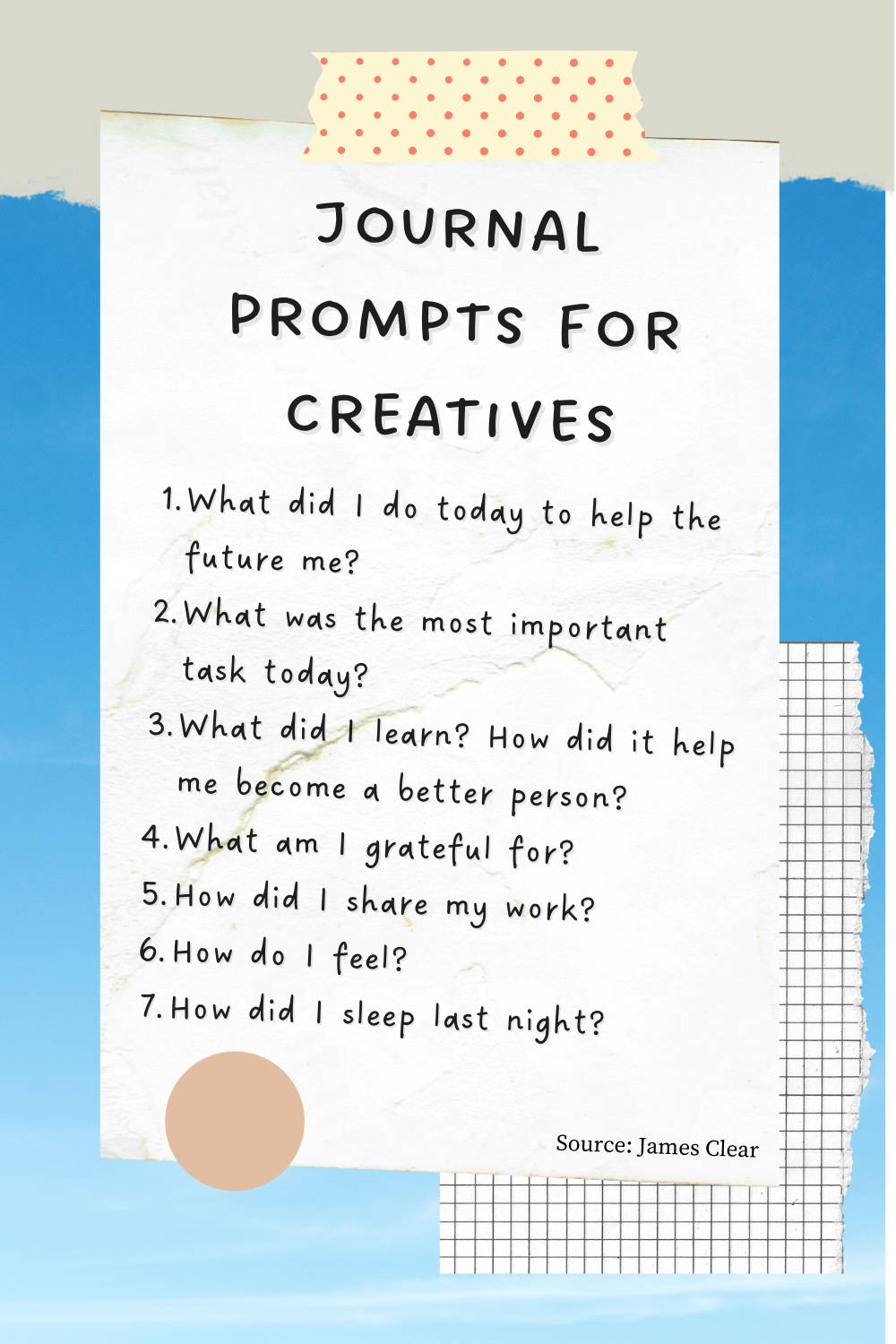
Make it Attractive: I had linked journaling at the end of my day as part of my habit-stacking approach. This practice worked well initially, but over time, I realized I felt too drained by the end of the day to journal effectively. Now, I write short notes during the day when I feel inspired, allowing for more spontaneous reflection rather than waiting until bedtime. It still follows the prompts that keep me motivated!
Make it Satisfying: Tracking my progress with visual cues has continued to be motivating. However, I have switched from using Asana to using Daily Scrums. Each morning, in the studio, I go through:
Yesterday’s Work, Today’s Work, and Obstacles
I have it in a table, and it reminds me of the progress I have made, but it also gets me to think about the challenges I’ve faced and what needs to be resolved. One of the important aspects when tracking progress, and planning for the day, is that it has helped me determine what activities I can and can’t do given the health situation at a given point in time. For example, I now know that I have a limit to the number of things I can do in a day, and also which activities are most suited at certain times of the day / month.
2. The Challenges of Sticking to Habits
Procrastination Returns: Bad habits have a sneaky way of creeping back. Scrolling on my phone, particularly in the evenings when I should be relaxing, returned, and with it, poor sleep. I actually turned my app blocker off. Fortunately, I am not scrolling on social media, but just being on the internet and Youtube. Gosh, this is a timetrap, and I should know it!
3. Habit- Building as an Artist
The Importance of Rest: One of the most important lessons I've gained is that rest is essential for maintaining my practice. Atomic habits focus on consistency, yet at times, rest and recovery hold equal importance. Persevering through exhaustion ultimately results in burnout; therefore, I have incorporated “planned rest” into my routine.
Small Wins Add Up: I once believed that significant changes required immense efforts. However, Clear's point about the cumulative impact of minor, consistent habits is valid. I’ve noticed steady progress in my creativity and skills by consistently dedicating time each day, even if it’s just for a little bit.
Flexibility in Habit-Tracking: I've discovered that it's perfectly fine to skip a day or two. Rather than concentrating on perfection, I have begun to emphasize consistency in the long run. Habits do not develop in a linear fashion, and that's completely acceptable.
5. Final Thoughts on Atomic Habits for Artists
My experience with atomic habits is an evolving process, and I've come to understand that habits are not fixed. They evolve with life transitions, creative obstacles, and individual development. What's crucial is to remain flexible and discover what suits you best.
If you’re considering implementing Clear’s principles in your own creative work, I strongly encourage it. The important thing is not to be tough on yourself when things don’t unfold perfectly, but to acknowledge the small victories throughout the journey. As creators, we flourish in a mix of organization and imaginative freedom — fundamental routines assist us in managing both.
I’m eager to hear from other creators: what practices have you incorporated into your daily routine? In what ways have they influenced your creative work?