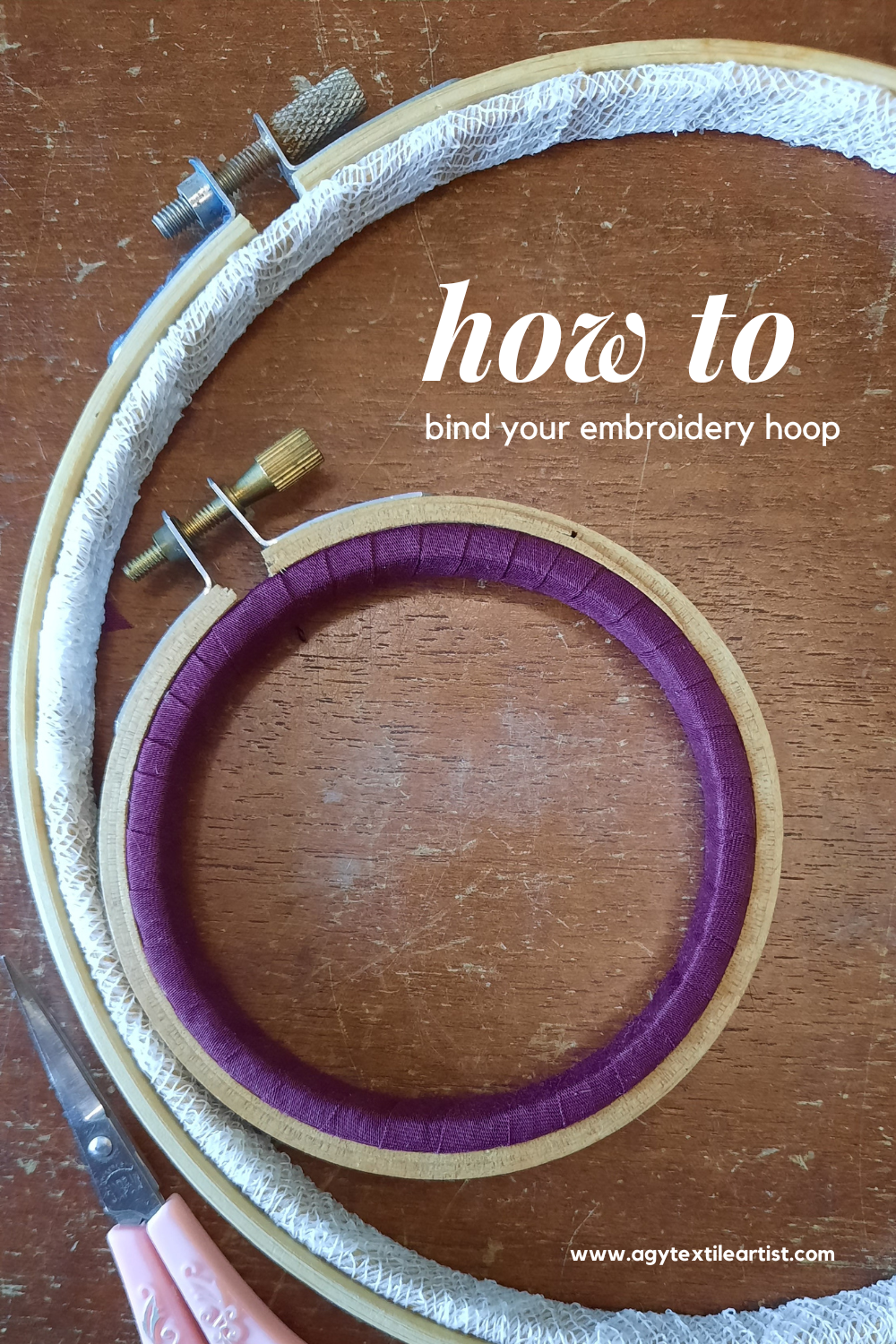
Embroidery Hoops - Binding and Other Tips
I have been meaning to write about my experience with embroidery hoops as I do get questions about which hoop I use, why I use it for free motion embroidery and not for Broderie Anglaise, and the difference between my plastic hoops and embroidery ones. It really boils down to the project that I am doing, and the fabric base I’m using. They both have their advantages and disadvantages, so let’s dive right in!
Free Motion Embroidery and Embroidery Hoops
Embroidery hoops are really useful tools when it comes to free motion embroidery. They help stabilise your fabric base as you move your artwork across the bed of your sewing machine to create thread drawings and textures. Without the hoops, you would end up with wrinkled and warped pieces of textile art (unless that is what you are going for!).
Broderie Anglaise and Embroidery Hoops
I personally do not use embroidery hoops when I sew Broderie Anglaise by hand as I like the tactile nature of the process. I also prefer to touch the work directly so that I have an idea of the tension of the stitches, which means I do without the hoop. I do find that if the Broderie Anglaise work covers a large area of fabric, moving the hoop across the fabric becomes difficult in maintaining the tension especially where cut-outs are involved. If I find a solution, I will definitely let you all know!
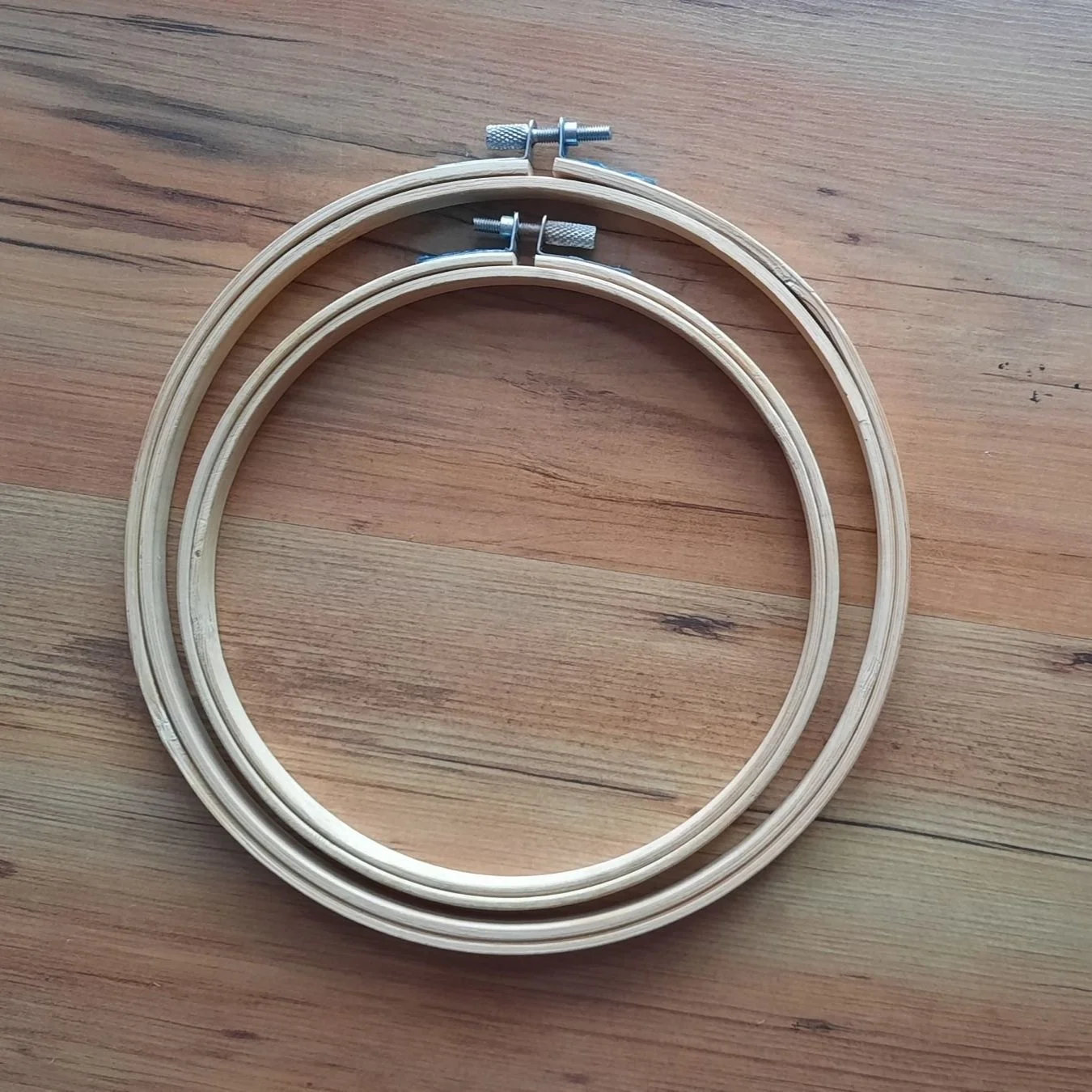
Bamboo embroidery hoops
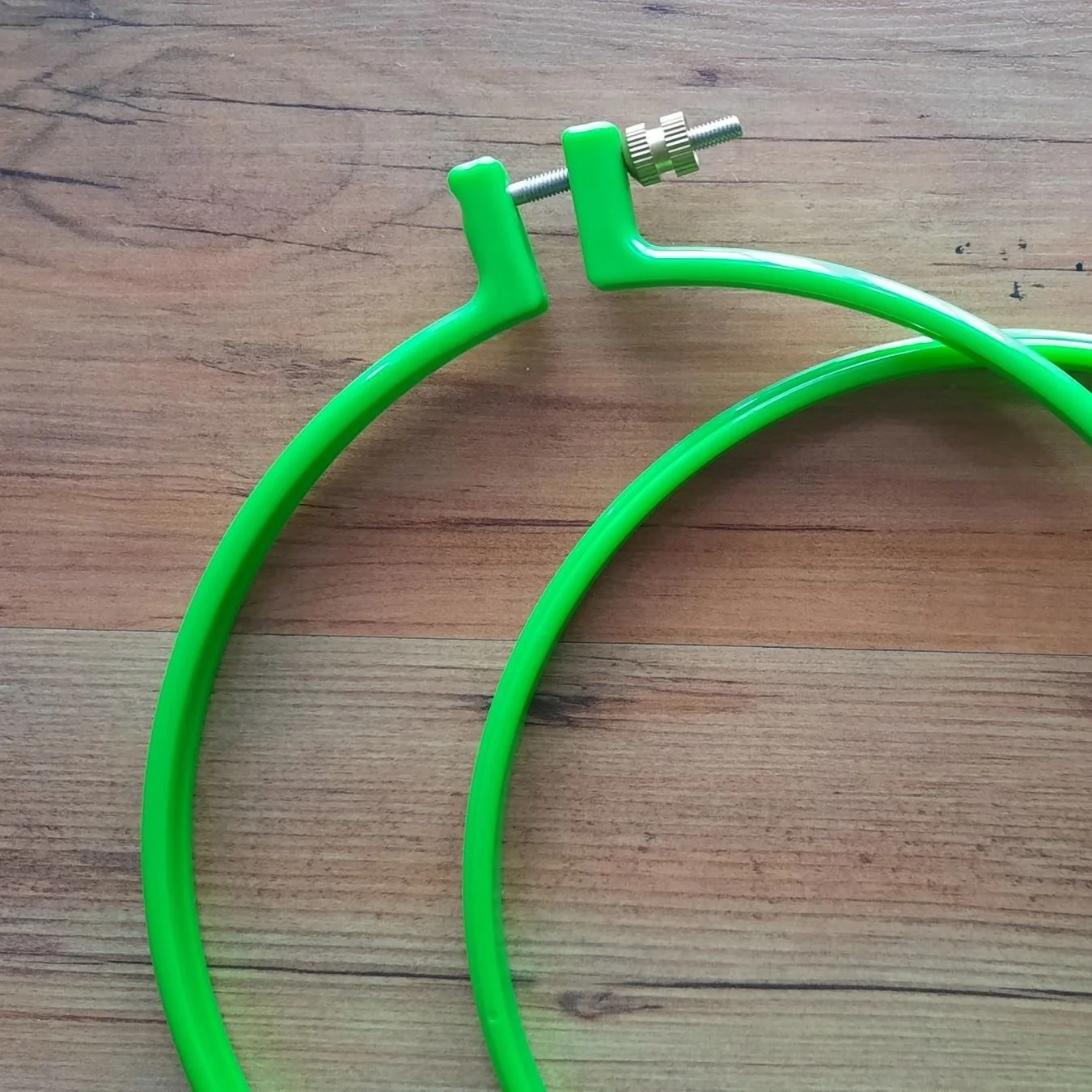
Plastic embroidery hoops
Your Hands - Comfort & Ergonomics
However, holding a hoop can reduce hand strain compared to holding loose fabric. And it will helping you with your handstitching, if you place the embroidery hoop in an embroidery hoop stand. There are different types available on the market, and here are the points you will need to consider:
Will you be working at your desk or seated on the sofa, or even both? This will impact the type of stand you will purchase. There are quite a variety of stands—tabletop, floor and combinations!
How big are the pieces you usually work with? If you often embroider pieces that are bigger than 22cm (~8 inches), then your stand must have grips on both ends of the hoop. Always check that your stand can accommodate the size of your hoop or frame.
Take note of the height of your work table! The first stand I purchased was not compatible. Even though I had researched on the adjustable dimensions of the stand, I forgot to take into account the height of my work table. In the end, I had to prop the stand up with a book!
Embroidery Hoops I have Used
I have used two types of embroidery hoops: bamboo and plastic. Each has its own advantages and disadvantages.
Plastic hoop - If you’ve taken my Free Motion Embroidery workshops, you will have noticed that I love using the plastic embroidery hoop. The design I have creates a nice grip and tension on the fabric due to the tongue and groove joint between the 2 hoops. It also has a smooth finish that allows your work to be gripped without being snagged. If you don’t have this type of hoop, you can visit your local haberdashery or arts and crafts store, like Michaels, or Ban Soon, if you’re in Singapore. However, you can always bind your existing wooden or bamboo embroidery hoops to achieve a similar effect, as I share below.
Bamboo hoop - These hoops are lightweight and visually appealing for framing embroidery work. However, they may have a few rough edges and develop minor cracks that can snag your fabric. I've even experienced a bamboo hoop breaking unexpectedly while working on a free-motion embroidery piece! Unlike plastic hoops, bamboo hoops don’t always provide an even grip between the inner and outer rings, which can be problematic when working with lightweight fabrics like organza or tulle. In such cases, binding the embroidery hoop can be a helpful solution.
Why Bind Your Bamboo Embroidery Hoop?
Mind the gap! You might have noticed a tiny uneven gap between the 2 hoops even after tightening the hoops. If you bind the hoops, you will be able to:
Create extra and even tension between the hoop and the fabric; and
Protect your fabric from snags and rubbing against the hoop
How Do You Bind the Embroidery Hoop?
What to bind an embroidery hoop with?
There are a few options. The least time-consuming is self-adhesive bandage. It’s stretchable and sticks onto the hoop, creating a quick-fix if you’re in a rush to get the hoop bound. This method, however, is temporary and only lasts about a year. If where you live is hot and humid, the bandage will turn yellow and crisp in about a year. It is also attracts dust/lint, so you can’t leave it out on your workspace for long periods of time. The alternative is premade bias tape (12mm, or 1/2 inch wide) from the haberdashery (or you can make your own if you have time!).
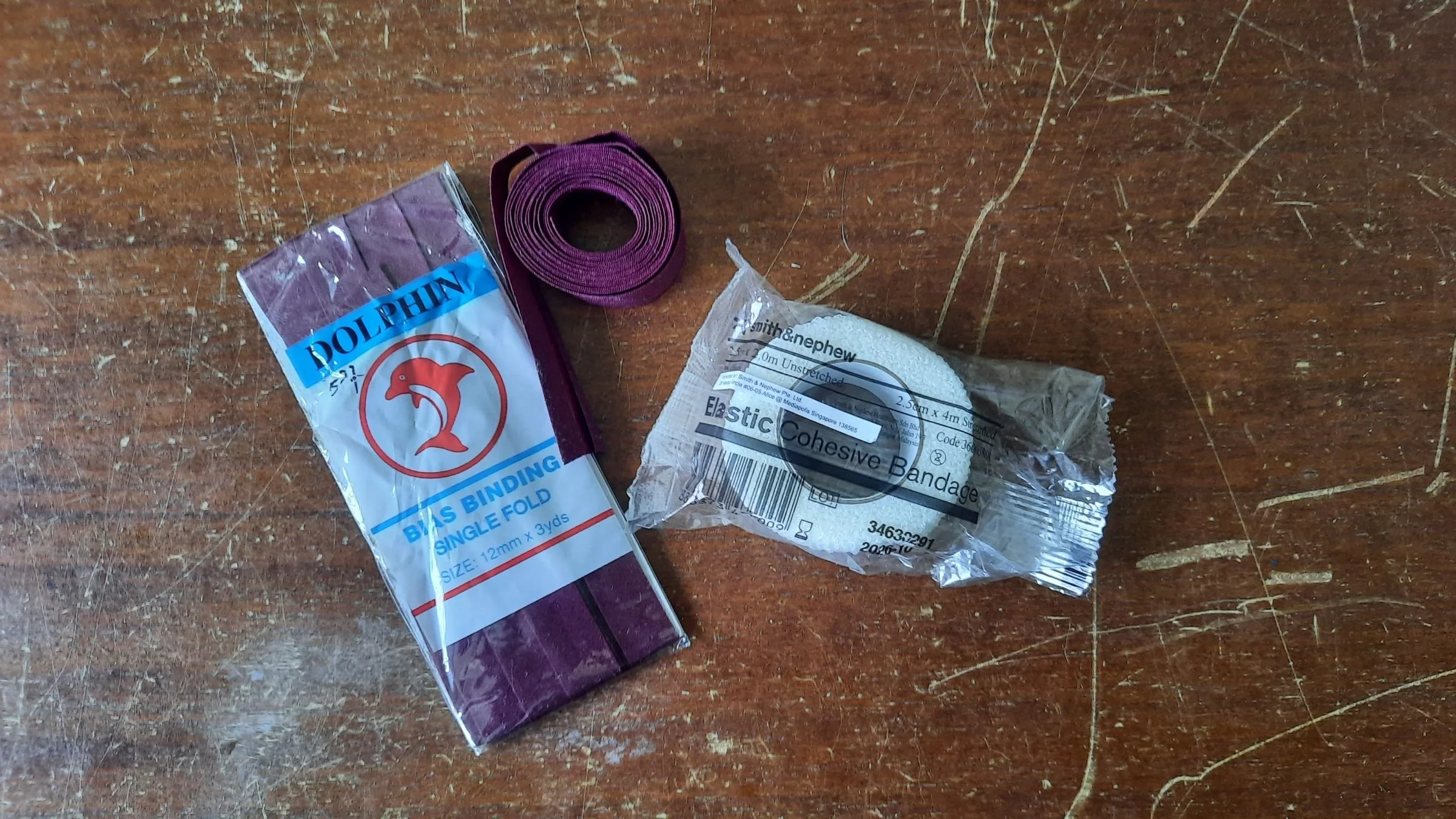
What you can use to bind your embroidery hoops
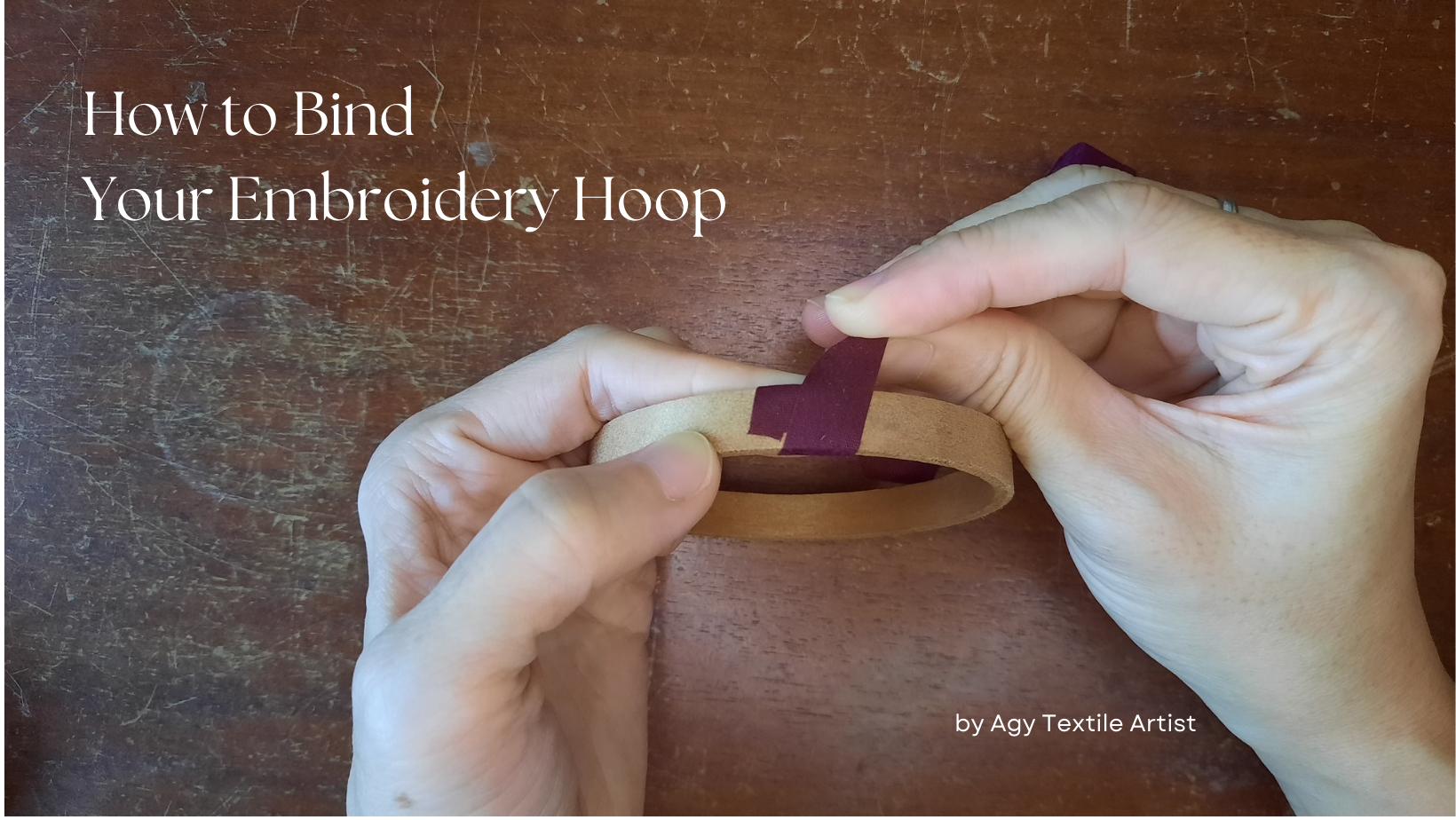


Starting off
Whether you are using bandage or bias tape, make sure the fabric overlaps on itself so that the tape is secured onto the hoop. Due to the nature of the bandage and bias tape, you will be able to stretch and wrap them easily over the hoop.
Ending off
I always end off by using a needle and thread to secure the end of the bias tape so that it doesn’t unravel. The stitches will be on the inner side of the hoop, or on the surface of the hoop that will not come into contact with the other hoop. You don’t want to be making the hoop uneven again. For extra security, you can do the same with the bandage even though it is self-adhesive, but this is not really necessary.
Should I bind both hoops?
I believe this is a personal choice and project-dependent. I bind both hoops when my fabric base is lightweight, but stick to one when the base is heavier. Either way, I want to make sure that the tension is even and not too tight that it will overboard in stretching the fabric.
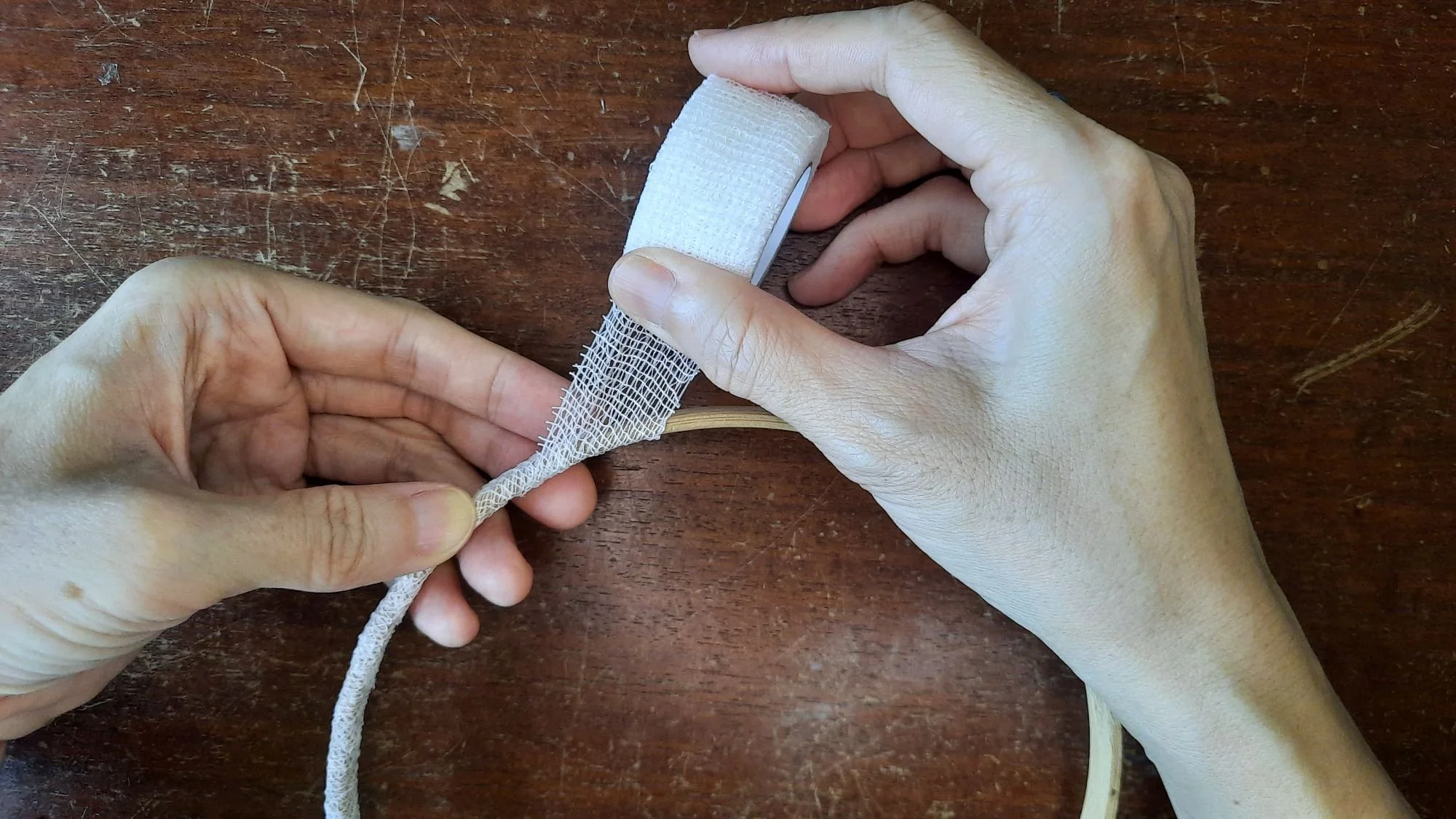
Using an adhesive bandage to bind the embroidery hoop
Have You Tried Binding Embroidery Hoops Before?
This might be your first time trying the binding method, and it can feel a bit fiddly—but don’t give up! Set aside about an hour (and your favorite hot drink!) to bind your most-used bamboo embroidery hoop. If you decide to bind the rest of your collection later, take it one hoop at a time. No need to overwhelm yourself—remember, taking care of yourself comes first.
Let me know what you think!