
Choosing Threads for Your Broderie Anglaise Projects
When I was writing this post, I was going to give it the title “Choosing the perfect threads for your broderie anglaise projects”. However, after taking a look at the textile art projects where I have used Broderie Anglaise, I realised that there is no such thing as the perfect thread for this technique. It really boils down to the project that you have in mind, and the textures you want to achieve. That’s it!
I have decided to compile a list of the threads that I have used and the effects that are created. Here I’m focusing on the coral art works that I have created. Here goes!
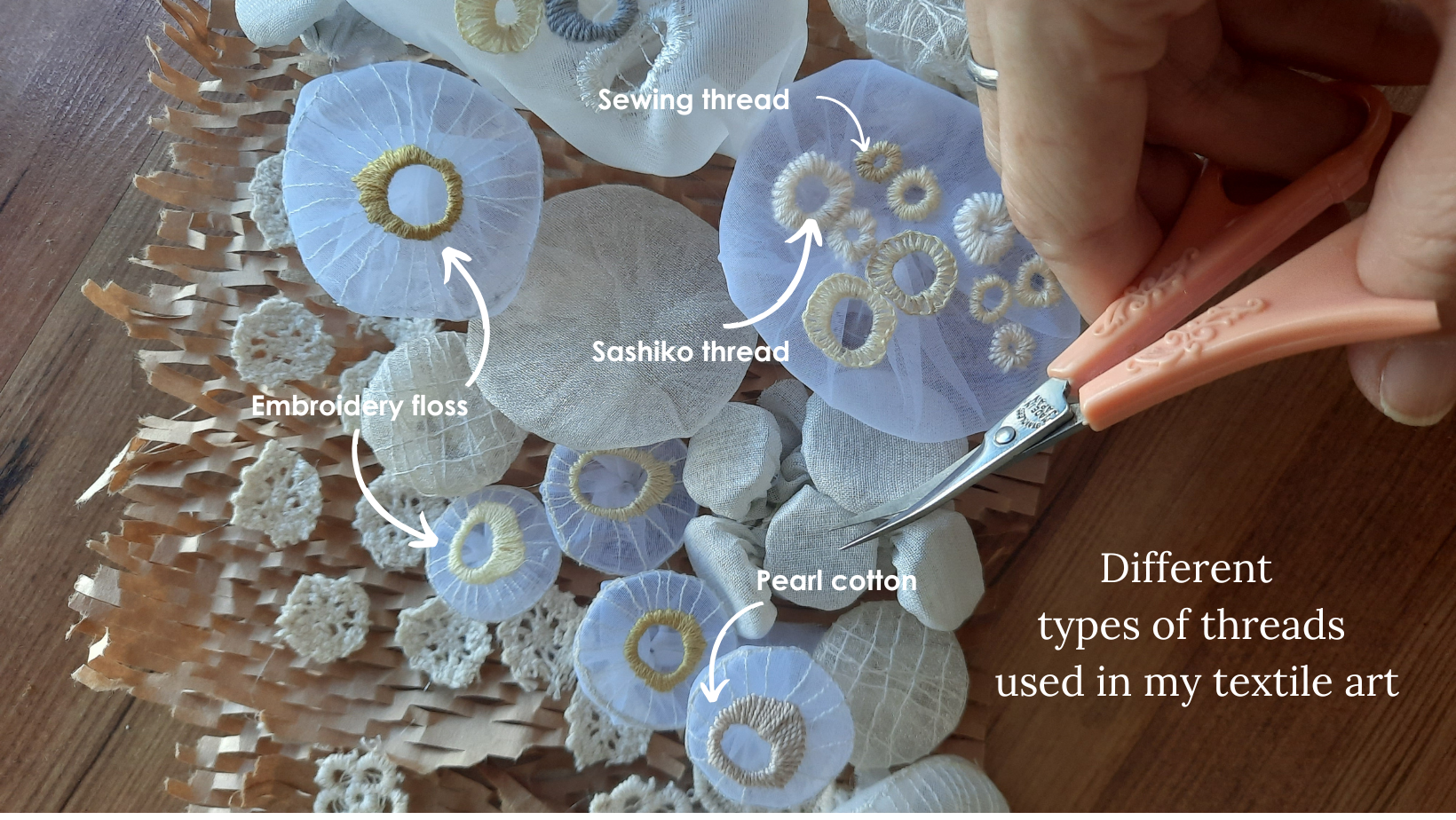
Pearl cotton / Coton perle
Embroidery floss
Sashiko threads
Sewing machine thread
My favourite go tos so far are DMC, Olympus and Madeira.
Pearl Cotton
I love the shiny satiny look of these threads, and it adds a luxurious look to the work. I have been using number 8 and 5 for my coral works so far. It gives the work depth and an illustrious effect. When using these threads, I have to make sure that I’m going extra slow with the technique, as the threads do tend to twist more than embroidery floss. If you look at the pearl cotton threads, they are already twisted, and the twist gives the final project an added texture as seen above.
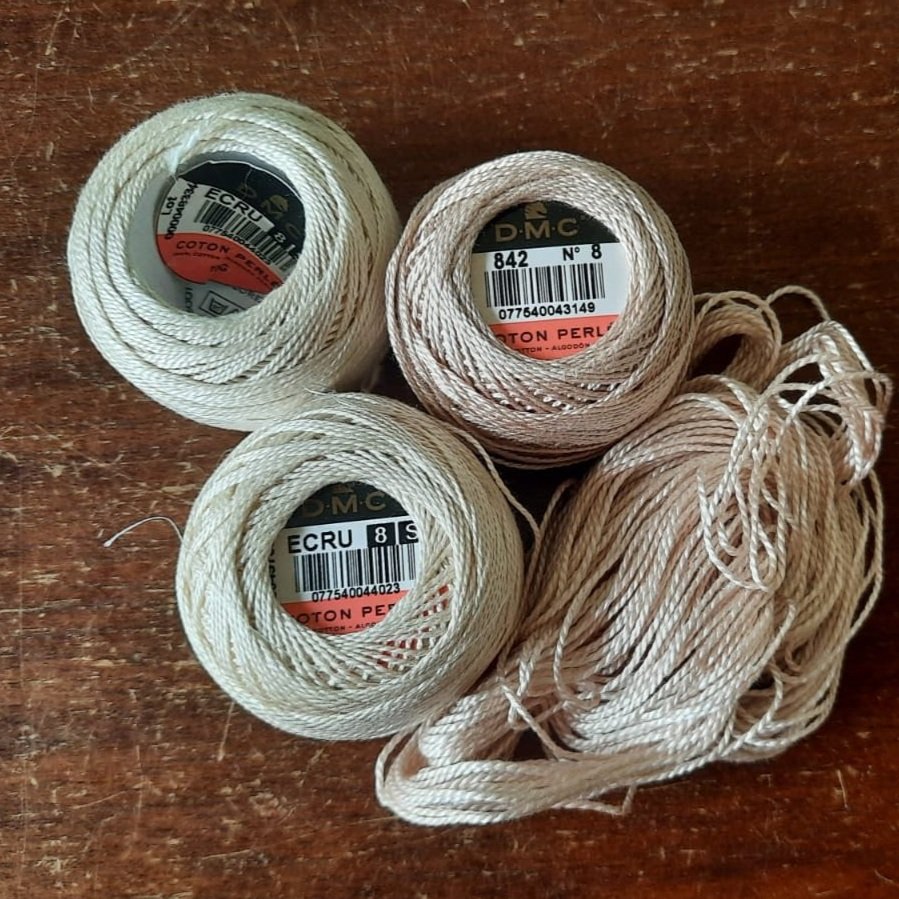
Cotton Pearl threads
Embroidery Floss
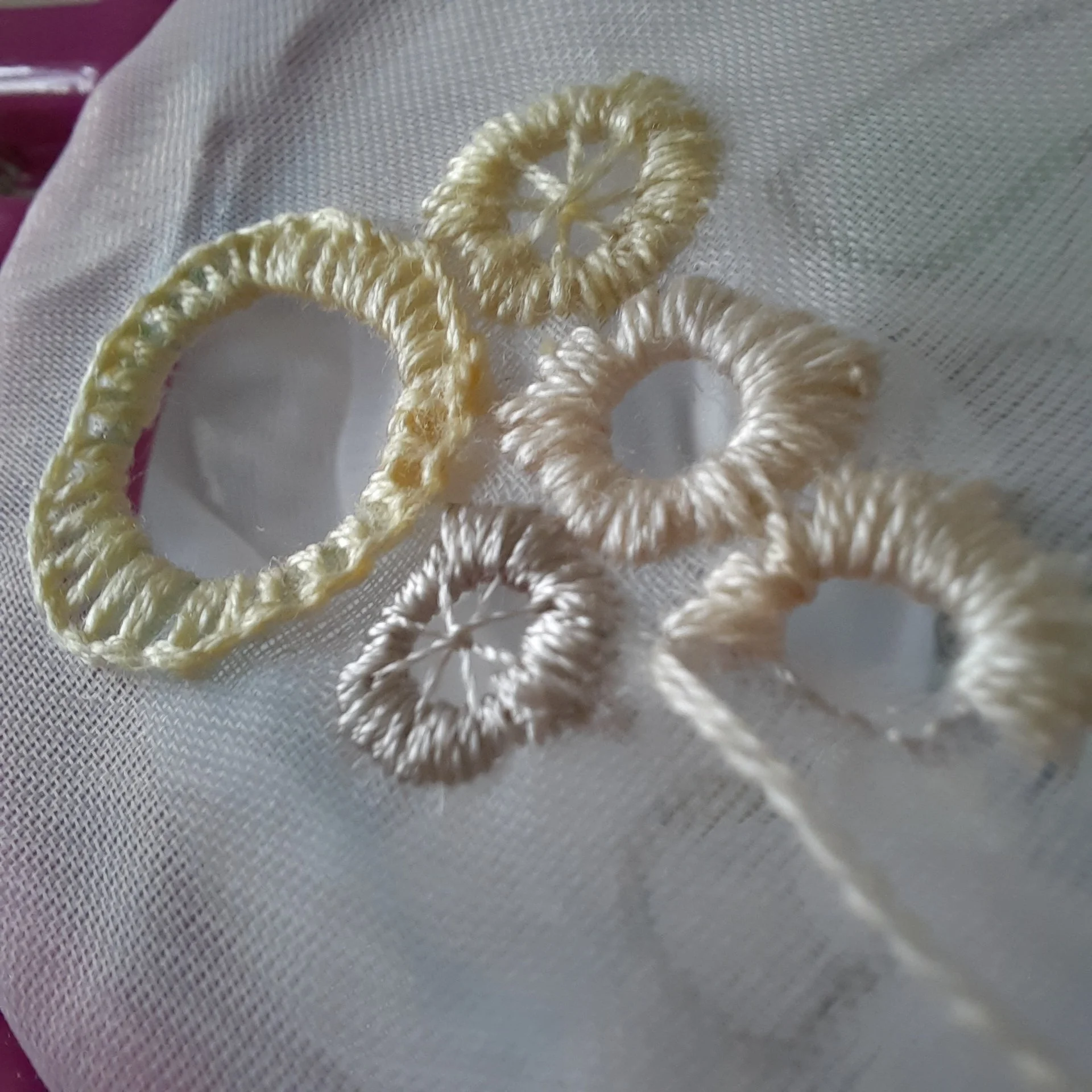
This is one of those extremely versatile and widely available threads. It’s my go to if I can’t find the pearl cotton threads I’m looking for, especially in Singapore. Because they are comprised of 6 separate strands, embroidery floss allows you to adjust the effects of your textile art project by using fewer or more strands - so as you can see, these eyelets were sewn with different number of threads, and therefore the thickness around the edges is different. I have found that embroidery floss is great for Broderie Anglaise projects on clothing too.
Sashiko Thread
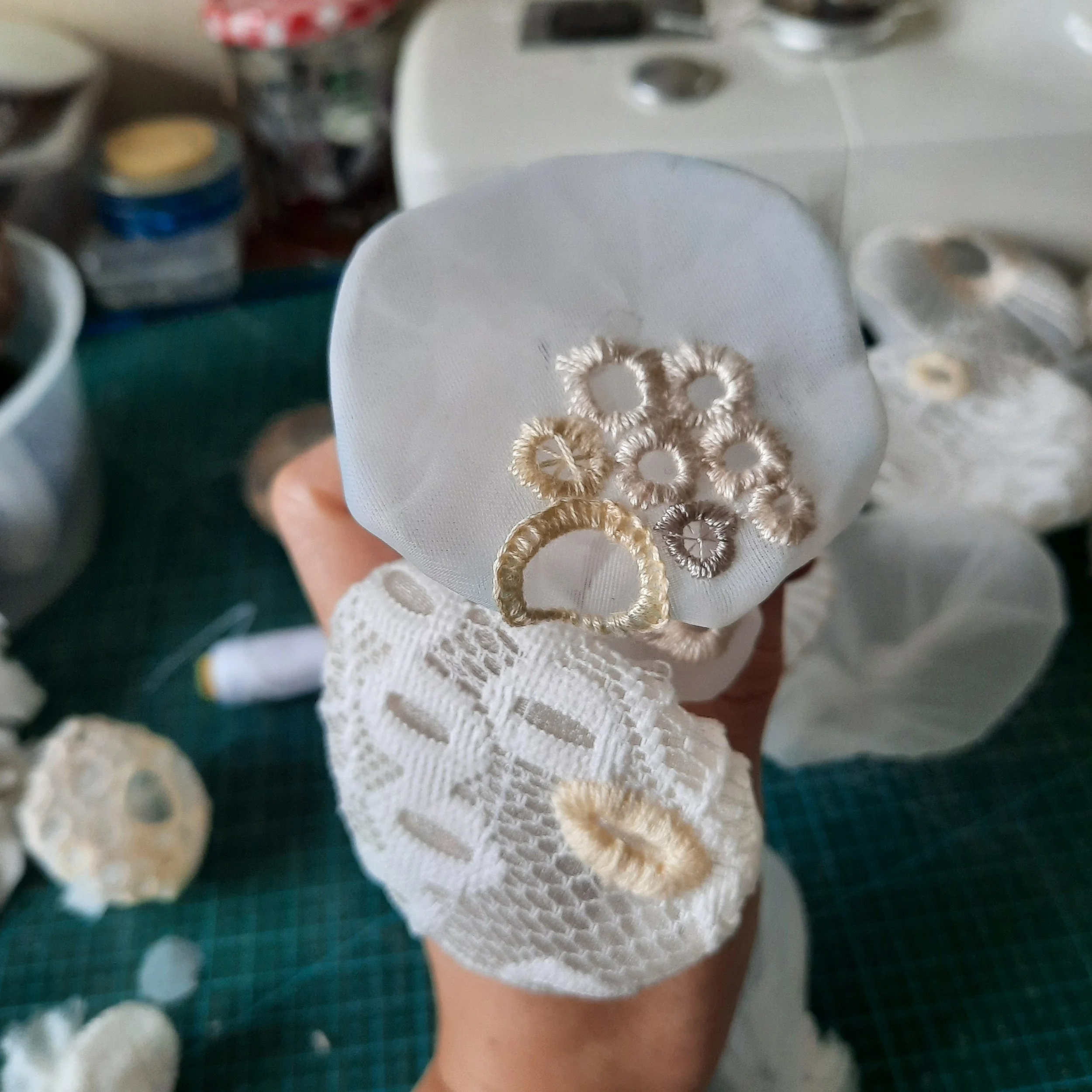
When I first took a look at the sashiko thread, I was a bit hesitant in using them in my coral works, but I realised that they were perfect in creating the detailed eyelets on my soft sculptures. They are about the same thickness as a size 3 pearl cotton but without the sheen, and they gave substantial bulk to the eyelet, something that I was looking for. I also think the sashiko threads add great depth to Broderie Anglaise on clothing.
Sewing Thread
Sewing thread is not usually my go to when it comes to Broderie Anglaise - I would normally use 1 strand of embroidery thread instead. However, if there is a colour that I can’t find in the DMC colour card, then my next best option is using sewing thread. I double up on the thread when threading the needle, and I am always careful to ensure that the threads are not twisted while sewing. If I was doing regular hand sewing, I would usually wax the thread, but I don’t do this with Broderie Anglaise. Instead, I use the natural oils on my fingers to get rid of any stray lint, or kinks in the thread, to make the sewing smoother.
Go for Quality
One thing to keep in mind: always choose the highest-quality thread you can afford. Why? I have found that low-quality threads are:
difficult to manage and sew with in Broderie Anglaise (think kinks in the thread and lint) tend to be fluffy
prone to color bleeding, and often can't handle ironing without damage. Investing in good thread ensures your work stays pristine, whether it’s worn, washed, or displayed. I have found that brands such as DMC and Madeira detail the care needed for their threads, including whether it can be machine washed, and ironed. I think this information is very important, especially when we are putting a lot of time and effort into our art projects.
Don’t forget to sample
One of the most important steps in my art practice is to always remember to do some sampling before working on the actual project. It saves a lot of heartache and pain, and it also means you don’t waste your hard earned money on your original choice of threads too. I always buy a small amount first (e.g. one skein or ball) so that I can test it out first. And it would be very useful to have your own colour thread swatches in your studio so that you can have a rough gauge of the texture and density of the stitches.