How to Clean and Maintain Your Sewing Machine
A Happy Sewing Machine Means a Happy Artist!
I have been asked a few times about what model and which brand of sewing machine I use for my sewing, free motion embroidery and upcycling projects. So here goes:
What model and brand do I have - SINGER 1100
Do I have an embroidery sewing machine. Well, the answer is a big NO, and my reasoning is as follows:
embroidery sewing machines are expensive, and if you are on a tight budget (like me), then no, you don't need one.
In Singapore, the price can be more than $800 for a basic embroidery sewing machine. However, if you are looking at fancy preset embroidery patterns then perhaps these are for you. b) some embroidery sewing machines have electronic components that are expensive to replace.
you can do free motion embroidery on any basic sewing machine that allows you to lower the dog teeth or at least has a cover to stop it from pulling your fabric back.
Here is my sewing machine, a SINGER that I purchased over 10 years ago. My issue now is that I have to toggle between the different tension settings when I want to sew normally and when I want to do some free motion.
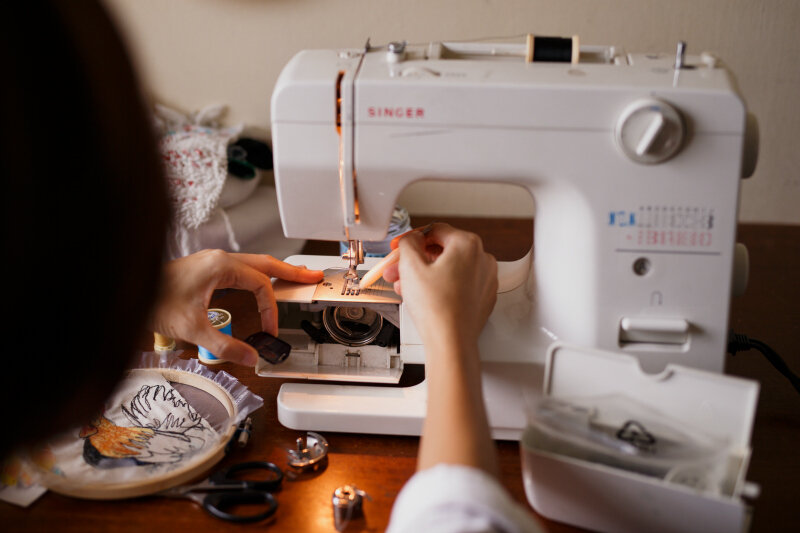
Singer Sewing Machine with it’s bobbin case opened up.
How Do I Clean & Lubricate My Sewing Machine?
6 Tips for a No Jam Sewing Session
Regardless of what type of sewing machine you have, it's important to clean it out after every project, or even after an hour or so of sewing. The action of moving the fabric backwards and forwards on the plate creates an immense amount of lint that can clog up the bobbin case. A clogged up case means a jammed machine.
There are several things to take note when you are cleaning your sewing machine:
1. Open up the bobbin case, the plate and the casing above the needle to get to all areas that the lint could possibly be hiding in.
2. Do not blow into your machine. Once you’ve opened up the sewing machine, it is really tempting to purse your lips and give it a good puff but trust me, you will be pushing all the lint back into the machine. Don't do it!
3. Use a vacuum cleaner - if you find it a hassle to take it out of the store room just to clean out your sewing machine, you can purchase a handheld one. What I do is I vacuum the sewing machine every time I use the vacuum cleaner for cleaning the house.
4. Use the brush that comes with the sewing machine to brush away the lint. If you find that some parts have accumulated a lot of lint and it’s getting gunky, use a cotton bud / Q-tip that is dipped in nail polish remover to clean it out. A paint sponge also works!
5. Be patient too. Spend as much time as you can to get all that lint out!
I clean out my machine after a major project and after an intense session of stitching.
FINAL TIP - The last and final tip is to remember to oil (with sewing machine oil and not cooking oil!) all moving parts of the sewing machine, and keep them moving. There’s nothing more annoying than getting rid of the dust and finding the parts don’t move because you had forgotten to oil it. Sewing machines need to be oiled and moved just like our bodies!
Storage Tips for a sewing machine
If you’re not using your sewing machine for a long period of time, remember to cover it to prevent dust from getting into the machine and clogging up the parts. You can use a large bag or cover the sewing machine with some fabric if you are planning to leave it out on your studio table. One useful tip I learnt from a sewing machine repair man, is to
use a piece of kitchen towel or cardboard to cover the feed dogs.
lower the footer over the covered area
lower the needle into the feed dog area, or remove the needle completely.
Let me know what tips you have when it comes to taking care of your sewing machine!

Read more on the blog