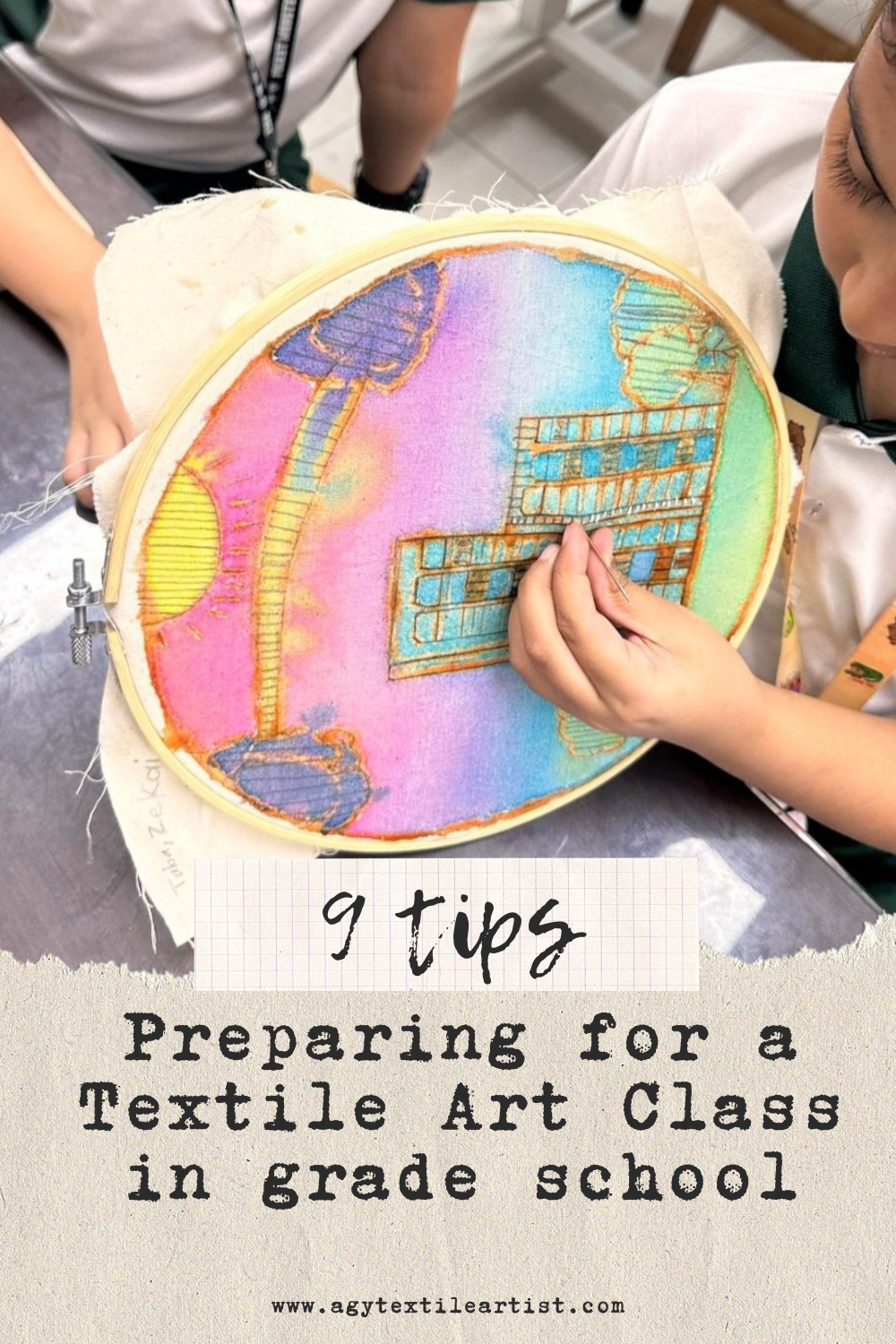
Preparing for a Textile Art Class with Primary School Students
Which age group of students would you prefer to teach? Primary school (aka grade school)? Secondary school ( aka high school)? Young adults?
I had the opportunity to teach textile art to a group of students aged between 10 and 11, sharing my thoughts, ideas and process. While it was incredibly rewarding, it was also filled with spontaneity, as you will read about further in this post! To maintain a relatively stress-free class, a lot of thought and preparation is needed. I have listed a few important pointers to keep in mind:
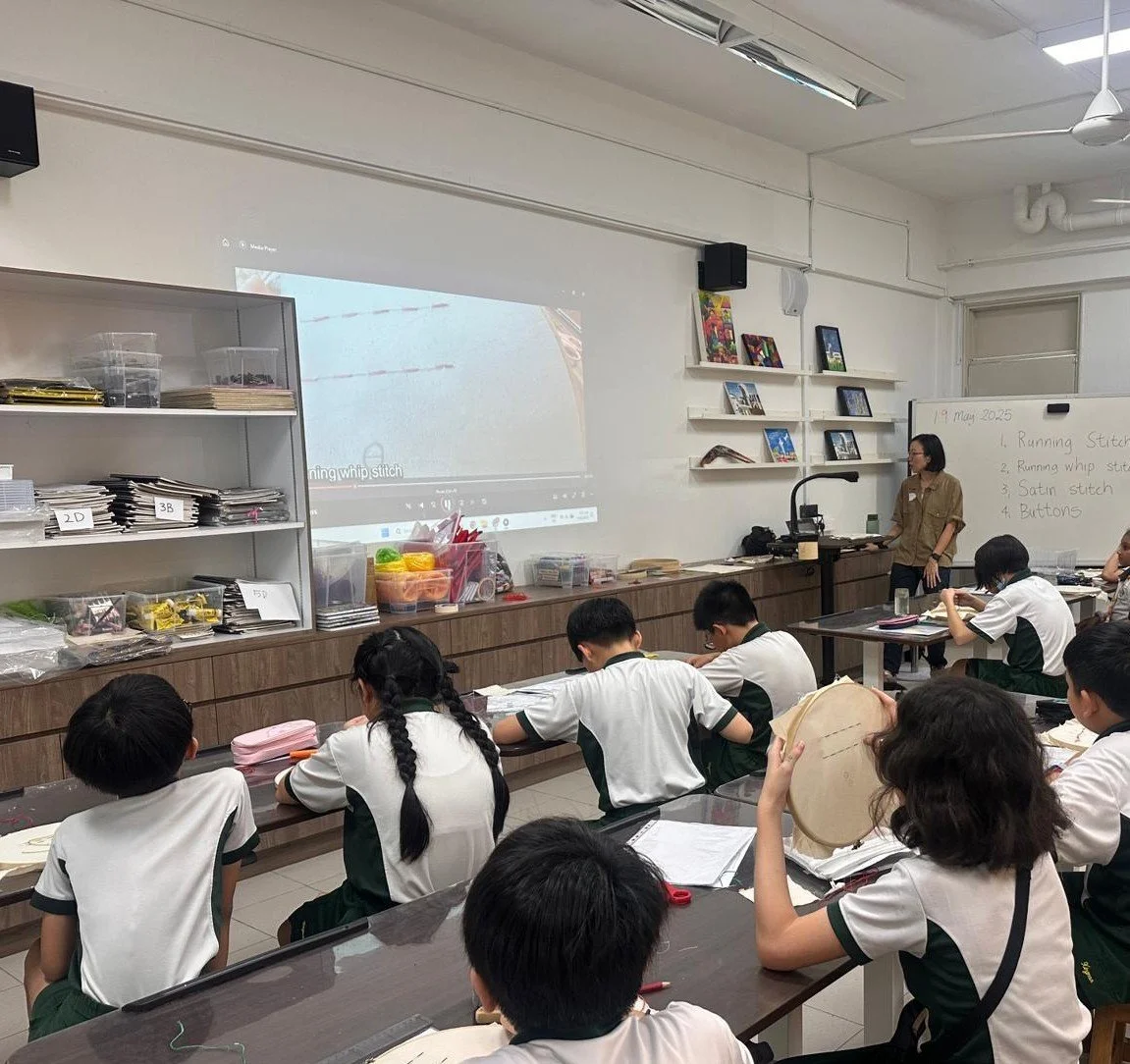
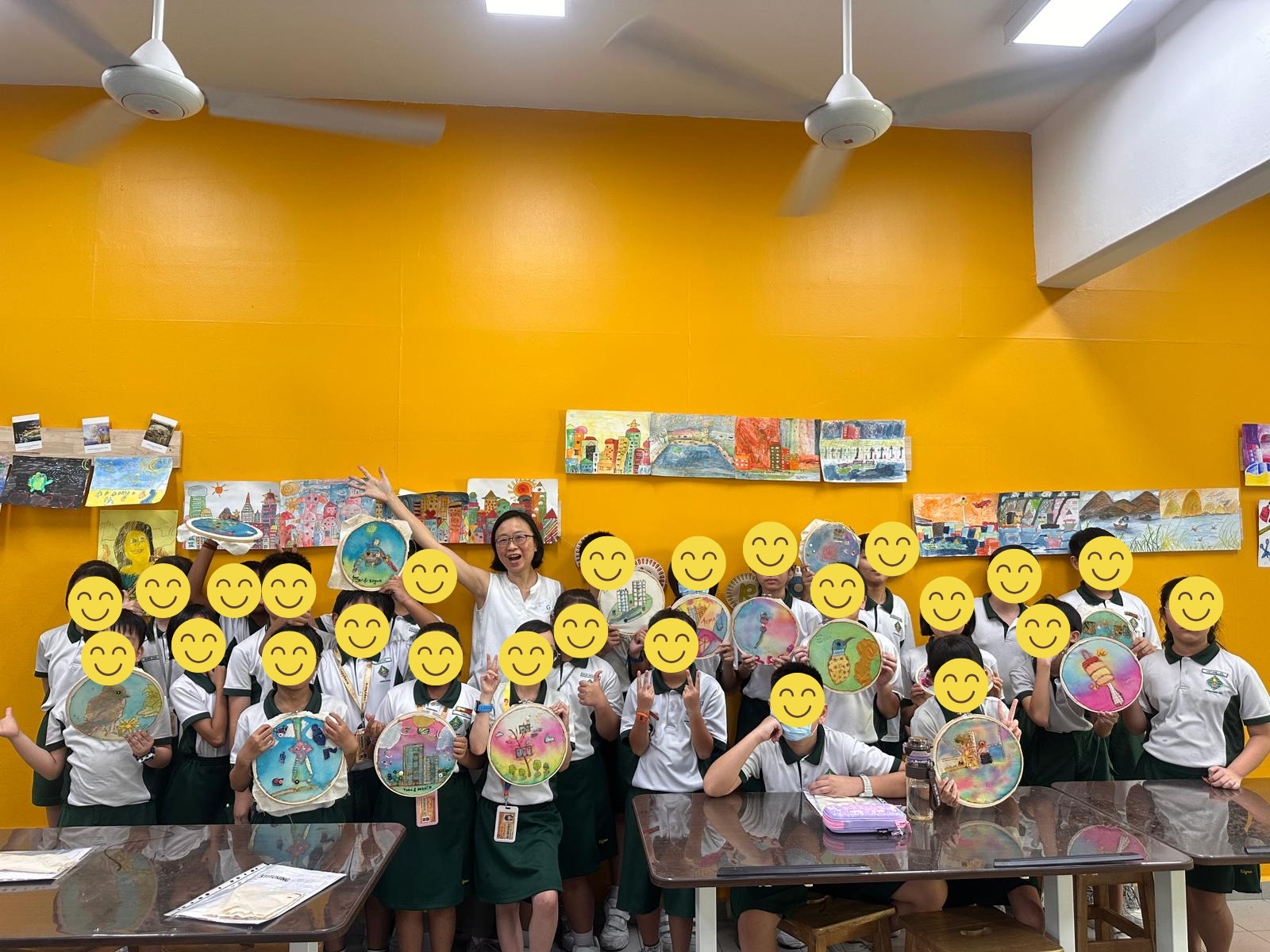
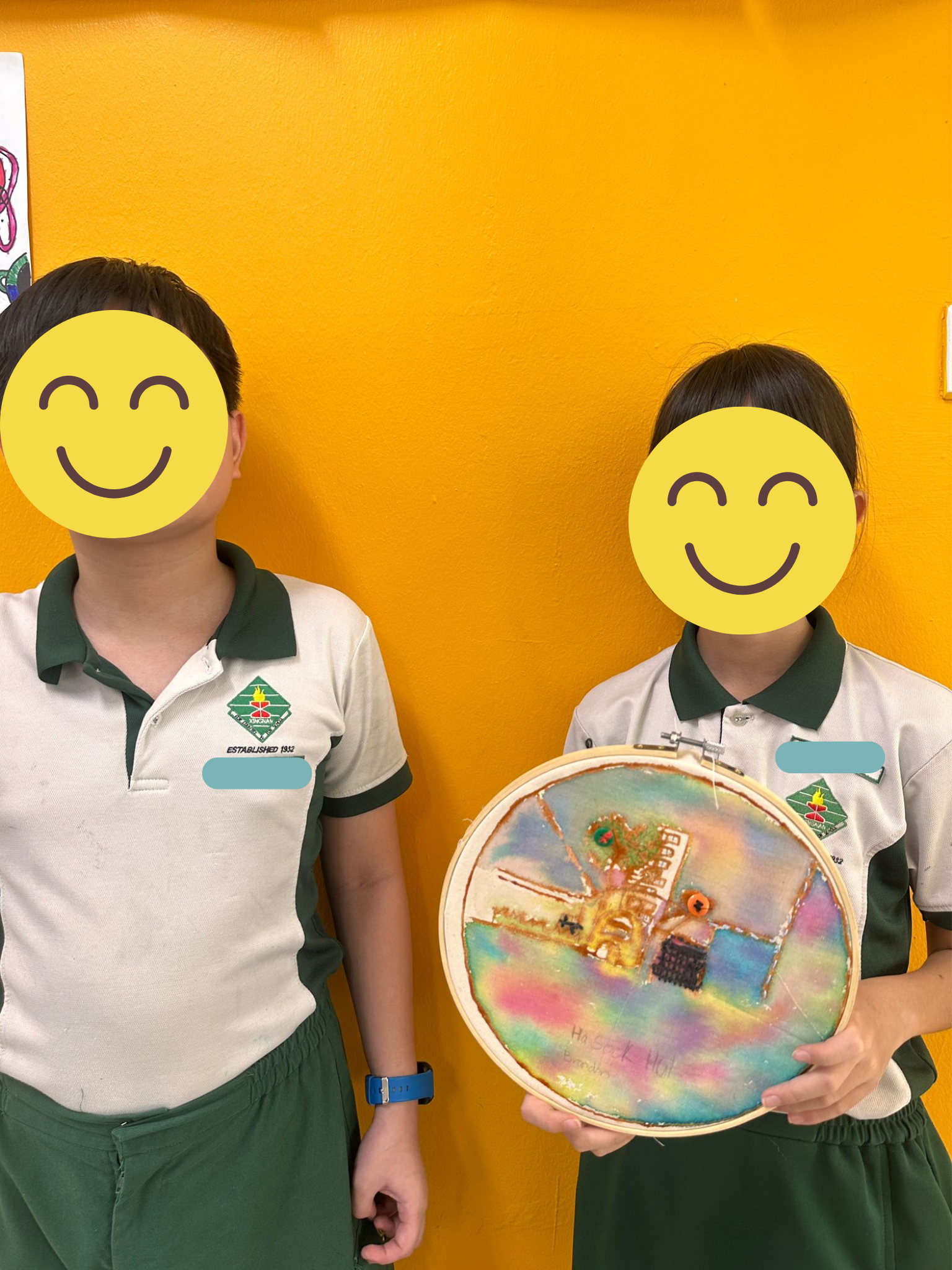
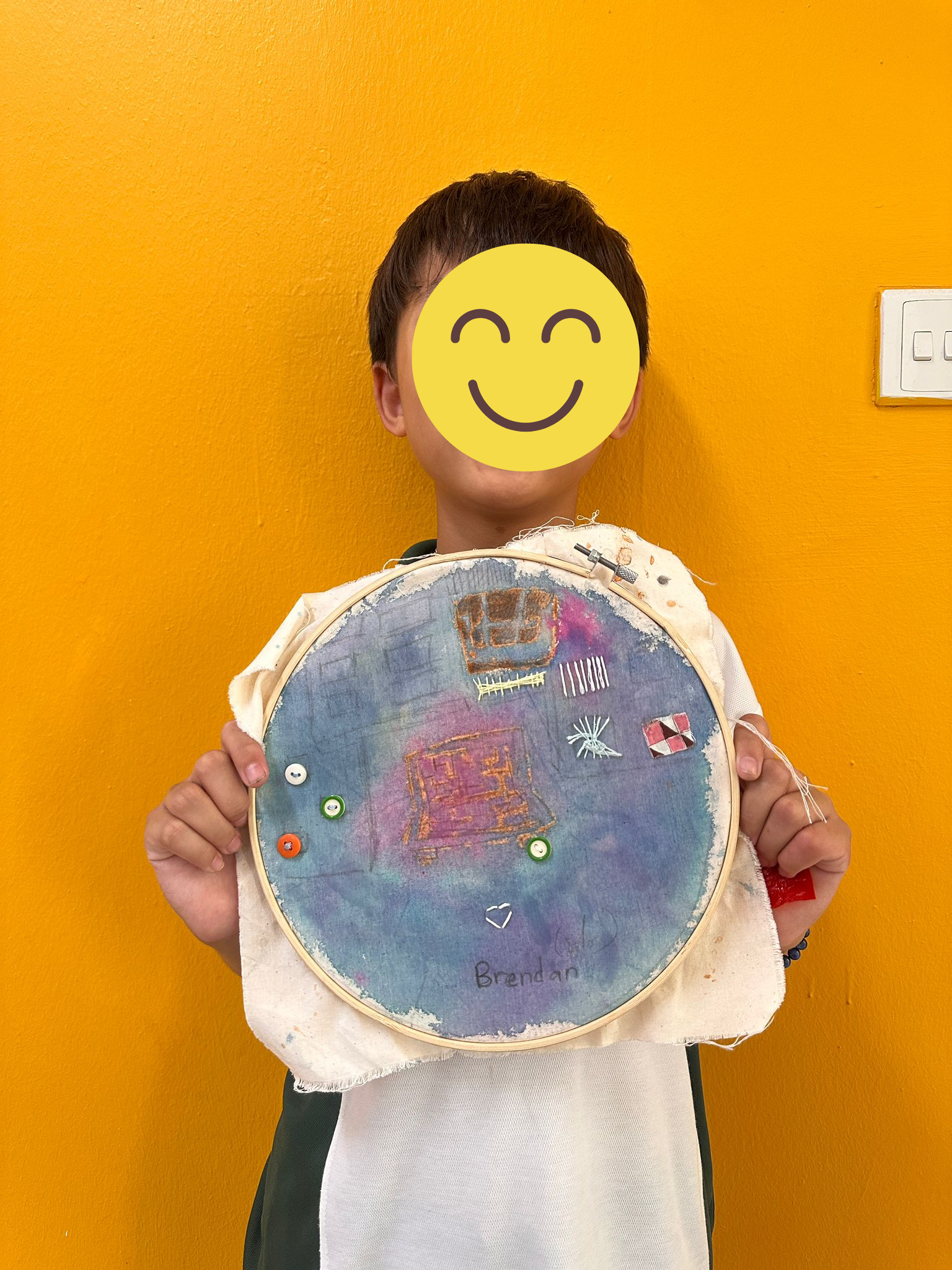
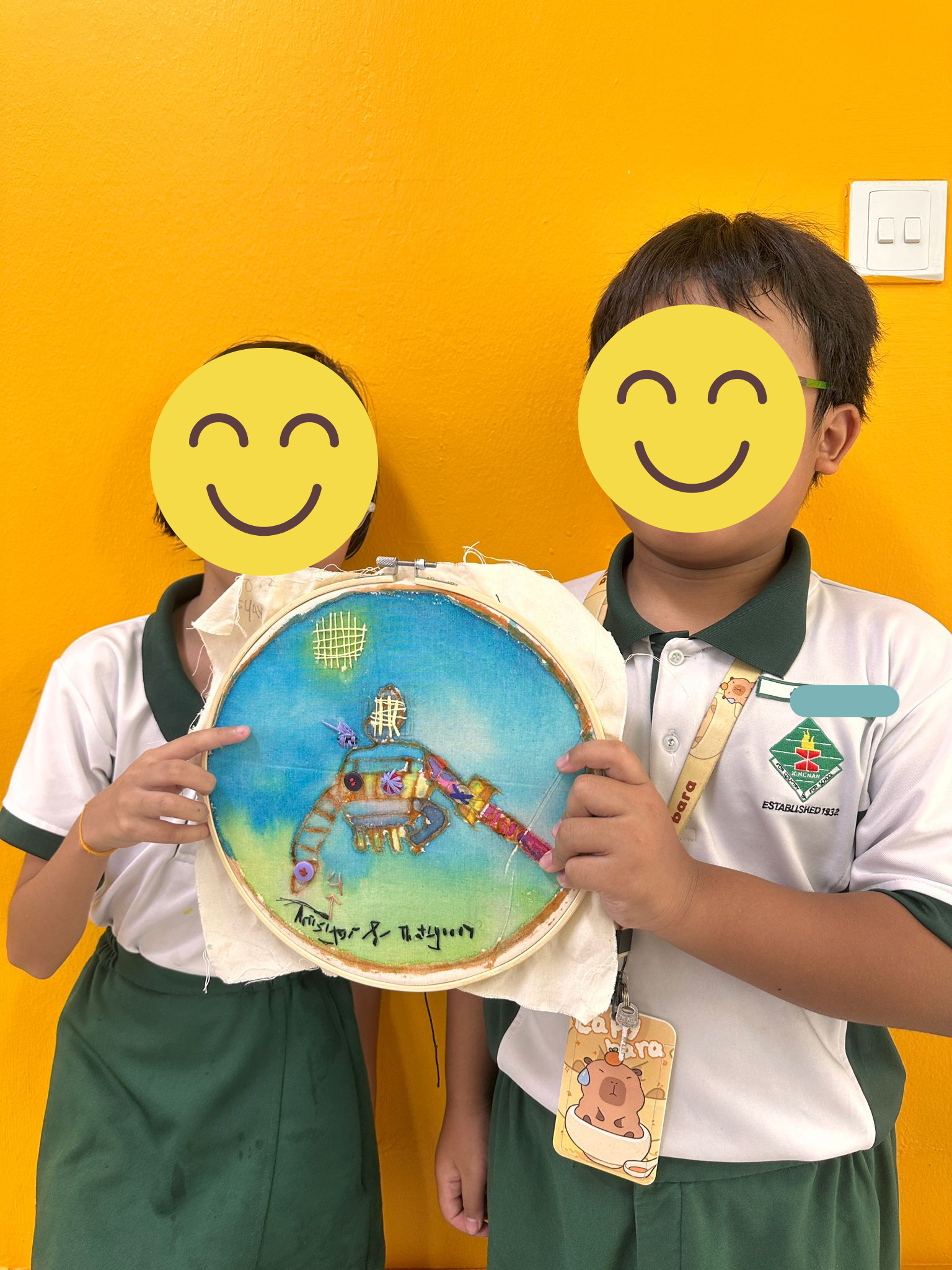
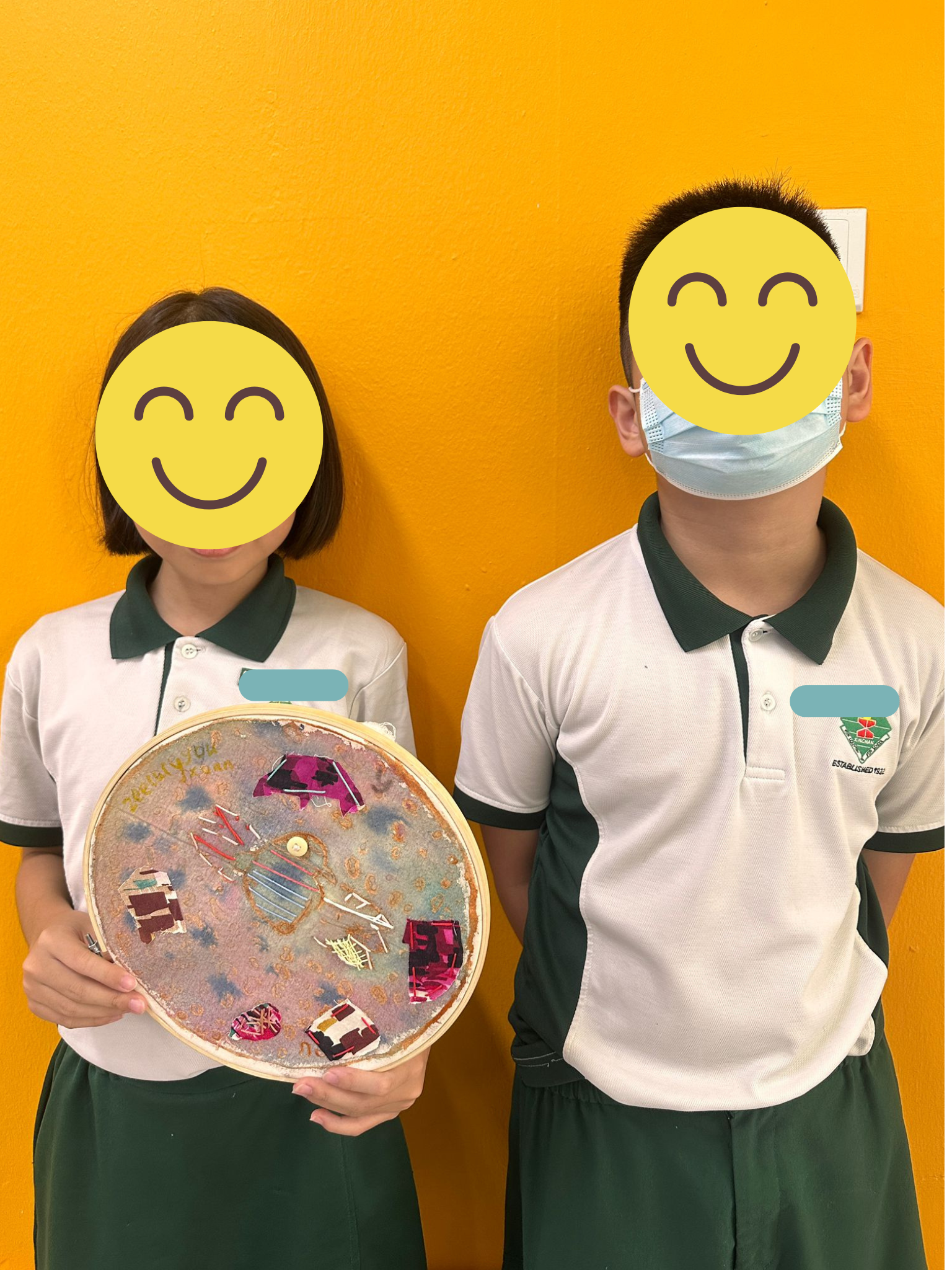
Textile art workshop at a primary school in Singapore
1. Be Realistic About Time and Skills
Always remember the age group that you are teaching to, and with this in mind, plan for short, achievable tasks that fit within the lesson’s time frame.
Sometimes I can get very ambitious and plan for a lot of skills to be learnt but once I have the lesson plan ready, I always ask myself whether the students can learn the techniques in the timeframe allocated. I had initially planned for the children to stitch a pattern as part of the embroidery practice, but after the third lesson I realised that there was no way they could complete it within the given timeframe. This meant I had to change the entire plan that I had to something simpler!
2. Collaborate with the Class Teacher
I was really fortunate to have a passionate class teacher to work with. She enabled me to understand the class dynamics, students’ needs (in particular those who might need assistance), and any specific classroom rules. It was also useful to get an understanding of what types of art and techniques were already taught in school so that I could make references (or even build upon these) and tie it to the art they were creating in the class.
3. Encourage Teamwork
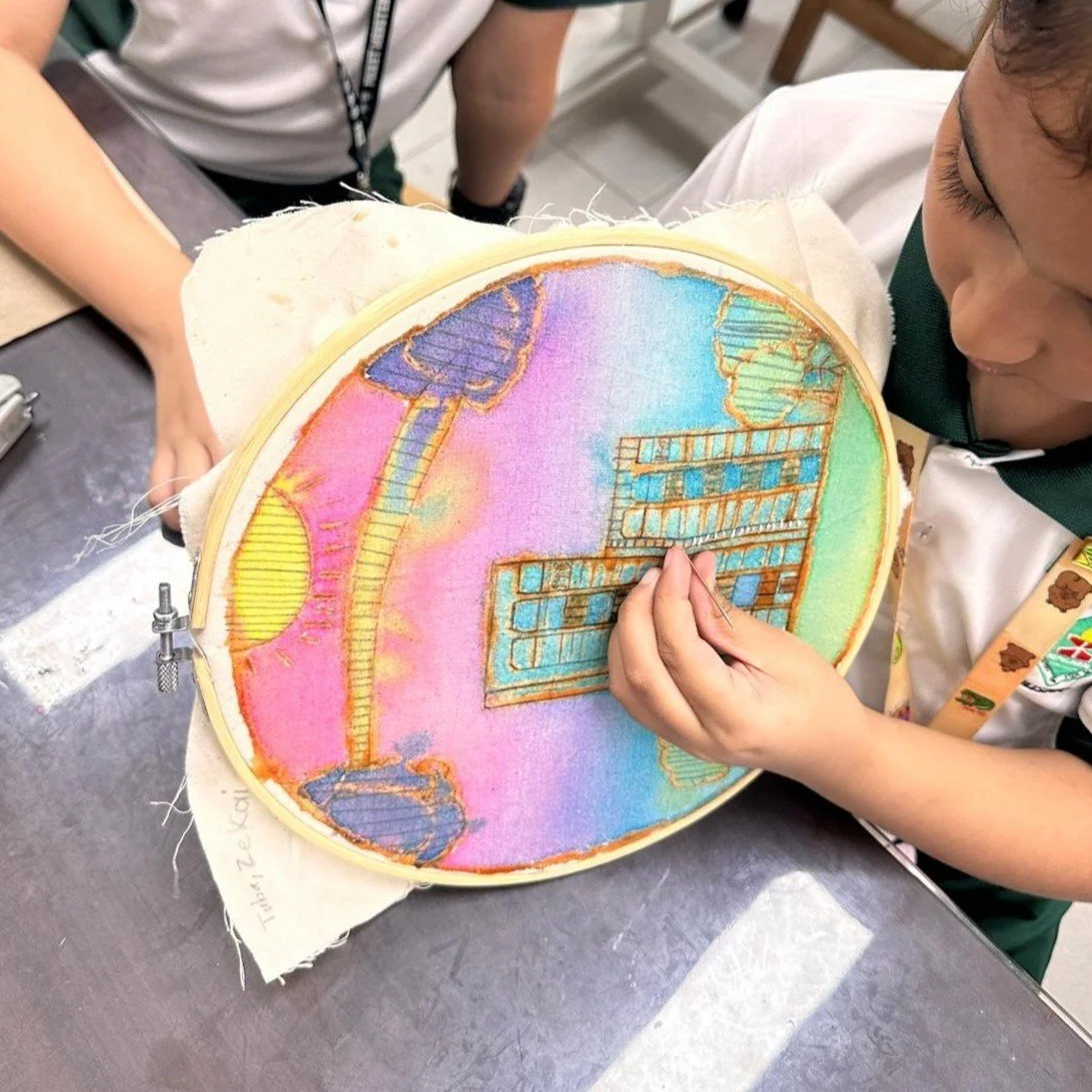
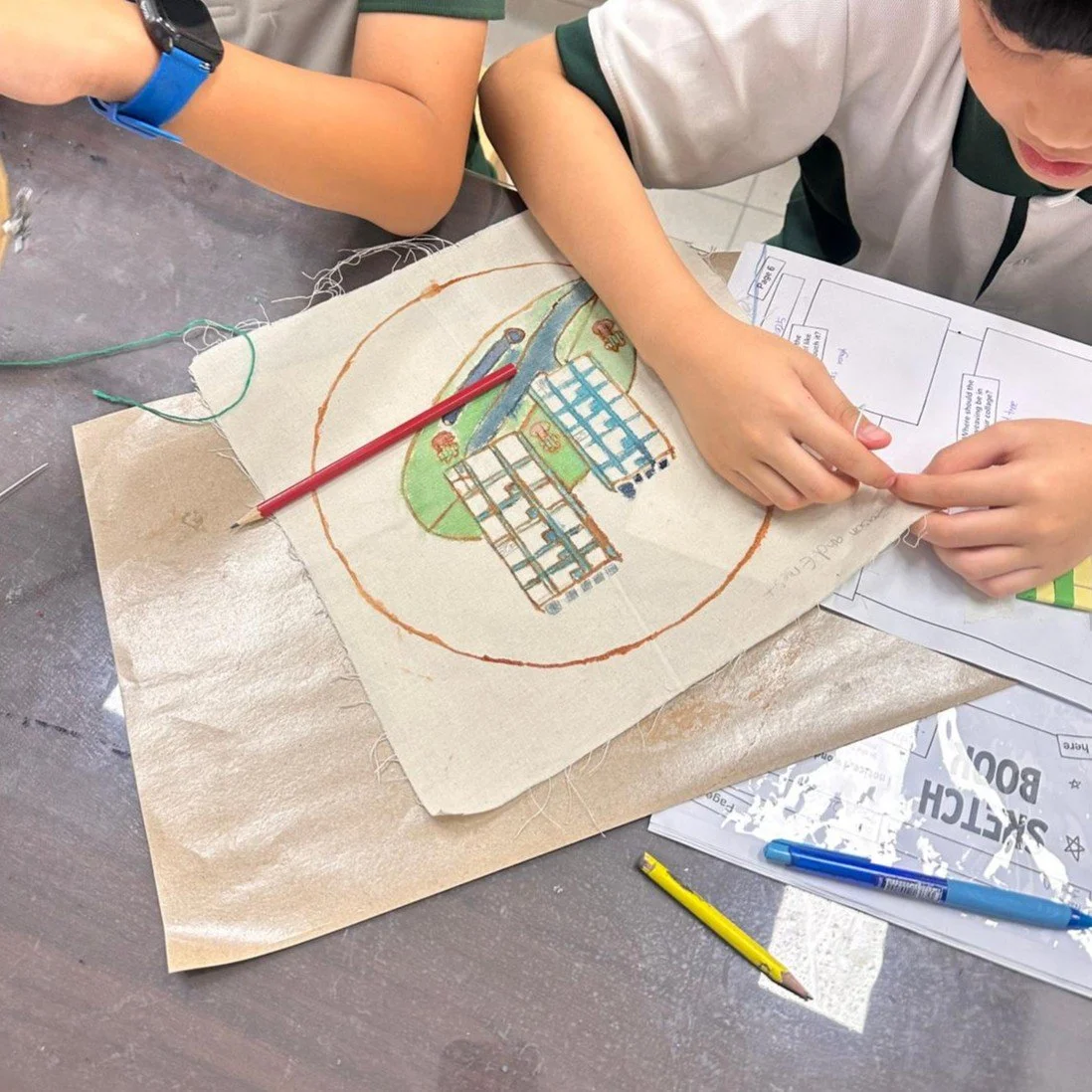
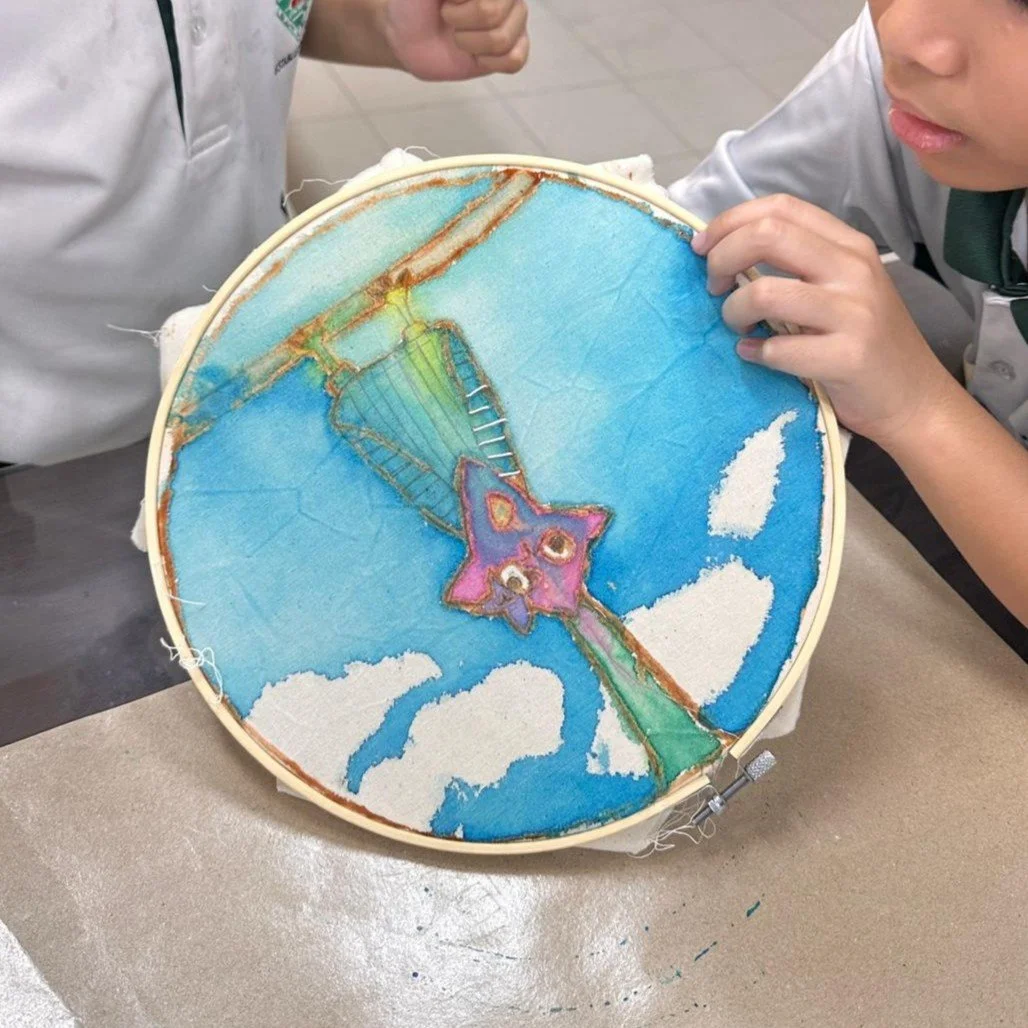
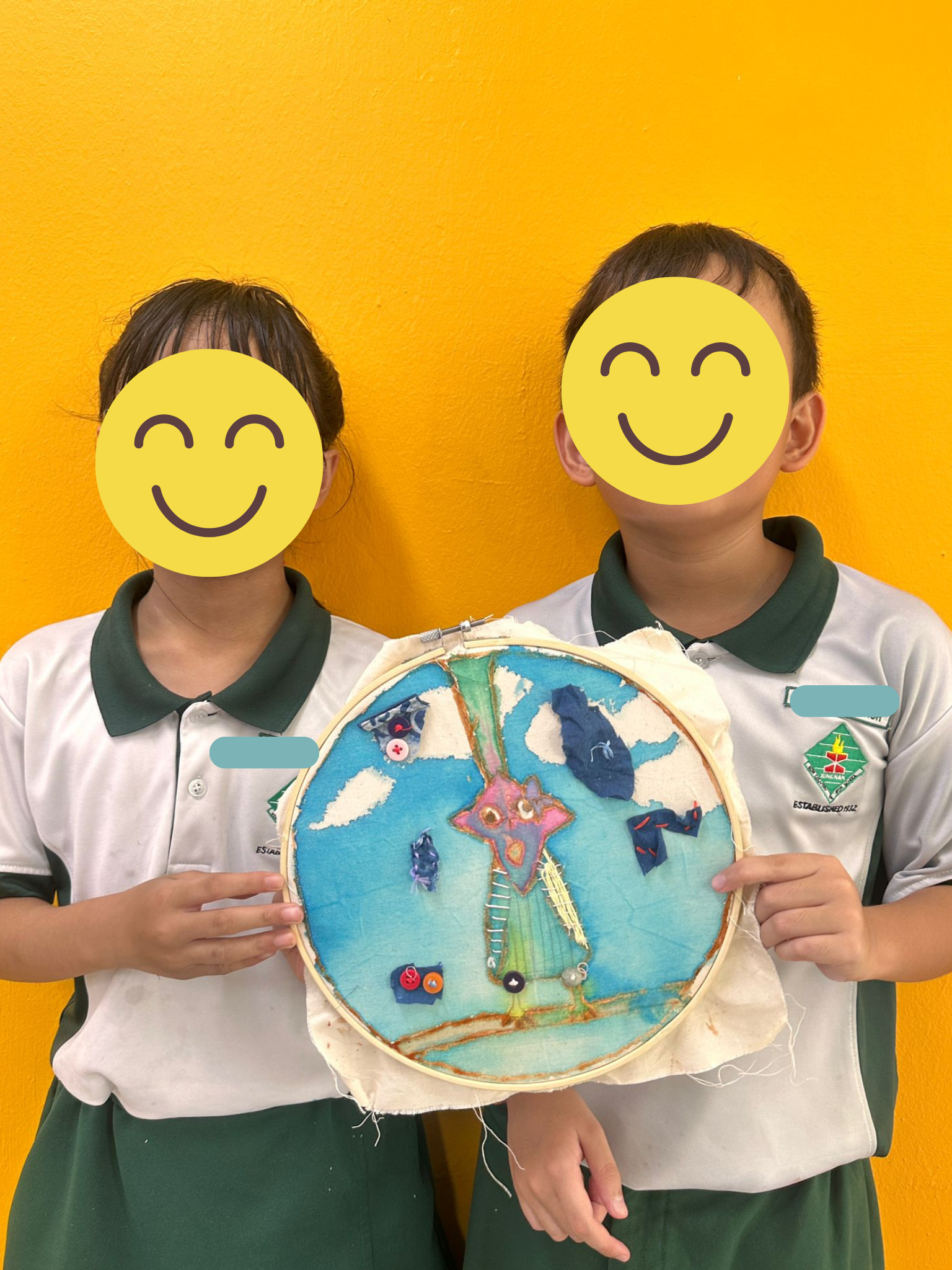
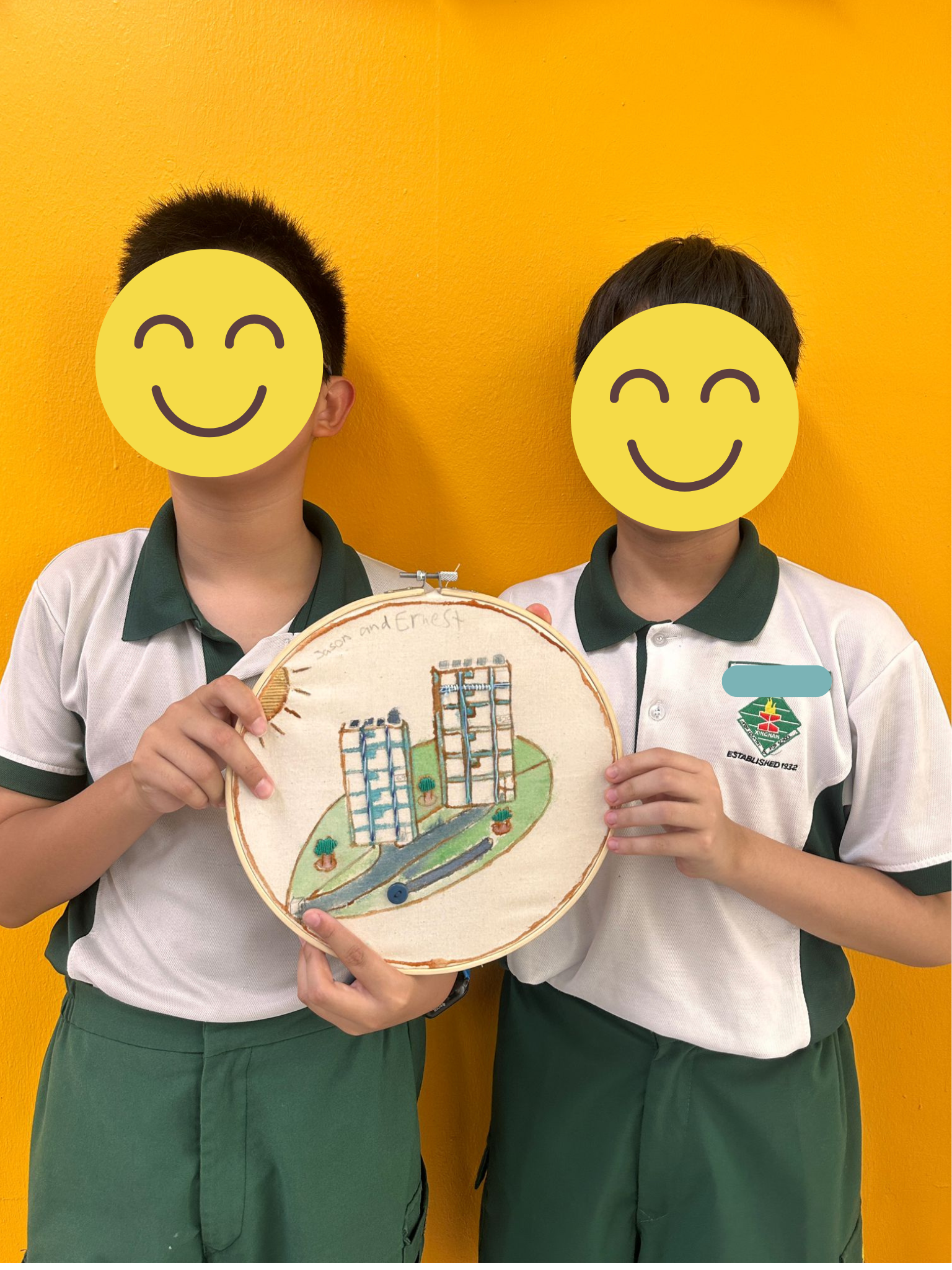
Rather than creating individual artworks, I got the children to work on a common theme in pairs. This enabled them to build communication and share problem-solving. Some of them were unhappy that they were not paired up with their friends, but after the first few lessons, the children warmed up to each other.
4. Make it Fun
I didn’t want the lessons to be rigid, and I allowed the children to explore textures, colors, and shapes with freedom. I got them to choose what they wanted to draw within a set theme, and then create their own art piece together their partners. I also included videos and a game to keep energy levels positive.
5. Use Visual Instructions
Demonstrate steps clearly and repeat instructions often. - We had a visualiser so that I could show the textile techniques to the children. After the first class, I realised that it was also extremely useful to have a video of the techniques on hand so that I could show the techniques again if needed.
Keep your language simple and age-appropriate
I always reminded myself to speak clearly and use simple language. For example, when introducing a topic like basic stitches, I would write key words on the whiteboard, have the children copy them into their sketchbooks, and then revisit those words at the end of the lesson. This helped reinforce their learning and supported vocabulary retention.
6. Prepare for Mistakes
I believe it’s important to normalise mistakes as a natural part of the creative process. I often remind the children that it’s not about being perfect, but about learning through exploration and embracing what doesn’t go as planned. One child could not get the buttons sewn the way I had taught them, but in the end he found his own way of sewing them on. In fact, he had used a technique similar to shisha; I was impressed!
7. Offer Choice and Autonomy
Letting the students choose their materials and colours helps them feel more invested and excited in the classes.
8. Have a Clear Structure
It's helpful to have a clear and simple structure to guide the session. A consistent rhythm like Introduction → Demonstration → Hands-on Activity → Sharing or Reflection gives children a sense of flow and helps them stay engaged. I find that this structure also makes it easier for me to manage time and transitions between activities.
9. Celebrate the Results
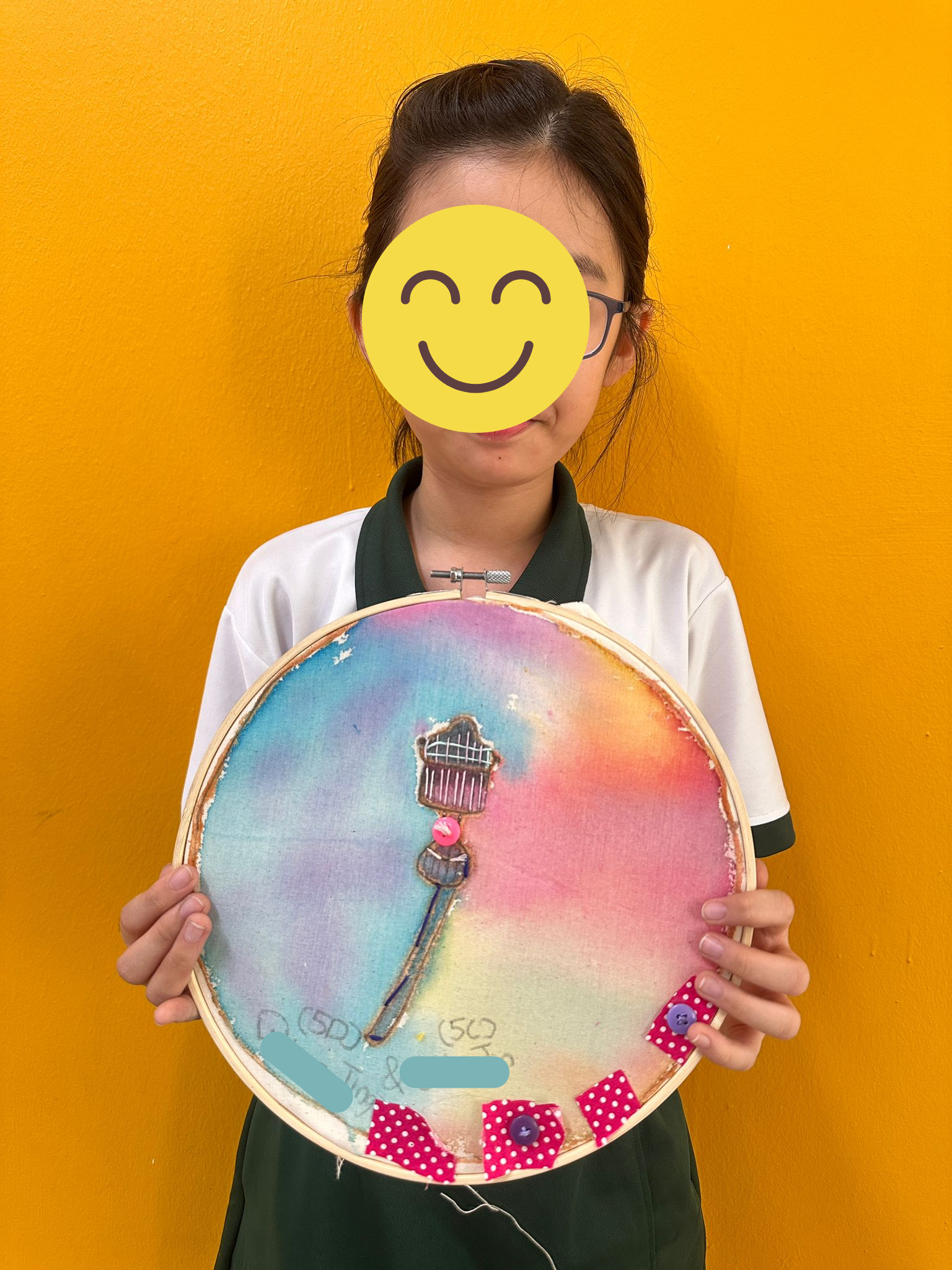
Celebrating the results is an important part of the creative journey. Unfortunately, we didn’t have time for a show-and-tell, but the school showcased the works on the premises—this helps build confidence and reinforces the value of their efforts. Even unfinished pieces deserve recognition, as the focus is on the process, not just the final product.
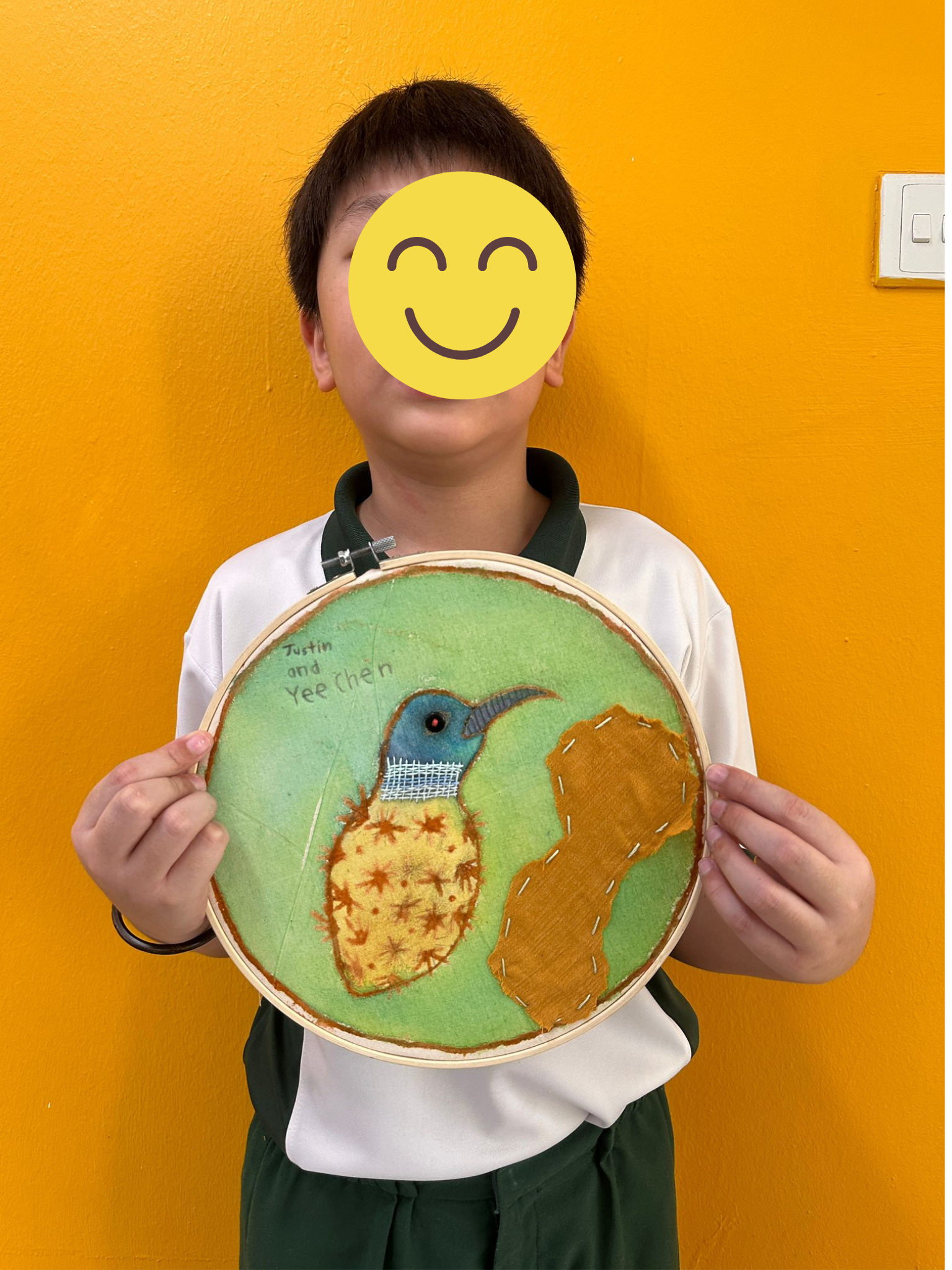
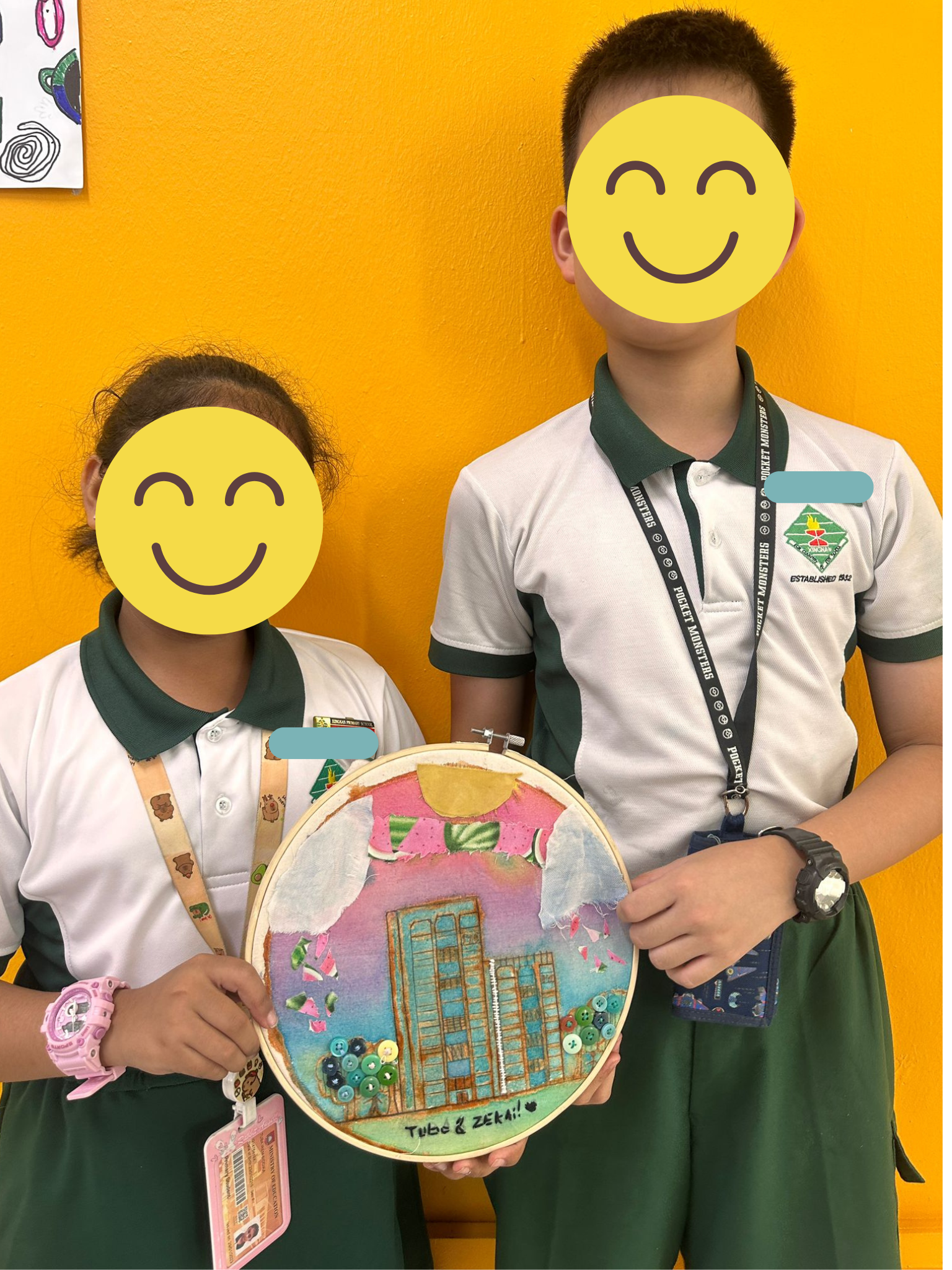
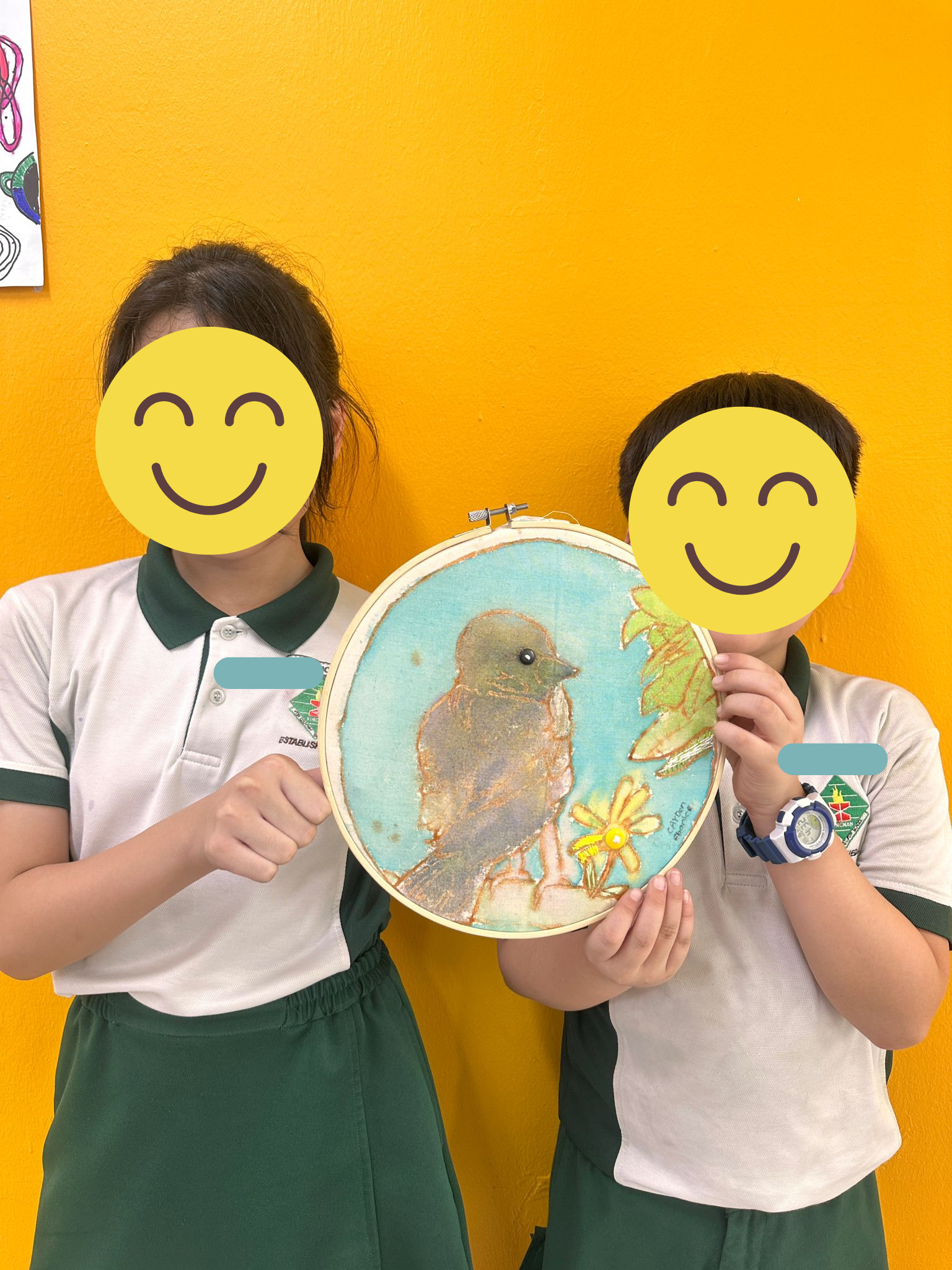
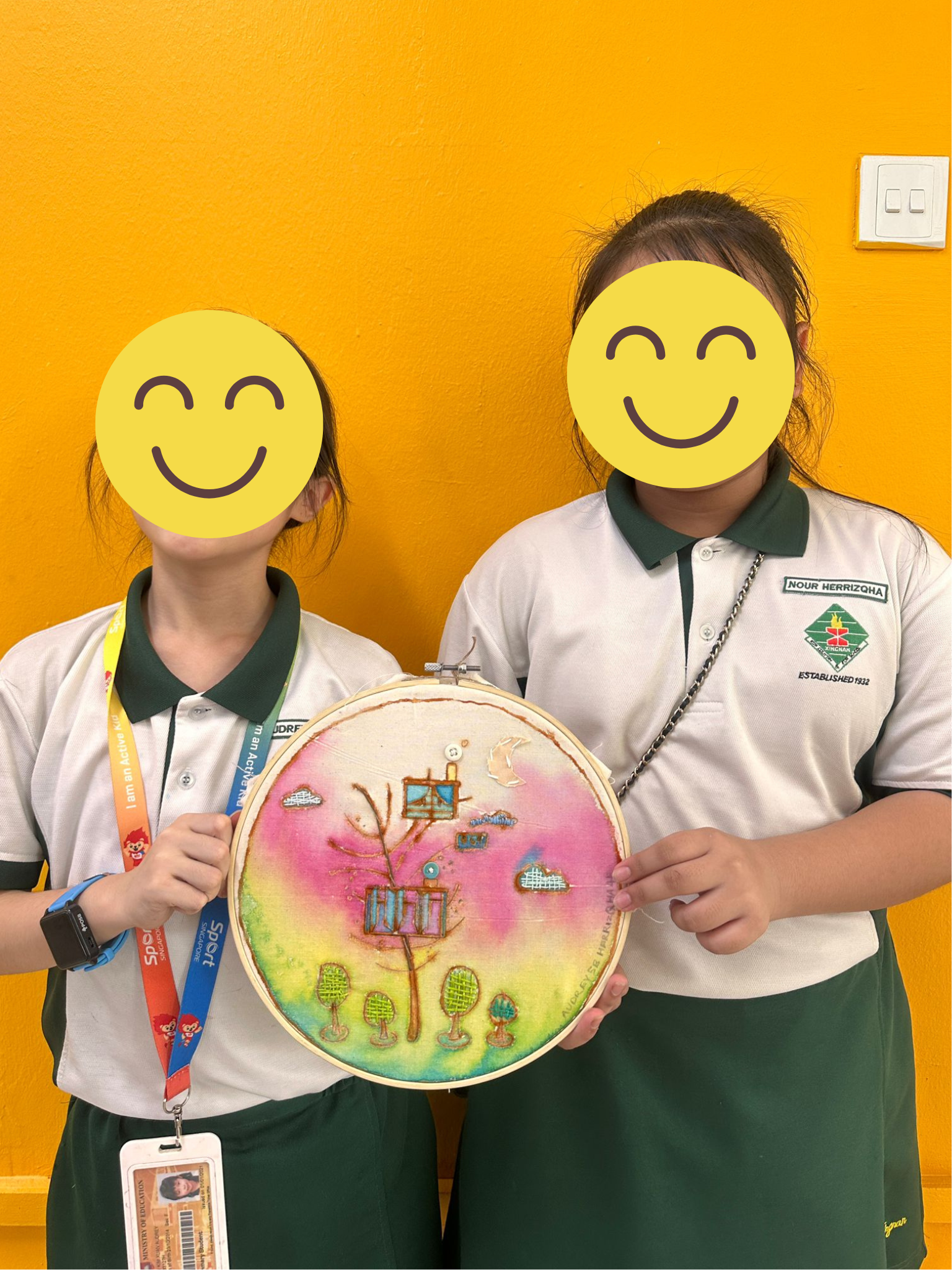
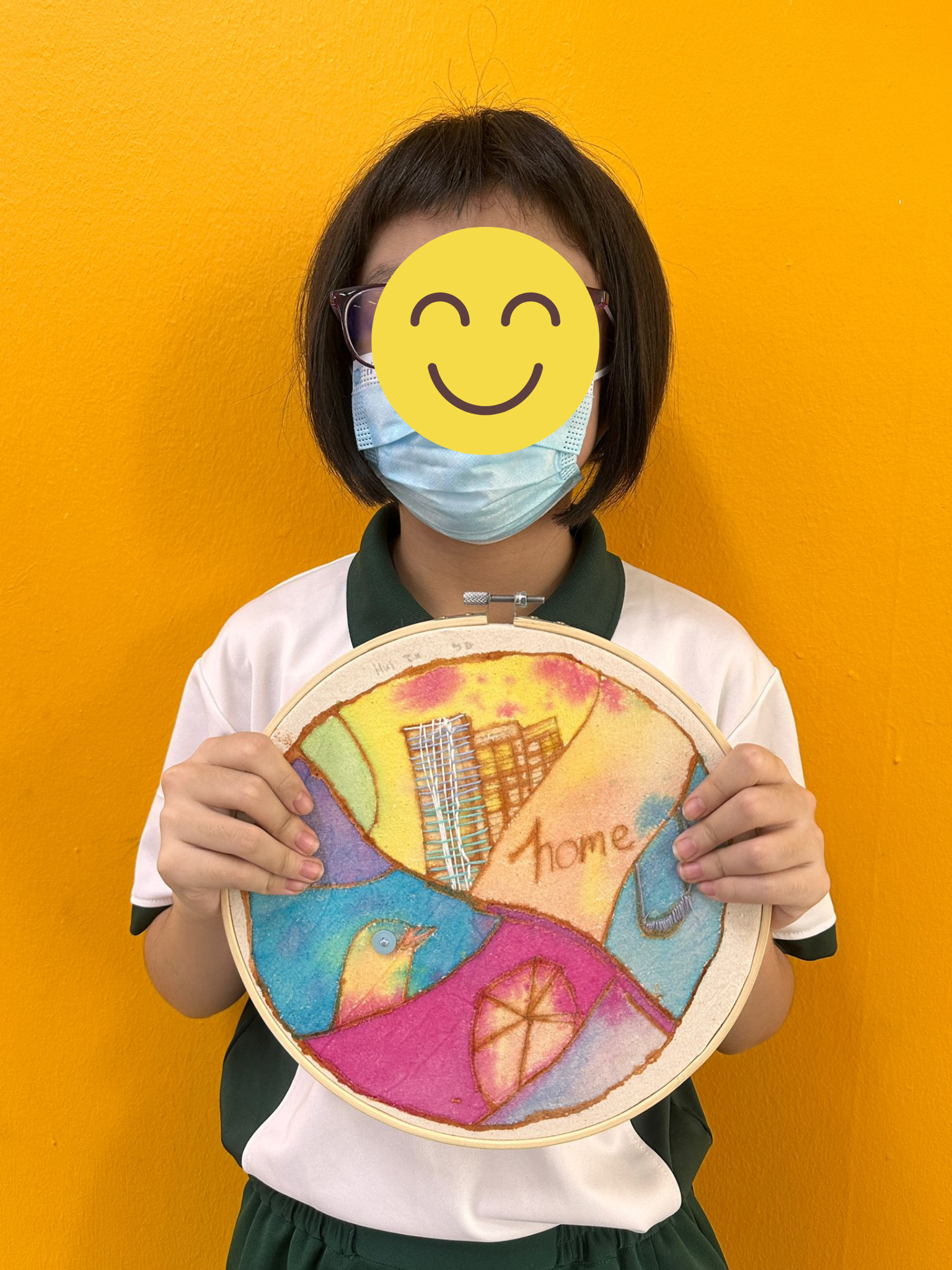
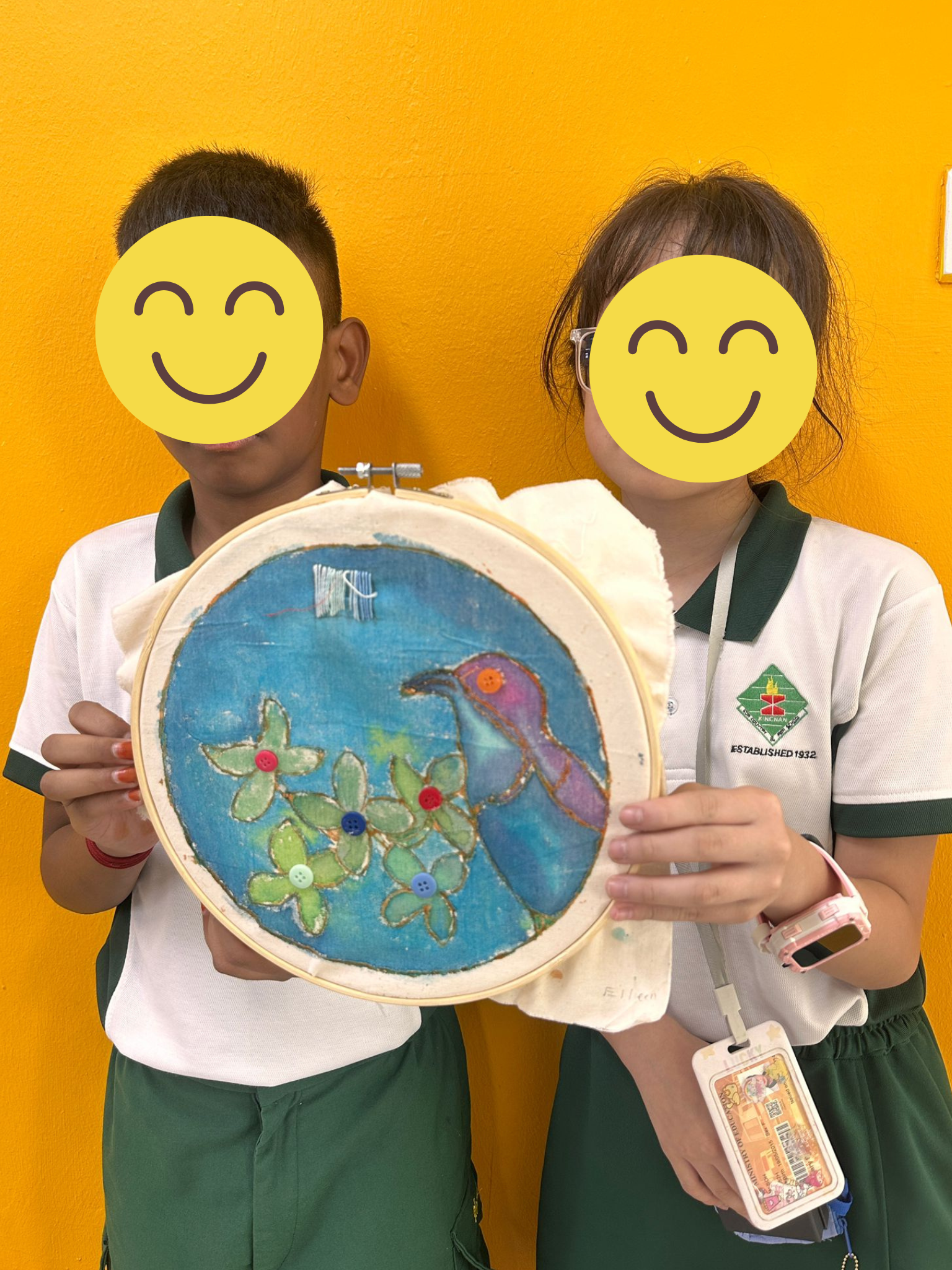
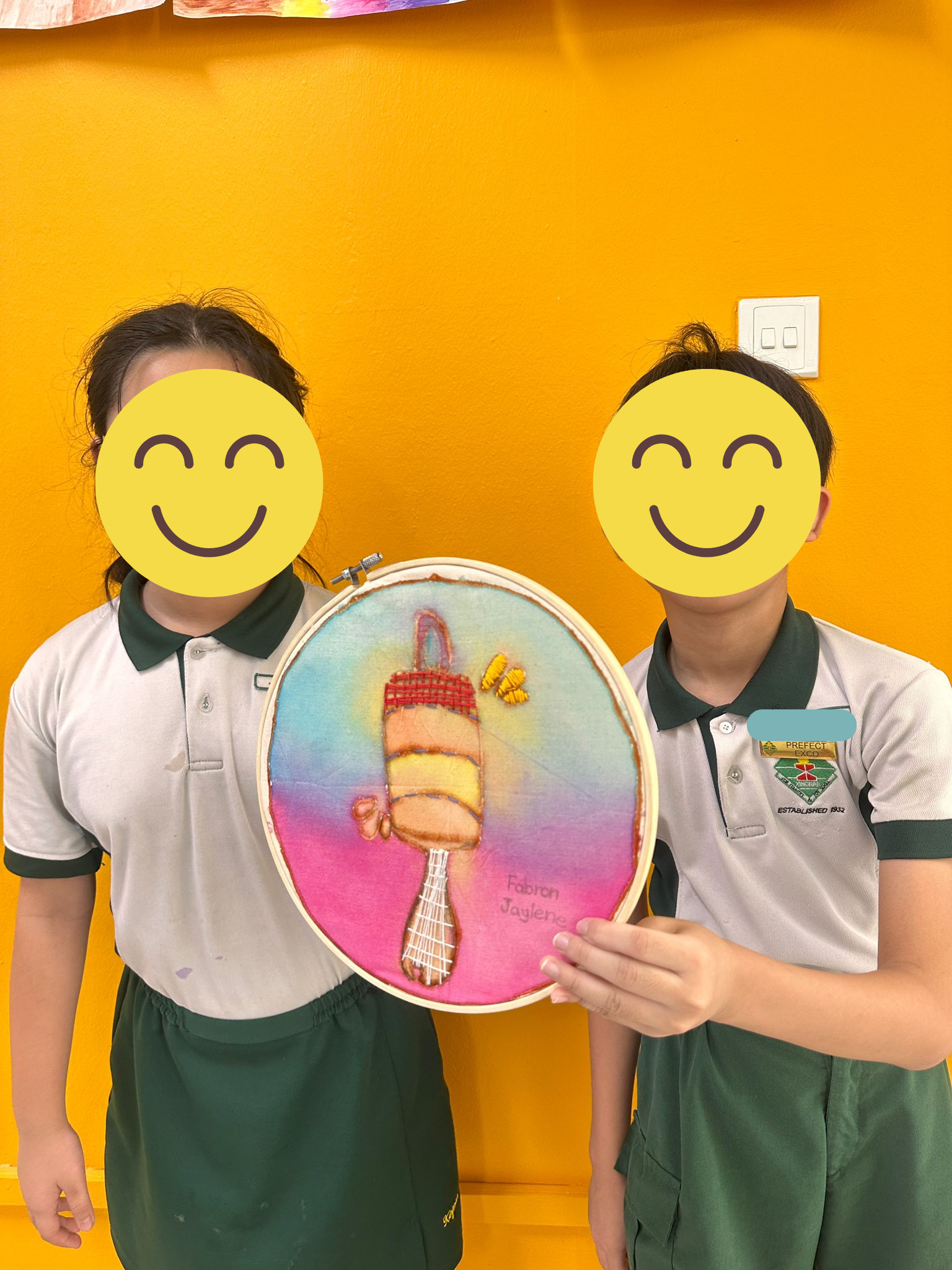
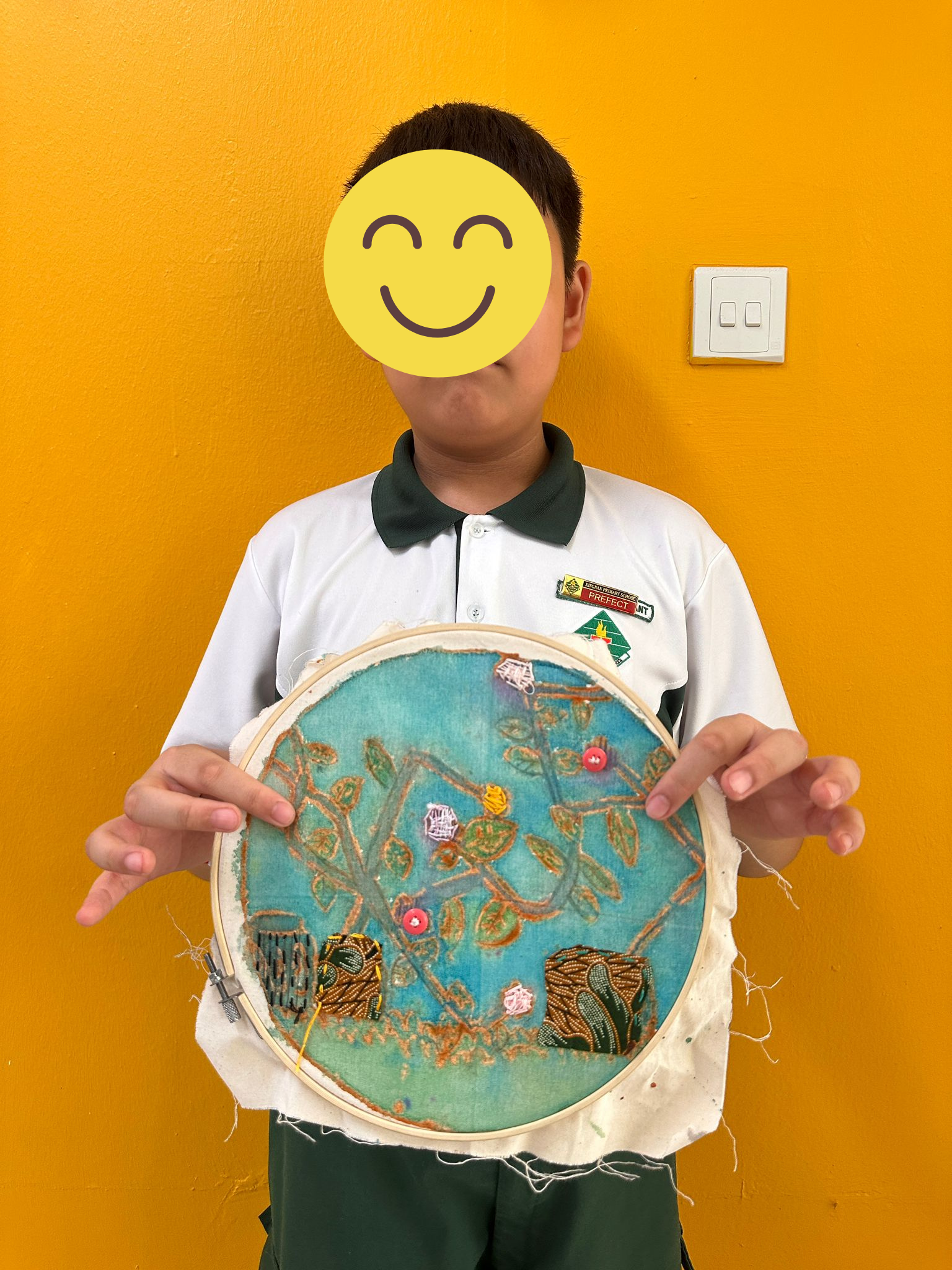
How do you prepare for your textile art classes? What tips do you have?
I would like to thank Xingnan Primary School and National Arts Council Artist-in-School Scheme (AISS) for having me for their textile art programme.