Building Creative Stamina
Creative Stamina - Getting My Creativity Back
For the past year, I have been having this intense pain in my left upper arm. According to the doctor it wasn't a frozen shoulder, but a muscle tear had weakened a particular set of muscles. I have no idea how it happened, but the tear and weakened muscles meant my left arm had a limited range of movement. I was quickly put on a physiotherapy regime, and sure enough, my muscles “remembered” what they were supposed to do. The physiotherapist reminded me that even though my arm had almost recovered, I had to continue “reminding” the muscles of their role in keeping my arm mobile. I had to increase their stamina; muscles that don’t move, will just lose their ability to do so.
What has this got to do with creativity and art? While regular physiotherapy and exercise increases the stamina of our muscles, doing regular creative stamina exercises can do the same for our art. I never thought of stamina being associated with creativity, but it all came together when I heard my partner talking to my child about stamina in football (or soccer, to my American friends).
Stamina is defined as “the ability to sustain prolonged physical or mental effort”
Have you watched a football game? When it comes to football, the players need to last the full 90 minutes of the game on a 125m x 85m pitch, without a drop in energy and intensity, and also be able to quickly recover for the next match.

Stamina and Art
Stamina is "the power to endure"
So stamina is not just associated with physical activity.
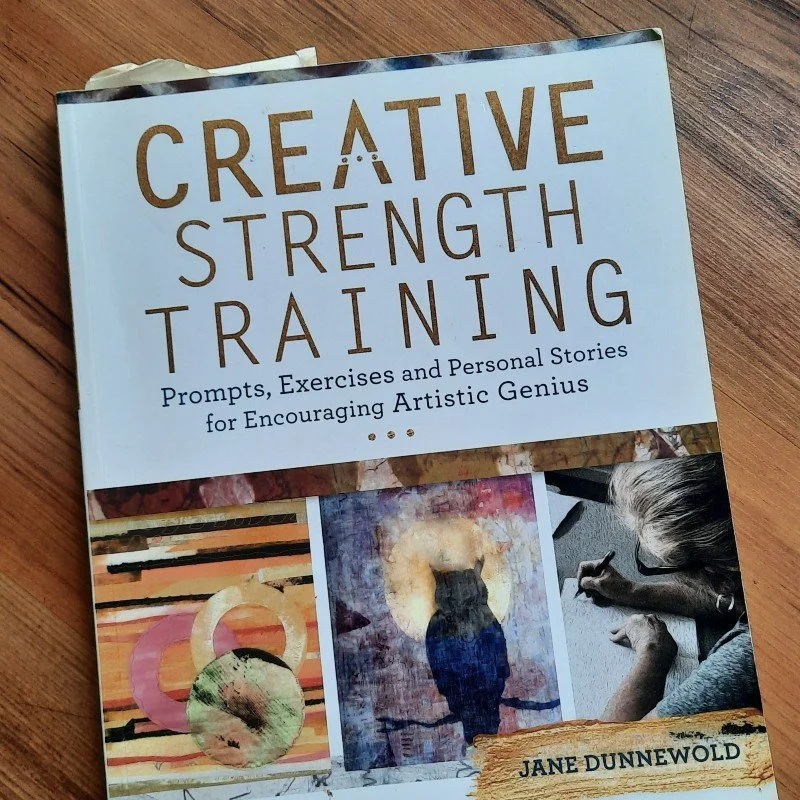
By increasing your creative stamina, you enhance your ability to bounce back from mental blocks, inhibit your fears, and continue making. I recently read Creative Strength Training by artist Jane Dunnewold, and found it extremely helpful. She has structured a series of prompts and exercises to help you move artistically through creative blocks or doubts about your art. You might already be doing some of the activities encouraging experimentation and exploration and action that are in the book, but she provides a step-by-step, and gives reassurance through the thoughts and inspiration of contributing artists. I would like to highlight here that this book isn’t about teaching you how to create works for sale.
Here were my takeaways from the book:
Writing to Assist Making - One activity that has also been recommended by other art books (e.g. The Artists’ Way), is writing. It’s a component that I have resisted for a while, but since being a part of the Connected Artists Club, I have realised how important it is for doing deep dives and explore who I am as an artist, and evaluating my art process. Just by putting down my thoughts has helped free my thought process; it’s been very liberating. I currently have one main art journal for thoughts and separate ones for different projects. It reminds me of my days as a scientist in a laboratory !
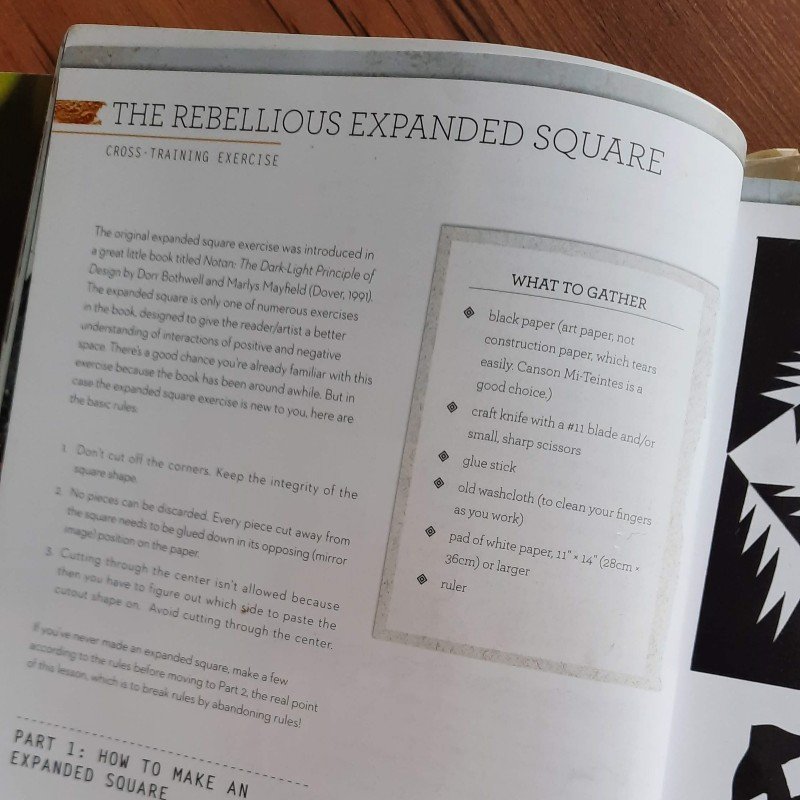
Be the Rebel Artist - Rules are usually what limit what we do as artists, but have you thought of breaking them? What will the result be? Why are there even rules for making in the first place? Give your permission to break these rules. The book has this great exercise called The Rebellious Expanded Square, which was first introduced in 1991 by Dorr Bothwell and Marlys Mayfield in their book, Notan: The Dark-Light Principle of Design. The first part lays down the rules of what you can do to make an expanded square. Once you are familiar with the rules, the next stage is to break them. It was great fun doing this, and it also gets you to realise how much we overthink when it comes making.
The Power of Limitations - Pushing myself more with what I currently have in the studio. I’m finding that as I step out of my comfort zone, I discover more about myself and my art.
Slowing Down - “Learning to Make and Take Time” is one of my favourite chapters of the book. We live in a world where we crave instant gratification, and the influence of social media to make things as quick as possible has pushed us to think likewise. Just yesterday, I was at a Critical Craft Collective discussion, and one point that was raised was the issue of incredulous demands from corporate clients such as near impossible deadlines! Jane Dunnwolde reminds me that putting heart “into the work, never rushing and doing whatever news to be done is the …… way to create art that sings”. So do we want to create art that sings, or art that just falls flat?
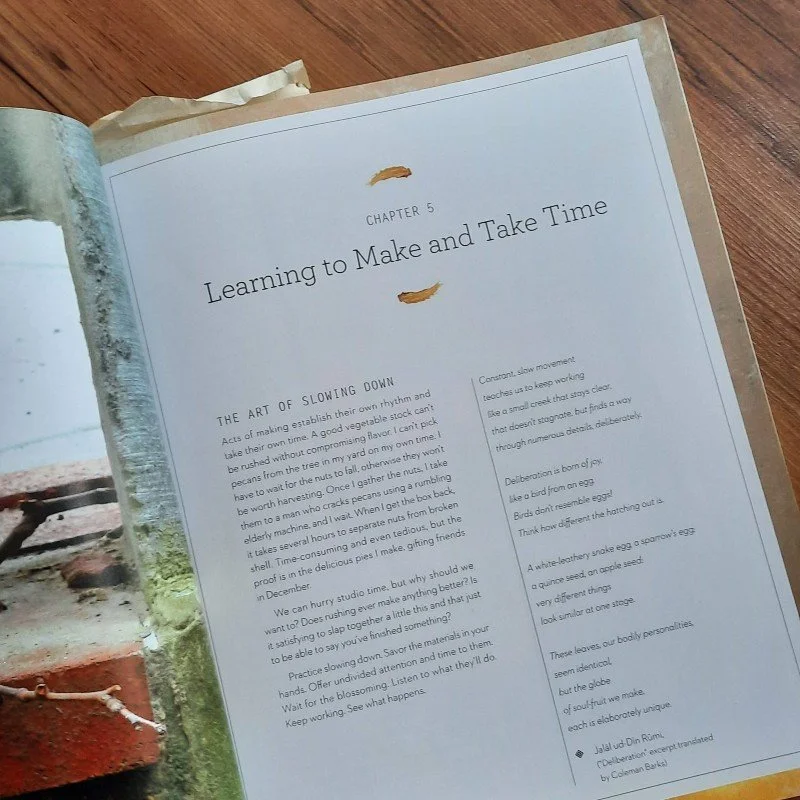
“Acts of making establish their own rhythm and make their own time. A good vegetable stock can’t be rushed without compromising flavour”
These were the few takeaways that I had when I first went through the exercises. I’m sure I will be dipping back into the book now and then during my art journey, when I feel I need that extra boost. What I enjoyed about the book is how the exercises can be done as projects on their own. Dunnewold says you don’t have to start from the beginning (although that would be the best) but you can choose the exercises that resonate with you. I think I’ll be doing that when the time comes!
Have you heard of Creative Stamina?
What books or exercises have helped you?
Read more…..