The Importance of Sampling in Textile Art
Sample, sample, sample!
This is the mantra I have before I start any project be it a piece of artwork, a pattern, or if it is trying out a new technique. It is always important to do a test first, even if you can visualise what it looks like or are very skilled in your craft. I shared why it is important in my original post here.
Sampling enables textile artists to make the most desirable choice of threads, type of stitch and materials in the art work.
Things can go wrong!
Yes, things can go wrong, and it’s advisable to keep the wrong bits to the minimum so that it helps our sanity. It not only saves time, but also money. Imagine embroidering something on your favourite garment or sewing half way through an art piece only to find out that it is not turning out the way you wanted.
From sketch to stitch
What you see isn’t what you get …. sometimes
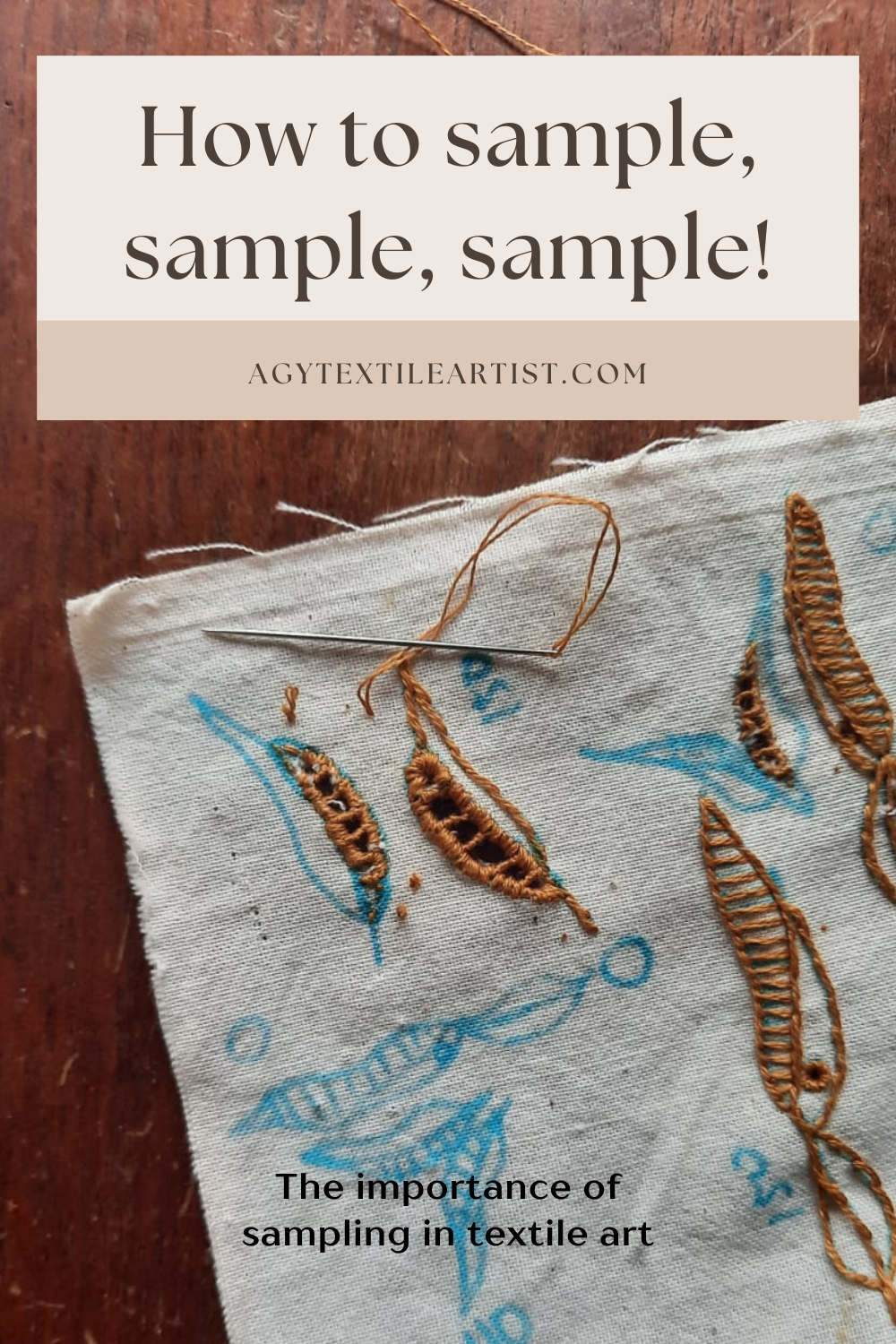
I’ve been doing a sample for a Broderie Anglaise pattern that I am planning to put in a project.
When I sketched out the initial pattern for this, I had ideas of what the final work would look like and the Broderie Anglaise stitches that I would use. I started off with the design being 110% of the original sketch.
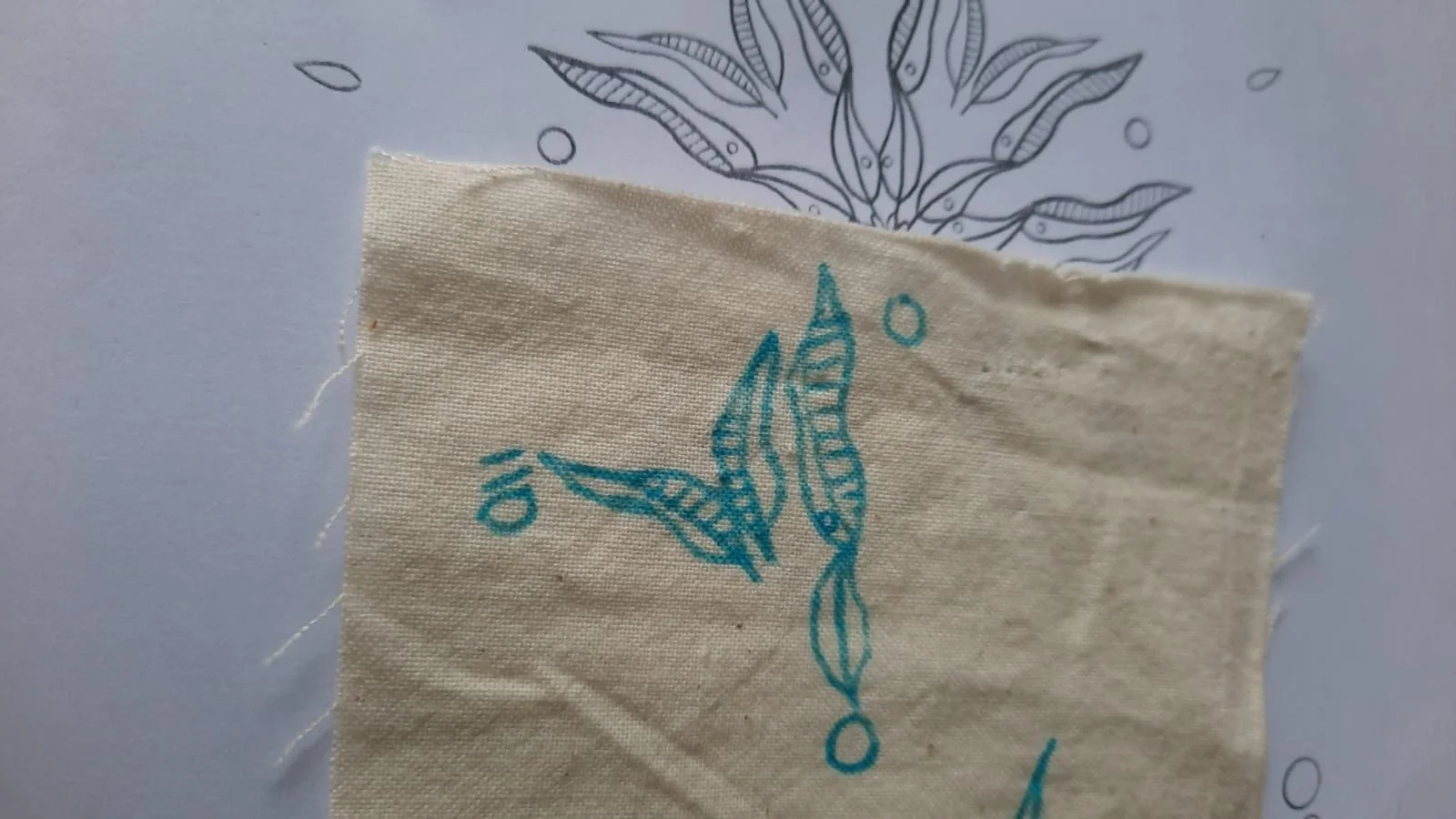
Testing the size needed
I noticed two things - see image below:
When the design was transferred to fabric and I start to stitch the bars and cutouts, it was impossible to stitch without the design breaking apart! I think the amount of poking with the needle and thread diminished the integrity of the fabric.
It was impossible to sew the eyelets - they were just too tiny!
It was then that I decided to expand the size to 150% of the sketch on the same sample.
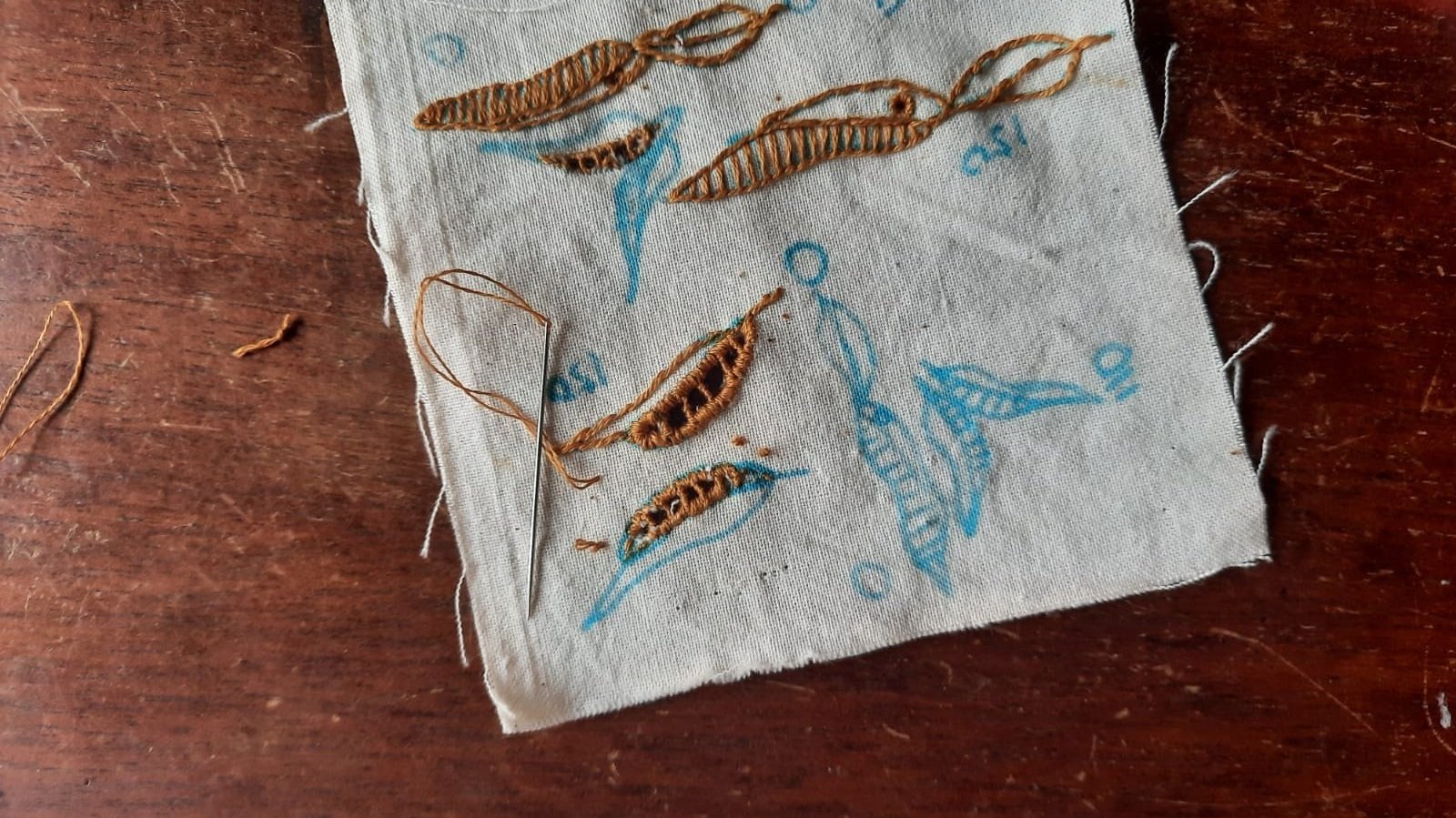
My sampling for a textile art project
I am very happy with this size of the design: the eyelets are visible and were easier to sew, and sewing the bars and cutouts didn’t break the fabric. The next stage was deciding, okay, do I use single or double-stranded embroidery thread when stitching the design, especially when it comes to the bars and cutouts? Once I stitched this out with both single and double-stranded embroidery thread, my next decision is which one do I like better? More, or less bulk in the embroidery?
I can’t imagine going through this process on the actual project, and ending up frustrated.
Avoid Frustration: Test Before You Stitch
Testing different options before starting the final project saves time, reduces frustration, and helps you make confident creative choices. If you’re working on Broderie Anglaise or any embroidery technique with cutouts, take a few moments to experiment with thread thickness and stitch density on a sample piece. It’s a simple step that makes a big difference in achieving the results you want.
Have you ever skipped this step and regretted it? Or discovered a favorite technique through testing? I’d love to hear about your experience— do share with me in the comments.
The Bigger Lesson in Small Tests
Sampling goes beyond merely preventing errors in textile art; it's a principle that you can use in various aspects of your life. Whether it’s trying out colors and threads in embroidery or making minor tweaks before a major choice, I believe that investing time in experimentation aids me in perfecting my method, boosting my confidence, and preventing unwarranted frustration.
We often assume we know how events, big or small, will unfold, yet reality can take us by surprise. Just like in stitching, where the fabric, thread, or technique might behave differently than expected, life’s plans don’t always unfold as we imagine. Experimenting, modifying, and perfecting throughout the process aids us in discovering what genuinely succeeds—whether in creativity, profession, or self-improvement.
Therefore, the next time you feel inclined to forgo sampling, consider it to be more than merely a practical measure. It's a method to welcome curiosity, improve decision-making, and ultimately produce something you can take pride in—on fabric and elsewhere.