
Free Motion Embroidery Workshops in School
Just before my first solo exhibition, I had the opportunity to teach basic free motion embroidery to a group of teenage students at an international school in Singapore. I had an enjoyable time, not least because the students had voluntarily signed up for the class and were keen to take on the challenge of learning a new craft!
Designing a workshop that caters specifically to this age group requires careful planning and creativity. I’ve decided to pen down some notes on what makes a good session, and I can come back to this in the future and see what needs improvement.
PS. I used to write all this in notebooks but found I can never find it when I need it. Digital for this one then!
PSS. I think these notes apply to any type of sewing / craft-related workshop.
Manage expectations
Set clear expectations right from the start, and this means with the teacher-in-charge. Have a call with the school and understand what they would like to engage you for (is there an event, a theme or are the students expected to produce something at the end of the class?), and let them know what you can realistically deliver. It is very important to set these clearly so that there is no misunderstanding. Nothing is worse with the school having a bad impression of you!
Don’t forget to manage the expectations of the students too. Teenagers may have varying levels of experience with the sewing machine. Set clear expectations at the beginning of the workshop, emphasizing that it is okay to be a beginner. It’s also important to encourage an atmosphere of learning and growth, where participants feel comfortable asking questions and seeking help.
2. Health & Safety First
Managing expectations means understanding:
a) how many students can you handle ?
b) can you teach students with a wide age range within the class ?
Keeping the participants safe is paramount. I generally limit the number of participants to maintain a low student-to-instructor ratio (1:5), ensuring that each teenager receives proper guidance. Other than the main instructor (that’s me!), I have assistant trainers to help out - remember to brief them in advance of the workshop on the programme so that they are familiar with the session.
Don’t forget that it is important to enforce strict adherence to safety guidelines, including the proper use of sewing machines and handling of sharp tools. State these clearly at the beginning of the lesson and before the students start using the machines.

3. Start with the Basics
Many teenagers may be new to using the sewing machine - have this determined with the school beforehand. Begin the workshop with a comprehensive introduction to the sewing machine, teaching them the basics of setting up it up, choosing suitable fabrics, and using the appropriate thread. It’s always useful to have a set of worksheets and practice templates prepared in advance, as well as a visualizer to show the set up process, or a video in case the visualizer is not available at the school. I find it useful to go through the set-up with the class step-by-step rather than demonstrate the entire thing before they give it a go.
4. Provide Creative Freedom
It is useful to provide samples of the final product / art piece according to the theme assigned by the school. However, teenagers crave artistic expression and the opportunity to showcase their individuality. Encourage them to experiment and think outside the box when creating their designs. I took the class through a brainstorming session, and the students then used the brainstorming to further their ideas.
5. Prepare for any Mishaps
Anything can go wrong during a free motion embroidery class, so it’s good to prepare in advance!
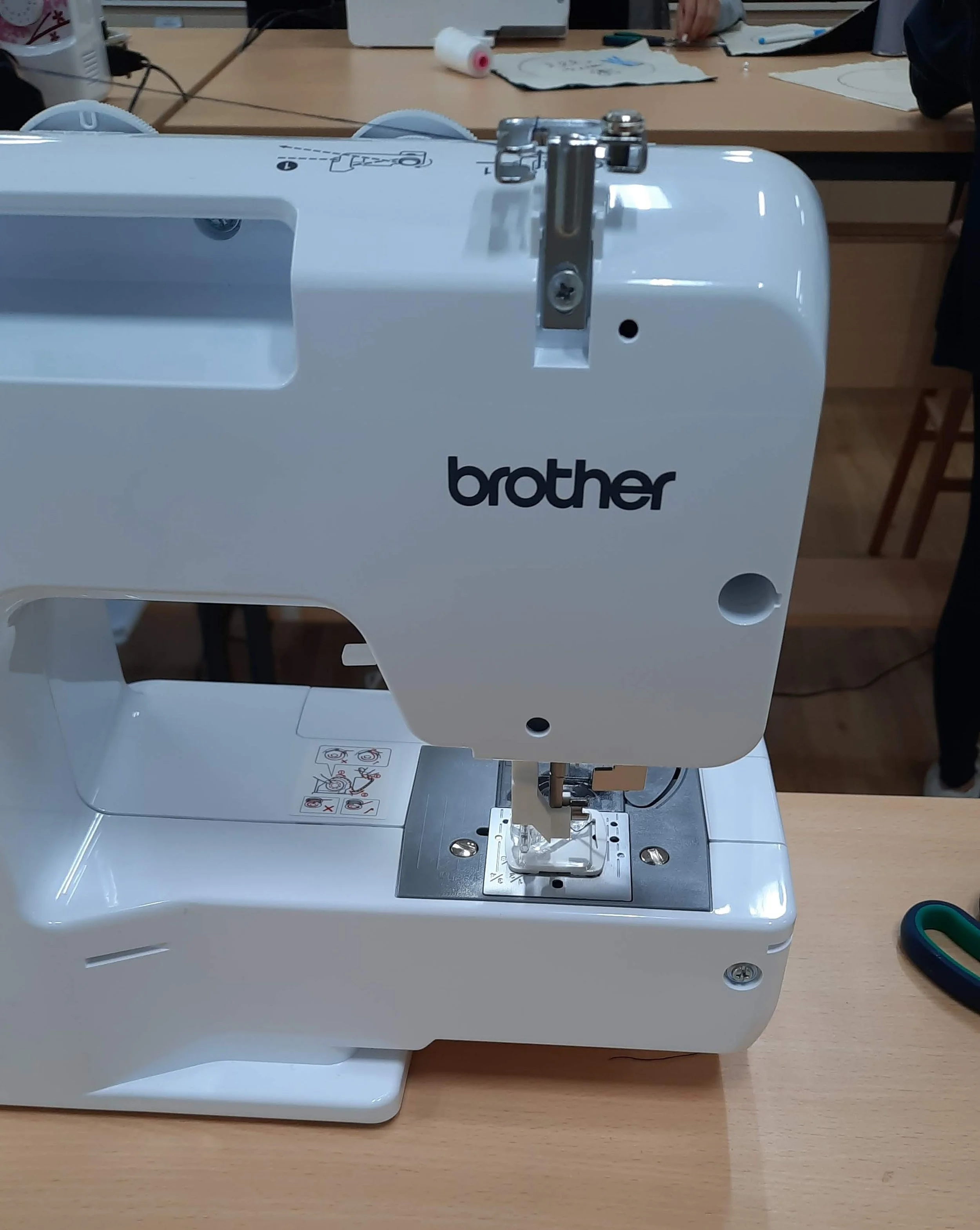
a) Working sewing machines - make sure to ask the school to test, clean and oil the sewing machines beforehand to minimise jams during the workshop. It can get frustrating for the students (and instructors!) very quickly if the sewing machines don’t work properly.
b) Right needles and threads - if the school is providing the supplies, make sure you inform them which needles and threads to buy so that the class will run smoothly.
c) Prepare practice templates in advance - have a pre-drawn template that will help the students focus on practicing the free motion embroidery. It can be as simple as squiggles and writing their name. The students will get a sense of satisfaction once they have finished the practice, and can then move onto the next stage of the class with more confidence.
d) Hoops or no hoops? Decide in advance if you want the students to fiddle with embroidery hoops or not. This really depends on how much time you have, the age of the students, and how confident they are with using the sewing machine. For absolute beginners, I use thicker fabric (felt), or stiffened calico.
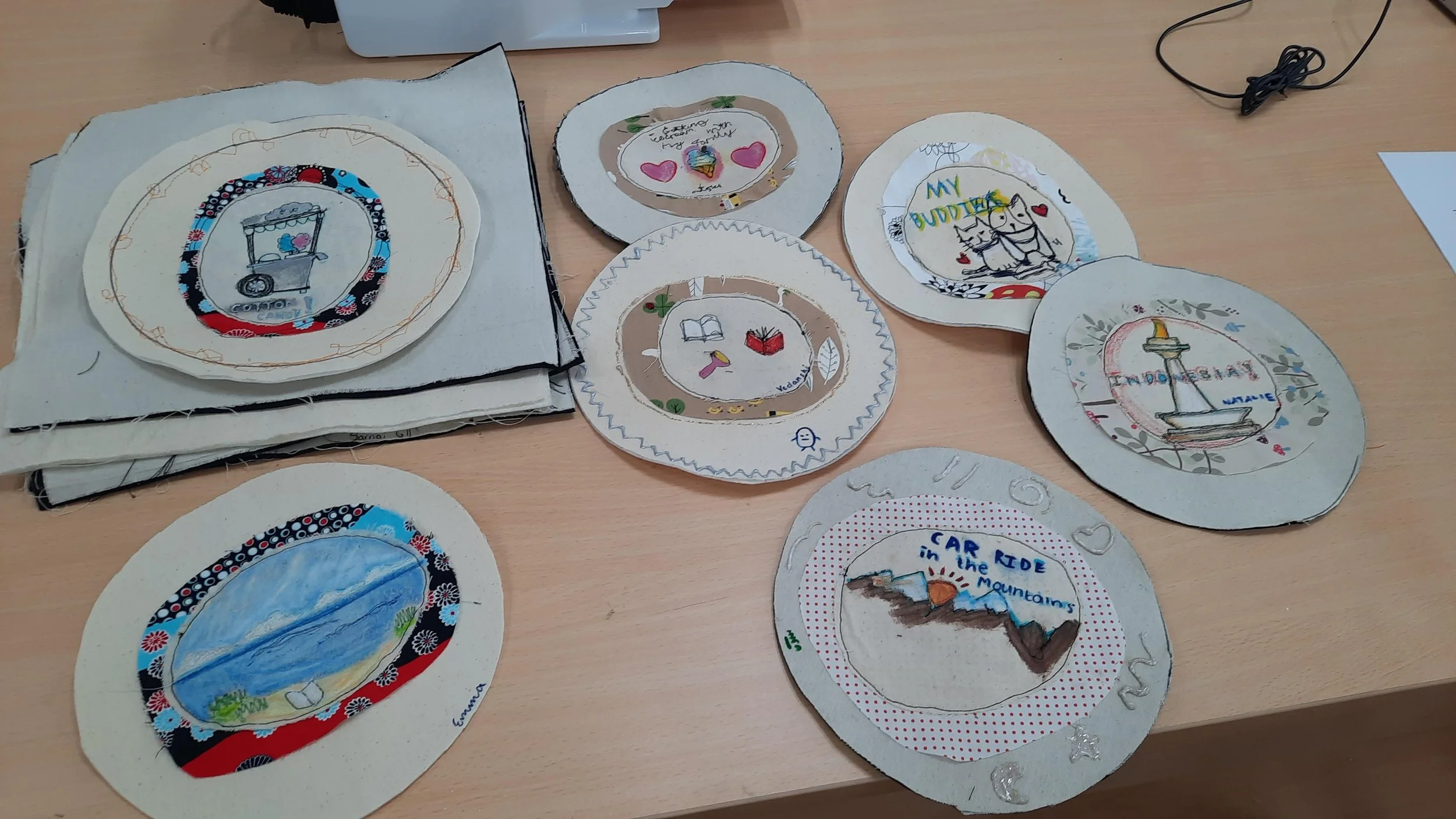
Free motion embroidery designs from the students
Overall, I had a successful session, and the children had a great time coming up with their designs. I was happy with the outcome. If I were to do it better, I think I would have included an element of adding textures to the session - that would have meant having an extra hour into the class! Have you taught in schools before? I would love to hear what tips you have to share. Let me know!