Threads I Love to Use in My Free Motion Embroidery
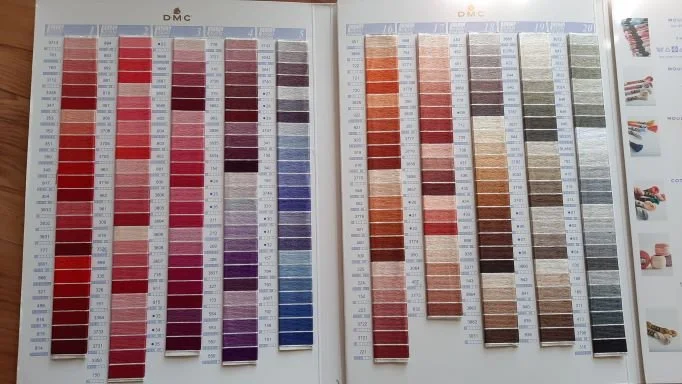
I just picked up my DMC embroidery thread colour chart! Isn’t it a beauty? It was the last one available in the shop.
The decision to invest in one was not easy because it cost me SGD60 (~USD45), but I think it’s made my life so much easier when it comes to matching and choosing thread colours. I spent about a month thinking about it!
As I mostly use free motion embroidery thread colours, I wanted to get a thread colour chart from Madeira threads, but sadly, they only had the printed version (which was free). A friend told me that the Madeira office in Hong Kong (closer to Singapore!) had sold her the thread edition, but unfortunately, their office had recently closed down. Sometimes I wish I was living somewhere with lots of haberdashery choices, but this is the DMC chart is the next best thing!
I have quite a variety of threads in my studio:
DMC embroidery threads (6 ply) and perle cotton #6 and #8
Gutermann threads - rayon viscose, polyester and silk
Madeira polyneon, cotton and rayon
Have you ever stepped into your favourite haberdashery and ended up buying more sewing items than you needed? That used to be me! Free motion embroidery can get expensive if you go on a thread buying spree and buy all the colours of the rainbow! I only buy what I need now, although I must admit it can be very difficult to estimate the amount of thread needed for a project. One mistake I made a few years ago was buy a lot of brown and green thread before a project was confirmed, and now it’s just in my drawer of threads, unused!
I’ve compiled a list below on some tips on choosing the threads you’ll love for your project.
Tips on Choosing Embroidery Threads You’ll Love for Your Project
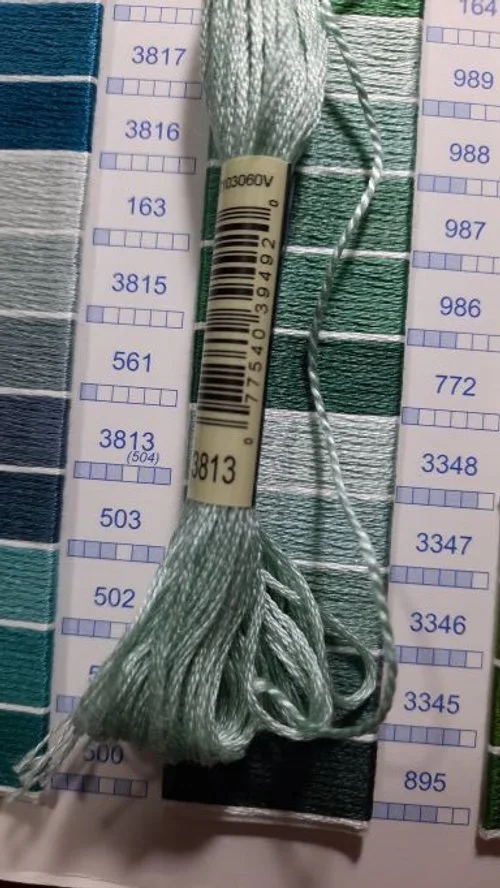
Using a colour thread chart will enable you to pick the right colours the first time around.
PLAN - It’s really important to plan your trip and decide what you need to purchase. Check your existing supplies, and just maybe you will have found the right colour in your sewing drawer.
Use your THREAD COLOUR CHART - this is where the chart comes in handy. You end up choosing the right colour, and you don’t have to second guess. It’s easier if you are buying thread to sew a garment as you just need to bring the fabric to the haberdashery and match the thread. But as there are more moving parts in free motion embroidery, deciding thread colours with the help of your colour chart will be easier.
Choosing the COMPOSITION of thread - there are a huge range of threads on the market, ranging from cotton to rayon to metallic. It’s difficult to decide which type is best, but as a rule of thumb, shiny threads (e.g. rayon and metallic) will “pop” and stand out in your work, while the “duller” threads like cotton and polyester will not. If you are looking at adding depth to your free motion embroidery work then bear these points in mind! Here are the ones I have used so far:
- Cotton is made from the cotton plant and spun from its fibers. Depending on how tightly it is spun, the cotton can produce little to high amounts of lint in the sewing machine.
- Rayon is made viscose filaments of wooden pulp, and has a shiny silk-like appearance. I enjoy working with rayon for my bright coral works.
- Polyester is basically spun plastic fibers, and is made from petroleum. It’s a lot stronger than cotton and gives less lint depending on how it was spun.
- Metallic threads are composed of thin metallic foil over a strong nylon core. I find these threads difficult to work with and use sparingly, but when I do, I use them with extra care!
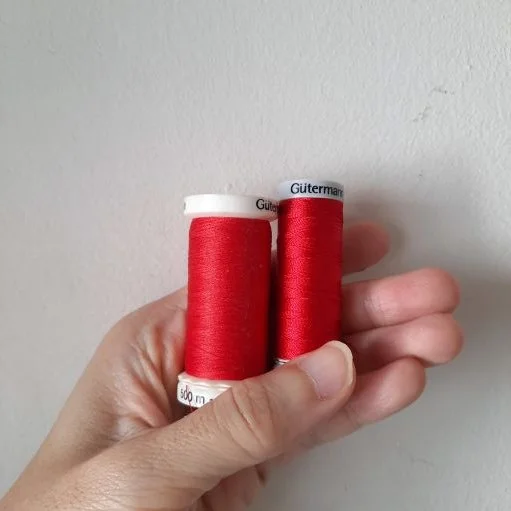
Polyester thread on the left, and rayon thread on the right. Notice the shiny sheen to the latter.
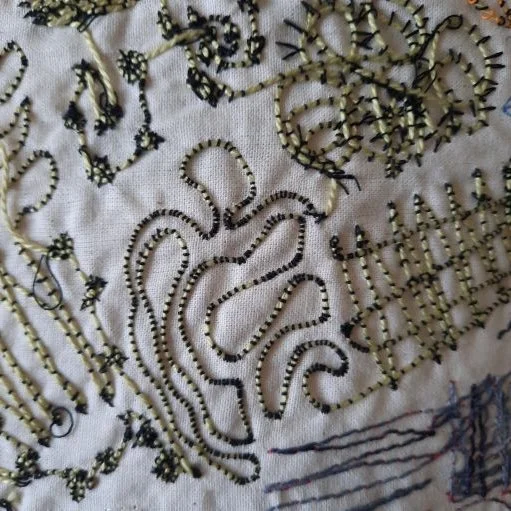
Different thicknesses of thread produce a variety of textures and interesting patterns
4. THICKNESS of the threads - I love mixing and matching my thread thicknesses to create a variety of textures, and depth. These range from DMC embroidery threads to threads on a spool.
5. Choose QUALITY - always choose quality when it comes to threads for free motion embroidery. Poor quality thread can be spotted when you visit the haberdashery - they fuzz up easily, and because they are not spun as well as the good quality threads, they can snap very easily. It also means that they will clog up your sewing machine a lot easier, and the outcome of the stitching will be uneven. This is more prominent when you are using free motion embroidery to sew various textures.
6. Thread stacked or crosswound? You have decided on the colour and the type of the thread. Next check if it is thread stacked, or crosswound, and whether it will be suitable for your sewing machine.
- A cross wound thread will unwind perfectly on a horizontal spool pin (on the majority of sewing machines). Make sure there is no gap between the spool of thread and the spool cap. It should sit nice and snug, but not too tight that it will not spin when sewing.
- A stacked thread likes to be unwound while it sits upright, so it is better on a standing spool pin. If you don't have one of those (like me), you can sit the spool upright in a jam jar. Have the jam jar placed on a few books so that it is about half-way up your sewing machine. Check tension by doing a test run before sewing actual project.
If you put a stacked thread on a horizontal spool pin (and likewise cross wound on an upright spool), what will end up happening is the thread could get caught in the spool, or start curling (in the case of rayon and metallic threads), both of which will create tension as your sew. This results in the thread suddenly snapping during sewing, and even needle breakage.
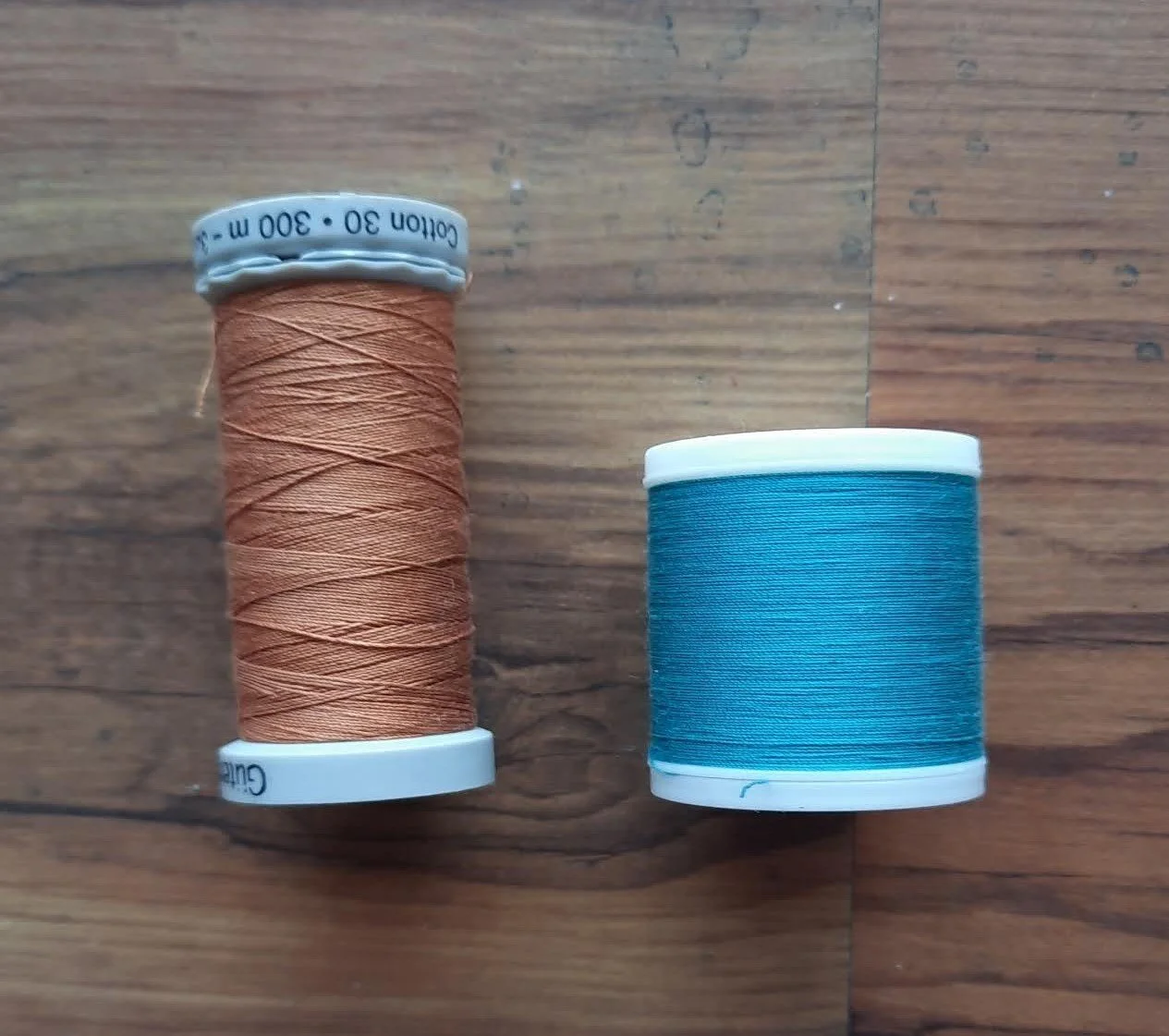
Cross wound versus stacked sewing threads
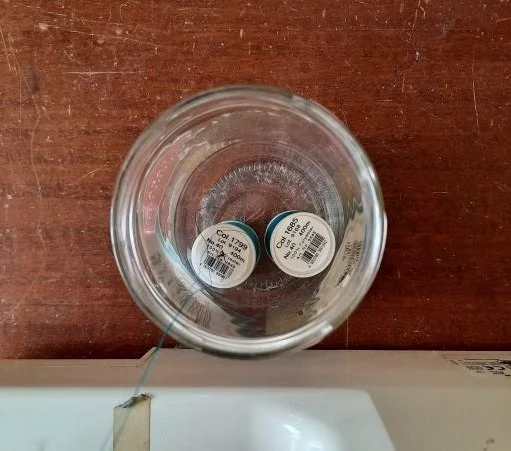
Stacked sewing thread placed in jar behind sewing machine for threading
Resources
Madeira downloadable thread colour chart
DMC colour chart online, including converter and tracker.
Gutermann shade card