
Natural Dyes - Colour Fastness
It has been an extremely long time since my natural dye experiments during the art residency at L'Observatoire. One of the things that has been on my mind is the colorfastness - under different environmental pressures, the dyes could change colour or totally disappear. For some, the colour fastness does not matter, but if you are dyeing items that are to be sold then it is important to understand this property.
So far my natural dye tests have included:
Mango leaves, Mangifera indica. L. - yellow green
Rukum masam, Flacourtia inermis Roxb - muted pink
Eucalyptus leaves (immersive and eco print) and bark, Eucalyptus camaldulensis Dehnh - rich brown
Golden shower tree pods, Cassia fistula - pale brown
Yellow onion skins - deep orange
Red onion skins - pale orange
Coffee grounds - very pale brown
Avocado seeds and skins - tones of pink
Blue pea flower, clitoria ternatea - blue
Dragon fruit - pale pink
What is Colour Fastness?
Colour fastness is the ability of the dyed material to resist fading due to light or water. To test for light, I covered half of the swatch with foil, leaving the other half exposed. For the water fastness, I sewed individual swatches onto white cotton fabric and laundered the swatches in the washing machine. In fact, I washed them in the same manner as I would normally do with my clothes. The objective is to see whether the colours would fade, run or even transfer onto other clothing.
Colour fastness to light.

Avocado seed natural dye
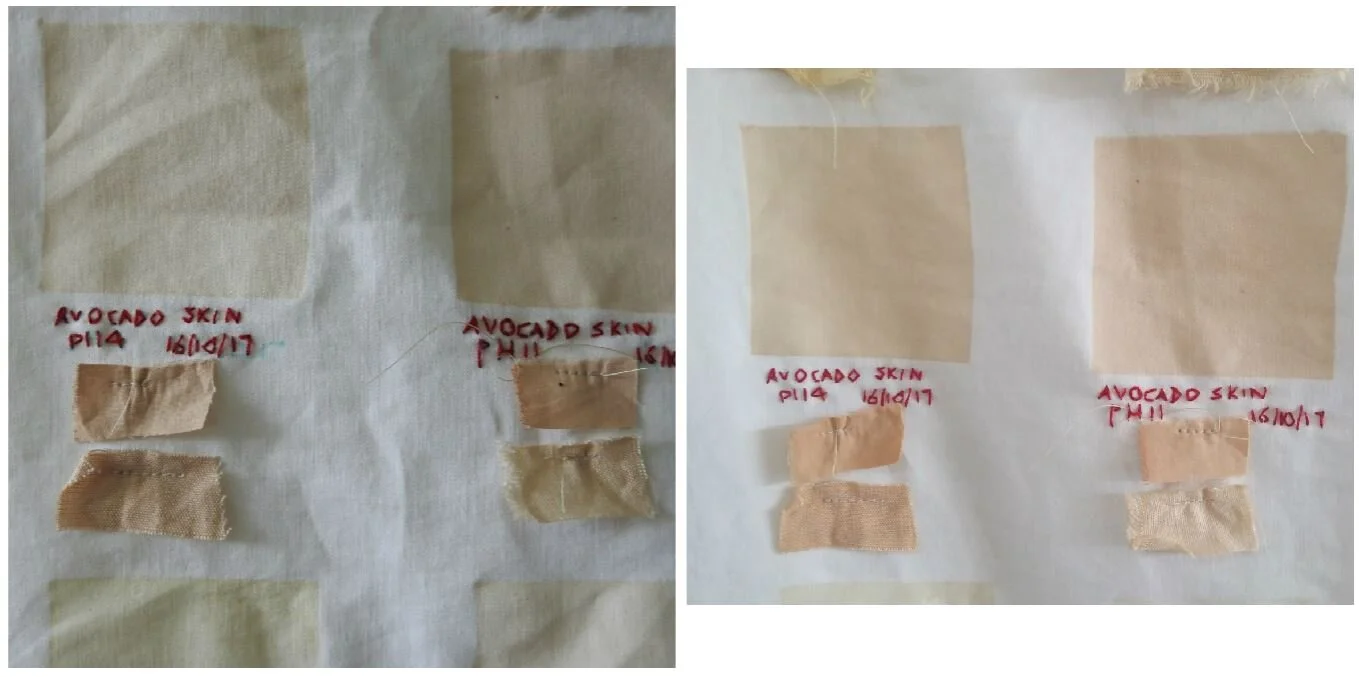
Avocado skin natural dye
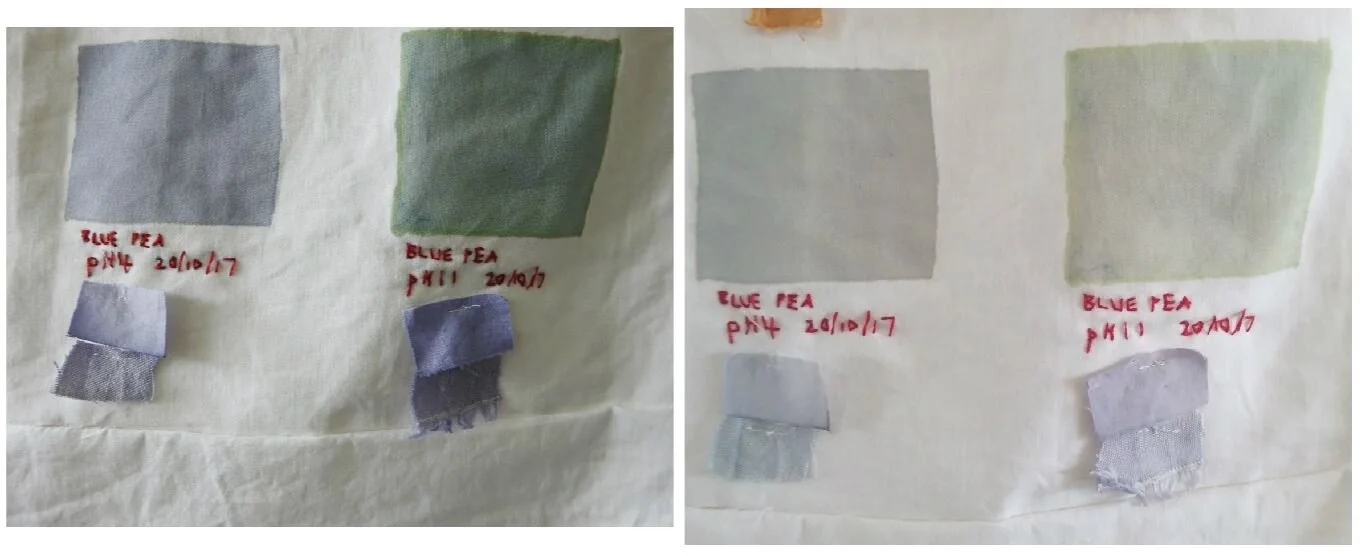
Blue Pea
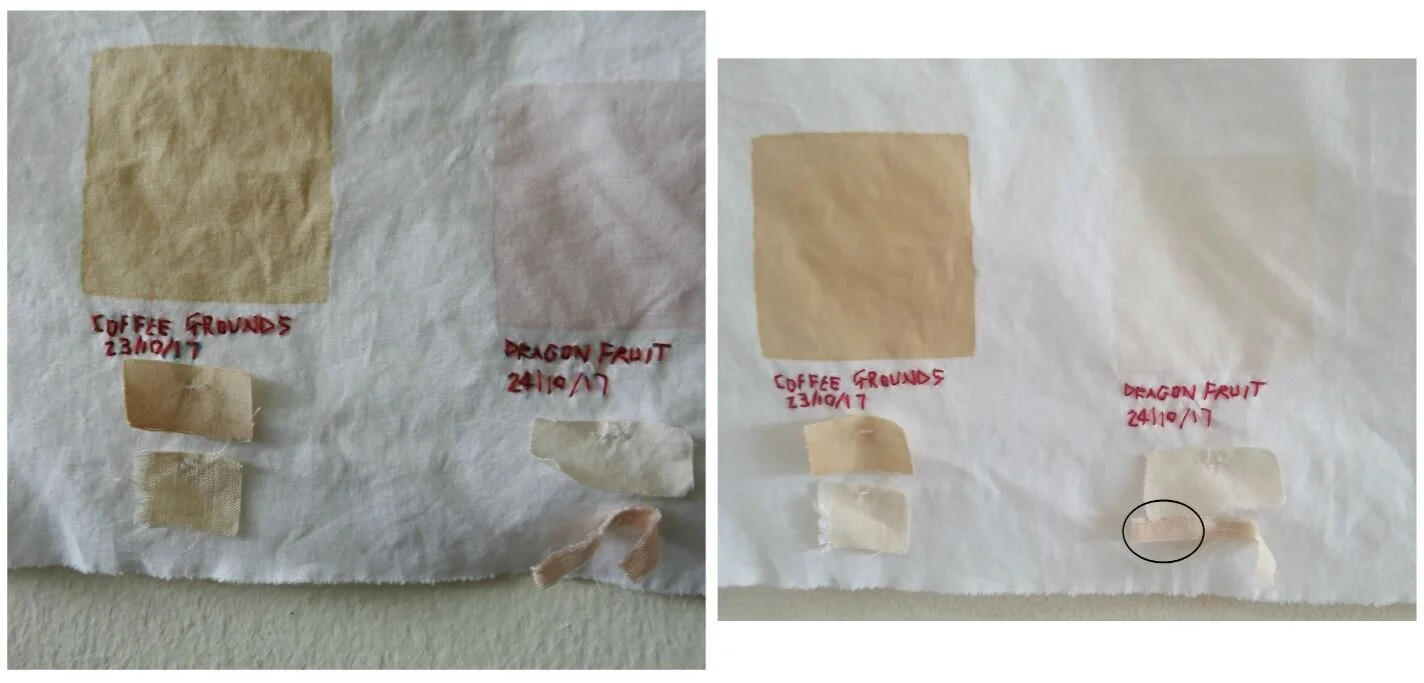
Coffee grounds and dragon fruit
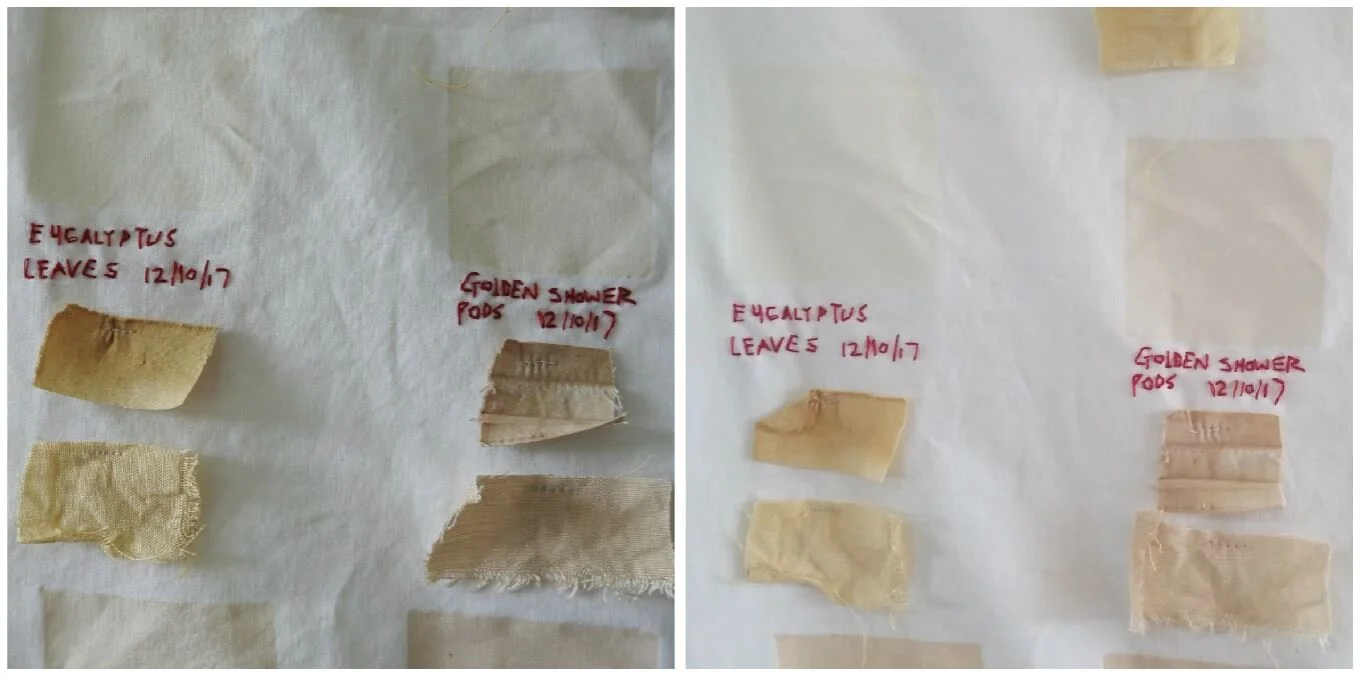
Eucalyptus leaves and Golden Shower
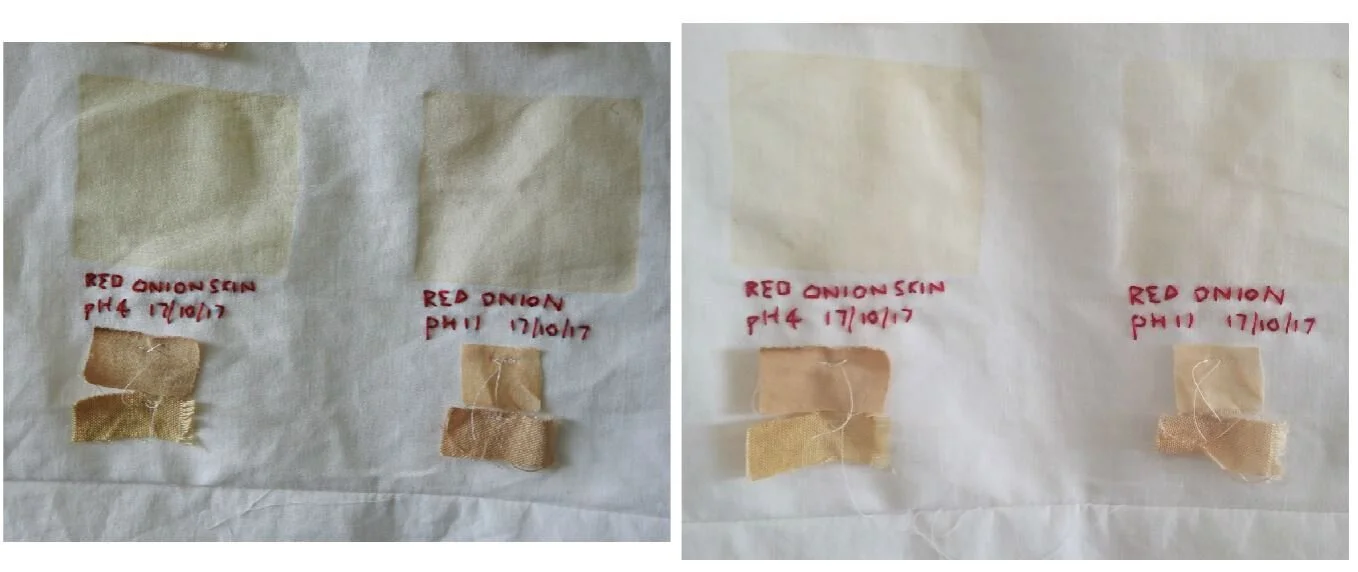
Red onion skins
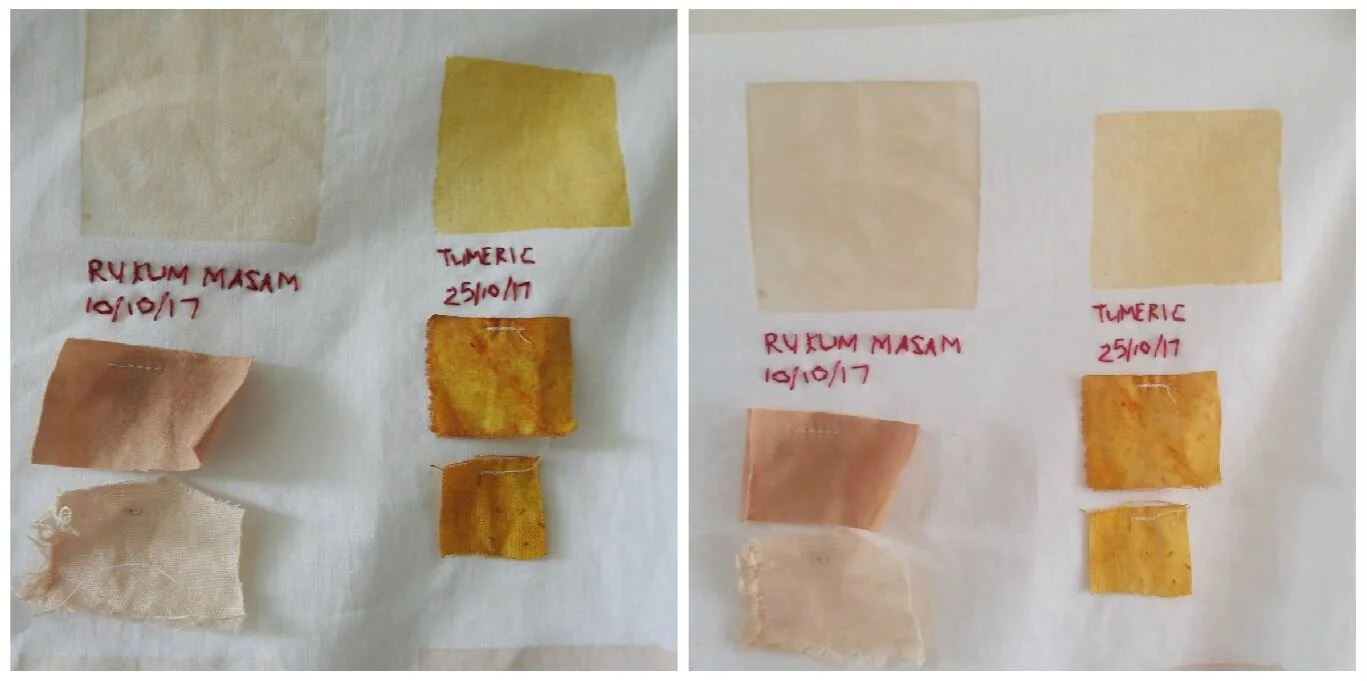
Tumeric
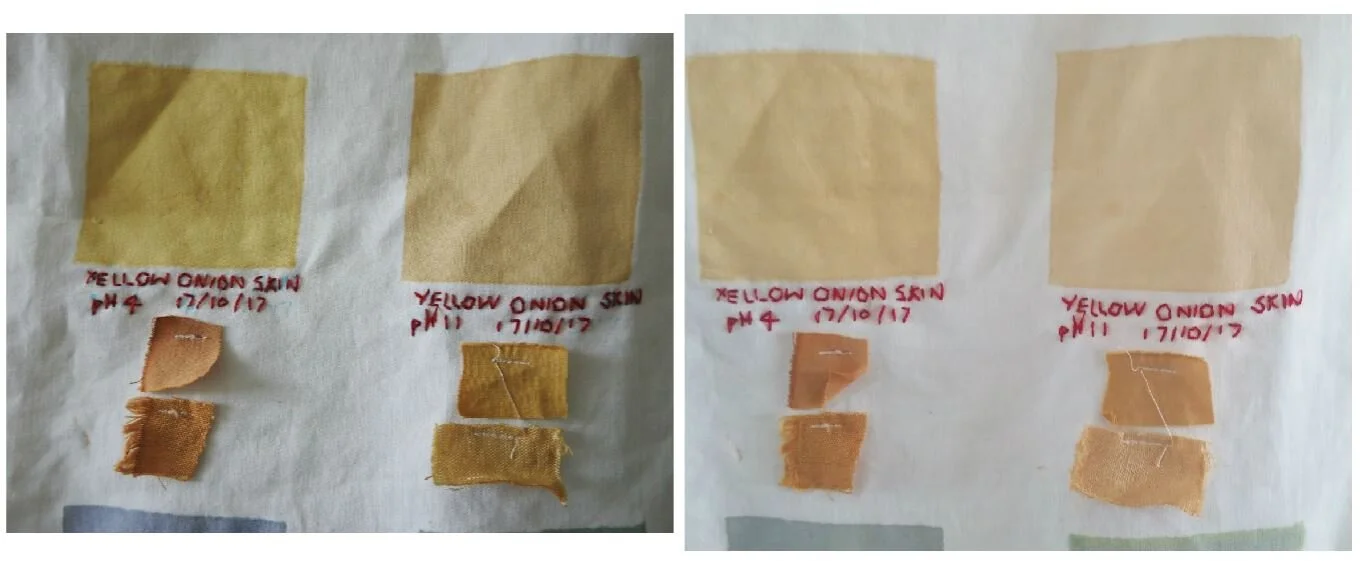
Yellow onion skins
The colour chart comprised screen printed natural dyes (the squares), and swatches of dyed fabric covered in half with foil. The chart was exposed to indirect light from 4 November - 9 January 2018.
Observations:
Screenprinted swatches
fading observed for tumeric, eucalyptus leaves, blue pea, dragon fruit.
colour change from pink to brown for rukum masam
Immersed swatches
fading observed for dragon fruit and blue pea
Images above are before (L) and after (R).
Colour fastness to water
After 4 rounds of washing the swatches in the washing machine (with drying in between), I opened up the fabric to see the result.
There was transfer of colour from the dyed swatch from the yellow onion skins (acidic) and tumeric. I was pleasantly surprised that the rukum masam did not wash off.
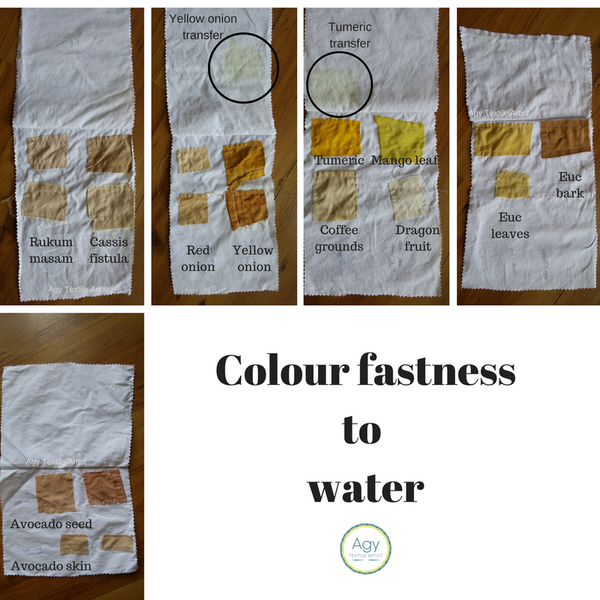
Colour fastness of natural dyes
Note: I wish I had done this better and used my knowledge in science - always have a control rather than rely on photographs. As you can see, the lighting was not ideal.